
VPP review, 2026
Amber Electric Review
Amber Electric isn't technically a VPP, but it achieves a similar outcome. Amber passes through wholesale electricity prices directly to customers, meaning when you export battery power during a price spike, you earn the full wholesale rate (minus Amber's small fee). With Amber's SmartShift feature, compatible batteries can automate this process.
- Est. annual earnings
- $200 to $800
- Export rate
- Wholesale (variable)
- Grid events
- Market-driven (continuous)
- Lock-in
- No lock-in
How Amber Electric works
As an Amber customer, you see real-time wholesale electricity prices in the Amber app. When prices are low (often during the day when solar floods the grid), your battery charges. When prices spike (typically 4pm to 8pm), your battery exports and you earn the high wholesale rate. Amber's SmartShift feature can automate this for compatible batteries (primarily Tesla Powerwall), or you can manage it manually through your battery app.
Payment structure
You earn (or pay) wholesale prices for every kWh imported or exported. During a typical evening peak, prices might be 20 to 40c/kWh. During extreme demand events, prices can spike above $1/kWh or even $15/kWh briefly. Amber charges a daily subscription fee ($15 to $20/month) and a small margin on wholesale prices. Your bill reflects net wholesale costs minus exports.
- Payment type
- Wholesale price
- Export rate
- Wholesale (variable)
- Commitment
- No lock-in
Realistic earnings
Battery export earnings vary enormously with Amber. In a good year with frequent price spikes, a Powerwall owner might net $500 to $800 from exports. In a quieter year, $200 to $400 is more typical. The risk is that if you're importing during a spike (battery empty), you pay the high wholesale rate too. Amber suits engaged users who understand wholesale pricing.
Pros and cons
Pros
- True wholesale pricing for exports
- High earnings during price spikes
- Works with most battery brands
- Real-time price visibility via app
Cons
- Requires active management for best results
- Variable and sometimes negative prices
- Not a traditional VPP (wholesale retailer)
- Risk of high import costs during spikes
Amber Electric-compatible batteries
The following batteries are confirmed compatible with Amber Electric for Australian homes in 2026. Check Amber Electric for the latest battery compatibility list as new models are added regularly.
Under the federal Cheaper Home Batteries rebate, all on-grid batteries must be VPP-capable to qualify. This means any battery eligible for the rebate of about 30% is also compatible with Amber Electric and other VPP programs. Check the CER approved battery list for the full catalogue.
- Tesla PowerwallRebate eligible
- BYD Battery-BoxRebate eligible
- Sungrow SBRRebate eligible
- Enphase IQRebate eligible
- Alpha ESSRebate eligible
- SolaXRebate eligible
- GoodWeRebate eligible
Contact Amber Electric for the latest compatibility list as new battery models are added regularly.
State availability
Amber Electric is available in the following states: NSW, VIC, SA, QLD, TAS, ACT.
How to sign up
Sign up for Amber Electric as your retailer. Connect your battery through the Amber app (SmartShift). Tesla Powerwall integration is the most automated. Other batteries can be used but may require manual management or third-party tools for automation. Allow 2 to 4 weeks for retailer transfer.
Requirements
- Amber customer
- Compatible battery
- All NEM states
Who is Amber Electric best for?
Tech-savvy battery owners who want wholesale price exposure and are comfortable with variable earnings. Works best with Tesla Powerwall (SmartShift automation) in SA or VIC where price spikes are most frequent.
Amber Electric FAQs
How much can I earn with Amber Electric?
Amber Electric participants typically earn $200 to $800 per year with a 10kWh battery. Earnings depend on your state, battery size, and the number of grid events during the year. South Australian households tend to earn the most due to frequent price spikes.
What batteries work with Amber Electric?
Amber Electric is compatible with: Tesla Powerwall, BYD Battery-Box, Sungrow SBR, Enphase IQ, Alpha ESS, SolaX, GoodWe. Check with Amber Electric for the latest compatibility list as new battery models are added regularly.
Is there a lock-in contract with Amber Electric?
No, Amber Electric has no lock-in contract. You can leave at any time.
Which states is Amber Electric available in?
Amber Electric is currently available in NSW, VIC, SA, QLD, TAS, ACT. Coverage may expand in the future, check with Amber Electric for the latest availability.
How does Amber Electric compare to other VPPs?
Amber Electric offers export rates of Wholesale (variable) and estimated annual earnings of $200 to $800. See our comparison table for how it stacks up against other programs. Visit our VPP comparison hub for a side-by-side breakdown.
Is Amber Electric a VPP?
Amber Electric is technically a wholesale electricity retailer rather than a traditional Virtual Power Plant. The effect for battery owners is similar: when wholesale prices spike, you can export stored battery energy and earn the wholesale rate (often 30 to 60 cents per kWh, sometimes much higher). Amber's SmartShift feature automates this for compatible batteries.
What is Amber Electric pricing in 2026?
Amber charges a monthly subscription (around $15 to $20 depending on state) plus a small margin on the wholesale electricity rate. There is no fixed retail rate. Imports cost you the wholesale rate plus network charges plus margin; exports earn you the wholesale rate. Average retail equivalent works out around 28 to 35 cents per kWh on imports in most NEM states.
How does Amber SmartShift work with my battery?
SmartShift is Amber's automation feature for compatible batteries (Tesla Powerwall is the primary integration). It charges your battery when wholesale prices are low or negative and discharges it when prices spike. You set thresholds in the Amber app and SmartShift handles the rest. Other batteries (BYD, Sungrow, Enphase, Alpha ESS) work with Amber but may need manual scheduling or third-party automation tools.
Is Amber Electric worth it without a battery?
Sometimes. Amber suits households with rooftop solar and flexible loads (EV charging, pool pumps, heat pump hot water) that can be shifted to low-price periods. Without a battery and without flexible loads, the wholesale price exposure can work against you during peak periods. Amber publishes an "Is Amber right for me?" calculator on their site.
What is the Amber price during a peak event?
Wholesale electricity prices in Australia spike during peak demand events, often 4pm to 8pm in summer. Typical peak prices are 20 to 40 cents per kWh, but extreme events can push prices to $1 per kWh or briefly to the $15.50/kWh market price cap. Amber passes these prices through, which is why a battery (or load shifting) is critical for getting the best out of an Amber plan.
Compare alternatives
| Program | Export rate | Est. annual | Lock-in |
|---|---|---|---|
| Amber Electric (this review) | Wholesale (variable) | $200 to $800 | No lock-in |
| Tesla Energy Plan | 12 to 22c/kWh | $200 to $500 | No lock-in |
| Origin Loop VPP | Up to 20c/kWh | $300 to $600 | 12 months |
| AGL Virtual Power Plant | 15 to 18c/kWh | $250 to $500 | 24 months |
| Simply Energy VPP | 18 to 25c/kWh | $300 to $700 | No lock-in |
Related reading
- VPP vs Feed-in TariffSide-by-side earnings comparison to help you decide.
- Battery Arbitrage AustraliaProfit from time-of-use tariffs and wholesale price spikes.
- Best Solar Batteries 2026Top home batteries reviewed with VPP compatibility.
- Solar Battery Rebate 2026How the federal rebate takes about 30% off a home battery.
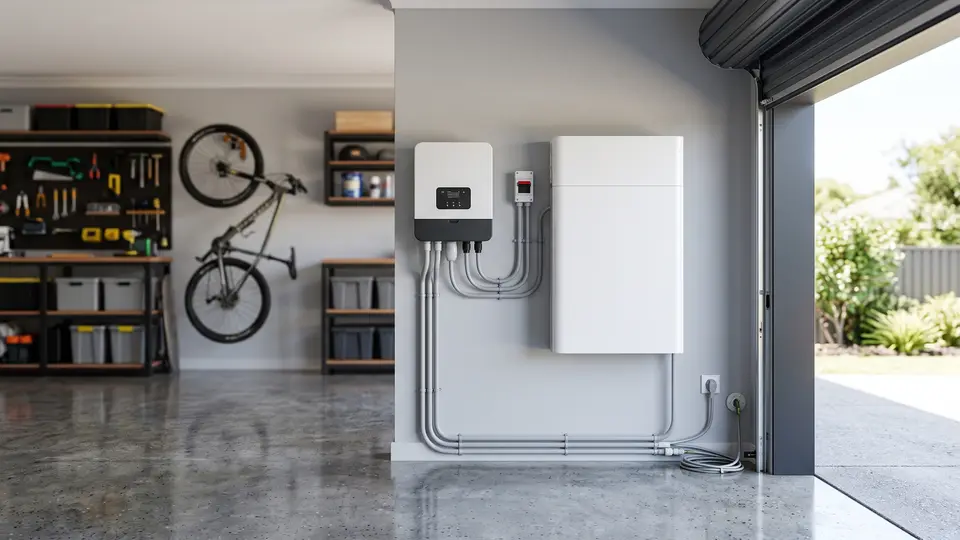
A battery that works with Amber Electric.
One Why Solar Approved installer quotes a VPP-ready battery for your home. Then a solar expert goes through the quote with you before you sign, including whether a battery is worth it for you yet.