
Solar panels in Launceston
Launceston sits at the head of the Tamar Valley, where the North and South Esk rivers meet, and it has some of the longest summer days in Australia alongside some of the shortest winter ones. Solar works here, but it works differently: a Launceston system produces a large share of its year between October and March, and the winter months are thin. The Clean Energy Regulator's postcode data on this page covers Launceston and its inner suburbs, Newstead, Norwood and Kings Meadows, Mowbray and Invermay to the north, Prospect and Youngtown to the south, and Legana and Grindelwald down the West Tamar.
Clean Energy Regulator small-scale installation data across 4 postcodes in the Tamar Valley, to October 2026. Averages include some business systems.
60 seconds. Free. No installer calls until you choose a time.
Where the installs are going
Legana and the West Tamar are the growth areas, along with Prospect Vale and the southern estates. The older suburbs of East Launceston, Trevallyn and Newstead are full of Federation and interwar homes with good north-facing roofs, and they have been installing solar for years despite the winter.
Roofs and homes in Launceston
Launceston's roofs are mostly corrugated iron on older timber homes and Colorbond on the newer ones, with heritage overlays across much of the inner city that can affect what is visible from the street. The valley traps fog and cold air in winter, and low-lying suburbs like Invermay see frost and fog well into the morning, which shortens the productive day further. An array facing north on an unshaded roof is the design that makes sense here; a west array picks up the long summer evenings but does little in winter. Snow is rare in the city but the mounting needs to handle it on the hills.
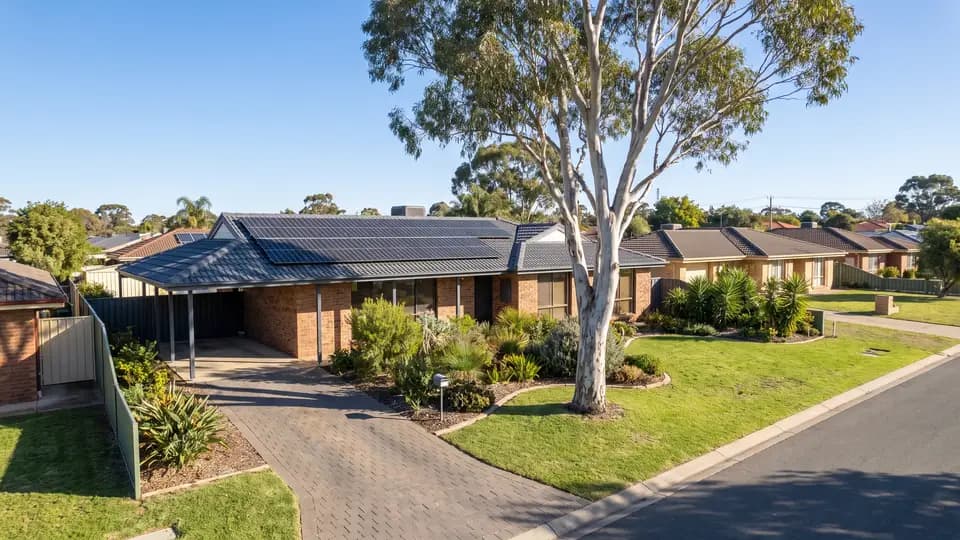
The network: TasNetworks
TasNetworks runs the network, and Tasmania's retail market is small, with Aurora Energy as the main residential retailer and the feed-in rate set by the state regulator rather than by competition. Single-phase homes have an export limit and larger systems need a connection application. Tasmania's grid is mostly hydro, so the environmental argument for solar is weaker here than on the mainland, and the case rests on the bill: heating loads are large and largely electric, and a system that covers the shoulder seasons and summer makes a real difference.
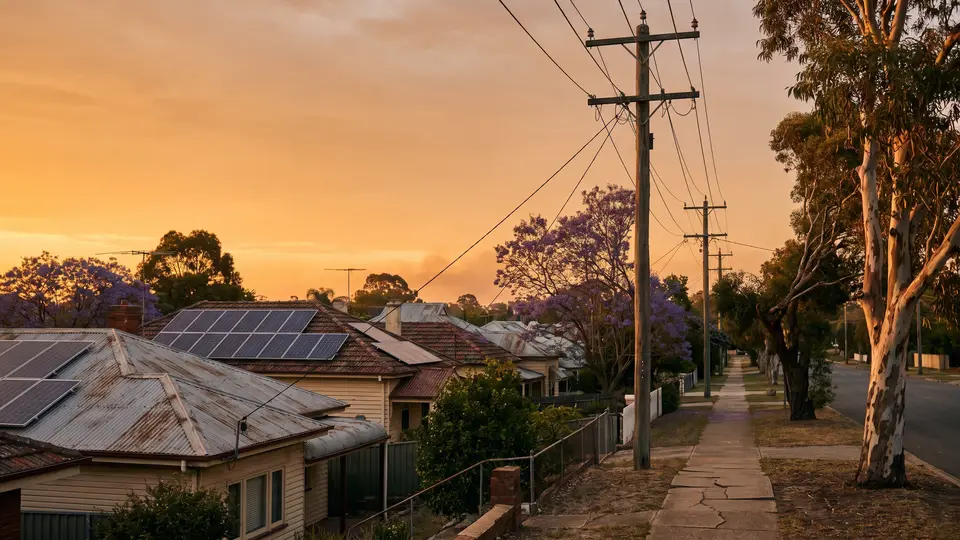
What a system generates in Launceston
Launceston averages 3.8 peak sun hours a day and sits in STC Zone 4. A peak sun hour is an hour of sunlight at full strength, so the figure is what a panel collects once the weaker morning and evening light is added up. On that average, this is what the two most common system sizes produce on a north-facing roof with no shade.
| System | Average day | Year |
|---|---|---|
| 6.6 kW | 21.3 kWh | 7,781 kWh |
| 10 kW | 32.3 kWh | 11,789 kWh |
Worked as system size times 3.8 peak sun hours times 85%, the allowance our suburb pages make for inverter, heat and wiring losses, over 365 average days. Summer days produce well above the average and winter days well below it, and an east or west-facing array produces less than a north-facing one.
Across the eight capitals, the same 6.6 kW system makes from about 7,576 kWh a year in Hobart to about 11,262 kWh in Darwin. In Launceston it makes about 3% more than it would in Hobart. More sun means more output from the same panels, but it does not change the STC rebate within a zone: that is set by the zone, the system size and the year you install.
Rebates and feed-in tariffs in Launceston
- Federal
- Up to $8,000+ in solar and battery rebates in STC Zone 4. See how we calculate this.
- Tasmania
- no state add-on.
- Feed-in tariff
- The best single-rate plan we can find for 7250 pays 10.9c per kWh (CovaU). Compare TAS feed-in tariffs.
How much solar panels cost in Launceston
These are the installed prices our solar panel cost guide works on, with the federal STC rebate for Launceston taken off. The rebate comes off the quote at the point of sale, so the last column is what you actually pay. In STC Zone 4 it is worth $1,482 on a 6.6 kW system and $2,242 on a 10 kW one.
5 kW
- Installed price
- $4,500 to $6,500
- STC rebate, Zone 4
- $1,102
- You pay after the STC
- $3,398 to $5,398
6.6 kW
- Installed price
- $5,500 to $8,000
- STC rebate, Zone 4
- $1,482
- You pay after the STC
- $4,018 to $6,518
10 kW
- Installed price
- $8,000 to $12,000
- STC rebate, Zone 4
- $2,242
- You pay after the STC
- $5,758 to $9,758
13 kW
- Installed price
- $10,000 to $15,000
- STC rebate, Zone 4
- $2,926
- You pay after the STC
- $7,074 to $12,074
Prices are the national ranges from our solar panel cost guide. Installed prices are before any rebate. The STC rebate is the certificates each system creates in Zone 4 over the 2026 deeming period of 5 years, at $38 a certificate. The deeming period shortens by a year every 1 January, so the same system earns less rebate each year you wait.
The average system installed across Launceston in the 12 months to October 2026 was 11.5 kW, between the 10 kW and 13 kW rows, although that average includes some business systems. Size yours on your own bills and roof, but it is a fair check on what your neighbours are putting up.
What moves a quote up or down: the panel and inverter brands, a second storey or a steep or tiled roof, and switchboard or meter work. The full breakdown is in our solar panel cost guide.
Payback in Launceston
Payback is the after-rebate price divided by what the system saves each year. The saving comes from two places: the power you use yourself, which you no longer buy at around 26.0c per kWh, and the power you export, which earns the feed-in tariff.
6.6 kW
- Yearly generation
- 7,781 kWh
- Yearly saving
- $1,199
- You pay after the STC
- $4,018 to $6,518
- Simple payback
- 3.4 to 5.4 years
10 kW
- Yearly generation
- 11,789 kWh
- Yearly saving
- $1,817
- You pay after the STC
- $5,758 to $9,758
- Simple payback
- 3.2 to 5.4 years
Assumes 30% of the solar is used in the home at 26.0c per kWh, the average residential usage rate we hold for Tasmania, and the other 70% is exported at 10.9c per kWh, the best single-rate feed-in tariff we can find for postcode 7250 (CovaU). That 30% is the share our suburb pages and calculators assume for a household out at work during the day. No battery, no price rises and no panel ageing are counted.
Using more of it yourself improves the numbers quickly, because a kWh used at home is worth 26.0c and an exported one 10.9c. At 50% self-consumption, which a household home through the day or one that runs the pool pump, dishwasher and hot water on a timer can reach, the 6.6 kW system saves about $1,434 a year in Launceston and pays back in 2.8 to 4.5 years.
Your rebate in Launceston
Up to $8,000+ in solar and battery rebates. One Why Solar Approved installer, one free written quote, and fifteen minutes with a solar expert before you sign.
Batteries in Launceston
The federal Cheaper Home Batteries rebate applies in Launceston as it does everywhere. It is paid on usable capacity, at $258/kWh for the first 14 kWh and at lower rates above that, and like the STC rebate it comes off the price at the point of sale. It steps down on 1 January 2027, when the full rate falls to $217/kWh.
| Battery (usable) | Federal rebate |
|---|---|
| 10 kWh | $2,584 |
| 14 kWh | $3,610 |
The table is the federal rebate only: there is no TAS battery rebate that a typical household can count on.
Tasmania: no state add-on.
Whether a battery pays in Launceston comes down to the gap between what you pay for power and what you are paid for exporting it. Each kWh a battery moves from export into your evening is worth about 15.1c (26.0c less 10.9c). A 10 kWh battery that filled and emptied every day would be worth up to $552 a year on that gap alone; most do less in winter, when there is less surplus to store.
Battery prices by size, before and after the federal rebate, are in our battery cost guide, and the TAS battery rebate page has the state detail.
Installers in Launceston
We have not published an installer guide for Launceston yet. Our national installer directory lists SAA-accredited installers with customer reviews.
When you check your rebate with us, you are matched with one Why Solar Approved installer in Launceston. An installer has passed all six of our checks: credentials, staying power, proof of work, who actually turns up to do the job, what goes in, and how they handle trouble. They earn it before they see a single homeowner, and they lose it if they let one down. The installer never cold-calls you; the one call is from a solar expert, fifteen minutes before you sign.
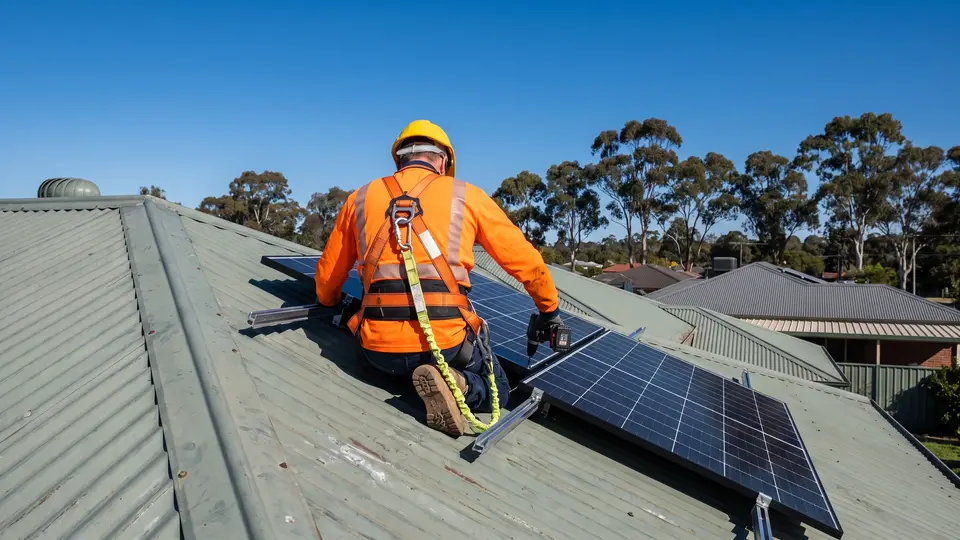
What's actually happening on roofs near you
What Launceston homeowners ask us
Launceston homeowners ask whether solar is worth it at all in Tasmania, and the answer depends on your usage: a household with a heat pump and an electric hot water system uses enough power that even a winter-light array pays back, while a small household on wood heating may not. They ask about batteries, which are a harder sell here because winter surplus is small, and about the feed-in rate, which is fixed. And they ask about installers, because Tasmania has a small pool and a couple of mainland companies that came and went. Local, long-established and accredited is the combination to look for.
Questions people ask
How many homes in Launceston installed solar in the last 12 months?
What solar rebates apply in Launceston?
What is the best feed-in tariff in Launceston?
How much does it cost to install solar panels in Launceston?
Is it worth getting solar in Launceston?
Who is the best solar installer in Launceston?
What is the 20% rule for solar?
Suburbs in the Launceston figures
- Alanvale
- Blackstone Heights
- Bridgenorth
- East Launceston
- Elphin
- Glen Dhu
- Grindelwald
- Inveresk
- Invermay
- Kings Meadows
- Launceston
- Legana
- Mayfield
- Mowbray
- Mowbray Heights
- Newnham
- Newstead
- Norwood
- Prospect
- Prospect Vale
- Punchbowl
- Ravenswood
- Riverside
- Rocherlea
- Rosevears
- Sandhill
- South Launceston
- St Leonards
- Summerhill
- Travellers Rest
- Trevallyn
- Waverley
- West Launceston
- Youngtown
More city pages in Tasmania
Your rebate, one Why Solar Approved installer in Launceston, and a solar expert on the phone before you sign.
60 seconds. Free. No installer calls until you choose a time.