

“How much do solar panels cost?” is the first question every household asks, and it is harder to get a straight answer than it should be. Prices vary with who you ask, the quality of the equipment and where you live. This guide gives you the real picture: honest price ranges from across Australia, what drives them up or down, and how to walk into any quote knowing what fair looks like. If you are new to solar, our understanding solar guide covers the basics first, and the solar savings calculator will size a system for your bill.
Solar panel prices by system size, after STCs
System size is the biggest single driver of what you pay. The table shows fully installed prices, which should cover the panels, inverter, mounting, wiring, labour and the grid connection paperwork, then the federal STC rebate on each size and what is left after it. The rebate runs from STC Zone 4 (Melbourne and Hobart) up to Zone 1 (Alice Springs), so the low end of the after-STC price pairs the cheapest quote with the biggest rebate and the high end pairs the dearest quote with the smallest.
5 kW
10 to 12 panels, ~20 kWh a day. 1 to 2 people, moderate use.
- Installed
- $4,500 to $6,500
- STC rebate
- $1,102 to $1,520
- After STCs
- $2,980 to $5,398
6.6 kW
Most popular12 to 15 panels, ~26 kWh a day. Most homes, 3 to 4 people.
- Installed
- $5,500 to $8,000
- STC rebate
- $1,482 to $2,014
- After STCs
- $3,486 to $6,518
8 kW
15 to 18 panels, ~32 kWh a day. Larger families, pool or home office.
- Installed
- $7,000 to $10,000
- STC rebate
- $1,786 to $2,432
- After STCs
- $4,568 to $8,214
10 kW
18 to 22 panels, ~40 kWh a day. Large households, an electric car.
- Installed
- $8,000 to $12,000
- STC rebate
- $2,242 to $3,078
- After STCs
- $4,922 to $9,758
13 kW
24 to 30 panels, ~52 kWh a day. Big homes, pool, EVs, a future battery.
- Installed
- $10,000 to $15,000
- STC rebate
- $2,926 to $3,990
- After STCs
- $6,010 to $12,074
| System | Panels | Installed price | STC rebate | After STCs | Daily output | Suits |
|---|---|---|---|---|---|---|
| 5 kW5 kW price guide | 10 to 12 | $4,500 to $6,500 | $1,102 to $1,520 | $2,980 to $5,398 | ~20 kWh | 1 to 2 people, moderate use |
| 6.6 kWMost popular6.6 kW price guide | 12 to 15 | $5,500 to $8,000 | $1,482 to $2,014 | $3,486 to $6,518 | ~26 kWh | Most homes, 3 to 4 people |
| 8 kWSystem sizes guide | 15 to 18 | $7,000 to $10,000 | $1,786 to $2,432 | $4,568 to $8,214 | ~32 kWh | Larger families, pool or home office |
| 10 kW10 kW price guide | 18 to 22 | $8,000 to $12,000 | $2,242 to $3,078 | $4,922 to $9,758 | ~40 kWh | Large households, an electric car |
| 13 kW13 kW price guide | 24 to 30 | $10,000 to $15,000 | $2,926 to $3,990 | $6,010 to $12,074 | ~52 kWh | Big homes, pool, EVs, a future battery |
Installed prices are indicative ranges for good quality equipment from an accredited installer, and vary by location, installer and equipment. The rebate is worked from the current certificate price ($38) and the 2026 deeming period of 5 years, and it steps down on 1 January 2027.
Why 6.6 kW is the most popular size
Many networks cap a single-phase home at a 5 kW inverter. Clean Energy Council design rules, which the STC scheme follows, let the panel array be up to a third larger than the inverter, so a 5 kW inverter can carry 6.6 kW of panels. Panels rarely reach their rated output on a hot roof anyway, so the extra panels lift production in the morning, the late afternoon and through winter without paying for a bigger inverter. This is also what most people mean by the 20% rule for solar, which the FAQ below explains. For help choosing a size, see our solar system sizes guide and what size solar system do I need.
Bigger systems cost less per kW
A 10 kW system does not cost twice what a 5 kW one does. The fixed parts of a job, the site visit, the switchboard work, the paperwork and the travel, are much the same whatever the size, so the installed price per kW falls as the system grows: about $1,100 per kW at 5 kW against about $962 at 13 kW, at the middle of the ranges above. If an electric car, a heat pump or a battery is likely in the next few years, sizing up now is usually cheaper than adding panels later. Our 10 kW system pricing guide breaks down the economics of larger installations, and adding panels to an existing system covers inverter compatibility, export limits and what upgrading later costs.
What a solar installation price includes
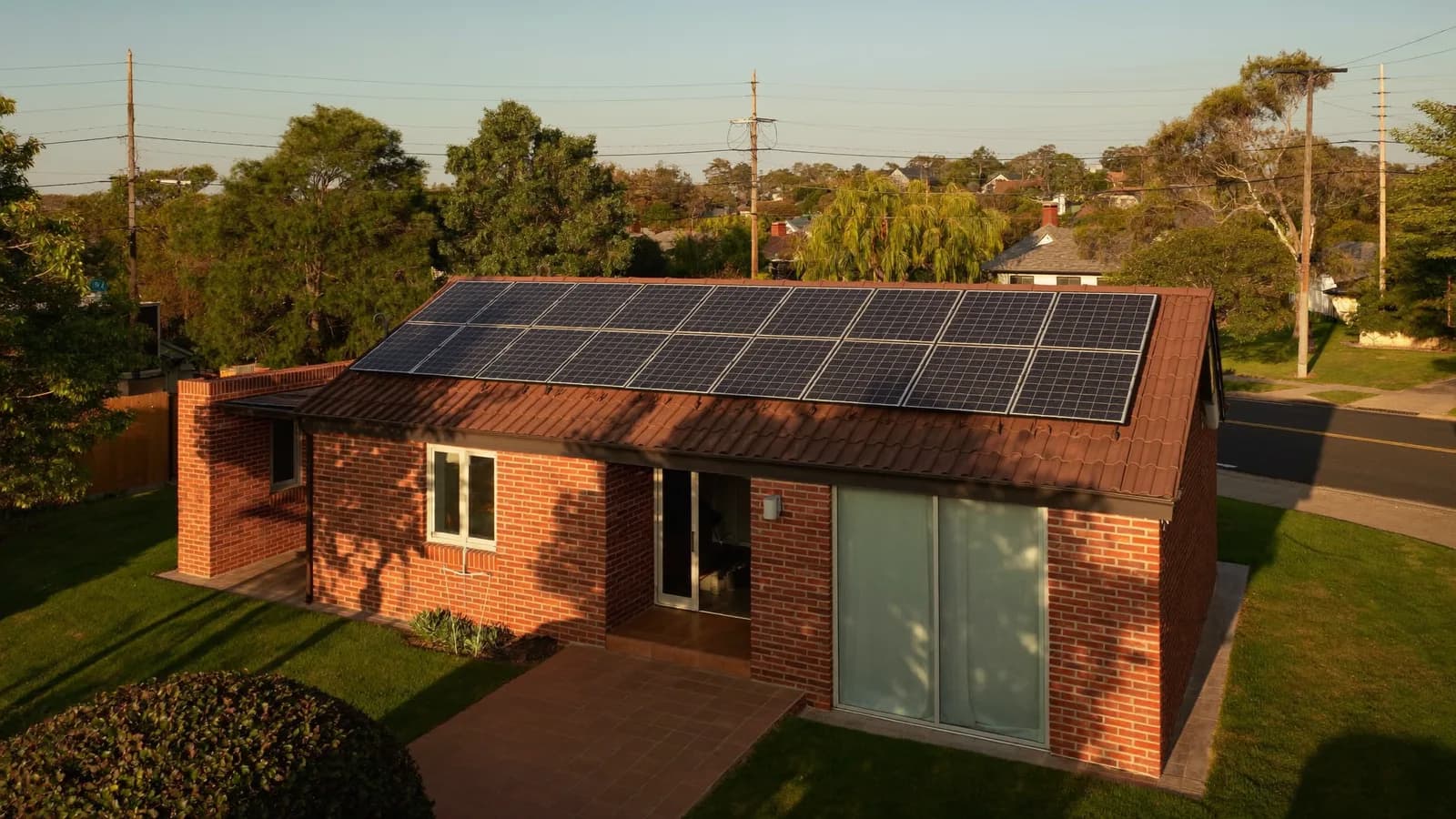
A fully installed price should cover everything needed to get the system generating and connected to the grid. A legitimate quote names each of these:
- Panels
- The brand, the model, the wattage of each panel and how many, which together give the system size.
- Inverter
- The brand and model (a Fronius Primo, a Sungrow SG5.0RS or Enphase IQ8 microinverters, for example), which converts the panels' DC power into AC for the house.
- Mounting
- Rails, clamps and brackets suited to your roof, whether tin, tile or flat.
- Wiring and protection
- The DC and AC cabling, conduit, isolators and the connections between the panels, the inverter and the switchboard.
- Labour
- Mounting the panels, running the cables and commissioning the system safely.
- Grid connection
- The application to your distributor (the DNSP) to connect the system and allow exports, and the meter change to record them.
- The STC rebate
- Shown as a line-item discount, with the number of certificates and the price per certificate, so you can check the sum.
Anything outside that list, such as a switchboard upgrade, an export limiting device or access equipment for a two-storey roof, should be listed separately with a price rather than left for the day. If a quote gives one number with no breakdown, ask for one. A reputable installer will be happy to explain every line, and one who will not is telling you something.
Warranties are part of what you are paying for. A quote should state the panel product and performance warranties, the inverter warranty and the installer's own workmanship warranty, which is the one that matters when a roof leaks or a connection fails. Our guide to reading solar quotes shows what to compare line by line.
The STC rebate explained
Every after-STC price on this page has the federal rebate taken off, because that is what you actually pay. It is worth understanding how the rebate works, because it shrinks every year and that affects your timing.
The rebate is a certificate scheme, the Small-scale Renewable Energy Scheme. When you install solar, the system creates Small-scale Technology Certificates (STCs). How many depends on three things: the size of the system, your postcode's STC zone (sunnier zones create more) and the deeming period, the number of years of generation counted up front. Your installer creates the certificates, sells them on the open market for around $38 each and takes the value off your quote.
A worked example
A 6.6 kW system installed in 2026 in Sydney, Brisbane, Perth or Adelaide (Zone 3): 6.6 kW × the Zone 3 rating of 1.382 × 5 years = 45 certificates, rounded down. At $38 each that is $1,710 off the quote. The same system creates fewer certificates in Melbourne (Zone 4) and more in Alice Springs (Zone 1).
6.6 × 1.382 × 5 = 45 certificates
45 × $38 = $1,710 off the quote
| System | Zone 1 (Alice Springs, Karratha) | Zone 2 (Darwin, Mount Isa) | Zone 3 (Sydney, Brisbane, Perth, Adelaide, Canberra) | Zone 4 (Melbourne, Hobart) |
|---|---|---|---|---|
| 5 kW | $1,520 | $1,444 | $1,292 | $1,102 |
| 6.6 kW | $2,014 | $1,900 | $1,710 | $1,482 |
| 8 kW | $2,432 | $2,318 | $2,090 | $1,786 |
| 10 kW | $3,078 | $2,888 | $2,622 | $2,242 |
| 13 kW | $3,990 | $3,762 | $3,382 | $2,926 |
The critical detail is timing. The deeming period drops by one year every 1 January until the scheme ends on 31 December 2030, so the same system creates fewer certificates each year you wait. On 1 January 2027 a 6.6 kW system loses $304 to $418 of rebate, depending on zone, and after the scheme ends you pay the full unsubsidised price.
That does not mean you need to rush. It does mean the old advice to wait for prices to drop no longer holds: panel prices have stopped falling, the rebate shrinks each year and the value you earn back through feed-in tariffs has narrowed too. For the full phase-out timeline, read our federal STC rebate guide.
Solar costs by state and city
Where you live makes a real difference. Three things drive it: the number of installers competing for work (more competition means lower prices), your STC zone, which sets the rebate, and travel costs on regional jobs. As a rule of thumb, metro installations come in 10 to 20% cheaper than regional ones for the same system. The table shows capital city quotes with each city's own STC zone applied.
| City | STC zone | Peak sun hours | 6.6 kW installed | 6.6 kW after STCs | 10 kW installed | 10 kW after STCs |
|---|---|---|---|---|---|---|
| Sydney | Zone 3 | 4.5 | $5,800 to $7,500 | $4,090 to $5,790 | $8,500 to $11,000 | $5,878 to $8,378 |
| Melbourne | Zone 4 | 4.1 | $5,500 to $7,200 | $4,018 to $5,718 | $8,000 to $10,500 | $5,758 to $8,258 |
| Brisbane | Zone 3 | 5 | $5,200 to $6,800 | $3,490 to $5,090 | $7,500 to $10,000 | $4,878 to $7,378 |
| Perth | Zone 3 | 5.3 | $5,000 to $6,500 | $3,290 to $4,790 | $7,200 to $9,500 | $4,578 to $6,878 |
| Adelaide | Zone 3 | 4.7 | $5,300 to $7,000 | $3,590 to $5,290 | $7,800 to $10,200 | $5,178 to $7,578 |
Sydney quotes sit toward the top because labour costs more there, even though it is the biggest market. Brisbane and Perth are the most competitive capitals, with good sun on top. Adelaide has the highest electricity prices in the country, which gives it some of the fastest paybacks, and Melbourne's smaller Zone 4 rebate is offset for eligible households by the state's panel rebate. Hobart and Darwin quotes tend to run above these ranges, with fewer installers and more travel, while Canberra prices track Sydney's.
What each state adds
State help now mostly goes to batteries or comes as loans. Only Victoria still pays a broadly available state rebate on panels. The table shows what each state adds on top of the federal STC rebate, with the average size of the systems installed there over the last year.
| State | Average new system, last 12 months | On top of the STC rebate |
|---|---|---|
| New South Wales | 10.9 kW | VPP incentives under the Peak Demand Reduction Scheme, plus a $15,000 interest-free Home Energy Saver loan. No upfront battery discount. |
| Victoria | 9.3 kW | $1,400 on panels through Solar Victoria for eligible households. The battery loan program has closed. |
| Queensland | 10.7 kW | No state add-on. |
| Western Australia | 9.5 kW | Up to $1,300 (Synergy) or $3,800 (Horizon Power) from the WA Residential Battery Scheme, stackable with the federal rebate. |
| South Australia | 11 kW | VPP incentives. The SA Home Battery Scheme has closed. |
| Australian Capital Territory | 12.1 kW | Up to $5,000 through HESP for concession card holders, plus Sustainable Household Scheme loans. |
| Tasmania | 10.4 kW | No state add-on. |
| Northern Territory | 14.4 kW | No state add-on. The Home and Business Battery Scheme is closed. |
Panel quality tiers: budget, mid-range and premium
Panel quality is the main reason two 6.6 kW quotes can be a few thousand dollars apart. Here is what you get at each tier. The prices per watt are for the panels alone, not the installed system.
Budget tier
Lowest upfront cost
$0.25 to $0.35/W
Entry-level ranges and lesser-known brands. Some manufacturers have no Australian office to handle warranty claims.
- Efficiency
- 19 to 20%
- Degradation
- 0.5 to 0.7%/yr
- Warranty
- 10 to 12 years
- Year 25 output
- ~80%
Mid-range tier
Best value for most homes
$0.35 to $0.50/W
Trina Vertex S+, Longi Hi-MO 7, Canadian Solar HiKu7. Most have Australian support offices.
- Efficiency
- 20 to 21.5%
- Degradation
- 0.4 to 0.5%/yr
- Warranty
- 15 to 25 years
- Year 25 output
- 84 to 87%
Premium tier
Maximum long-term performance
$0.50 to $0.70/W
Maxeon, REC Alpha Pure-R, Q CELLS Q.Peak DUO. Australian office and local warranty support.
- Efficiency
- 21 to 22.8%
- Degradation
- 0.25 to 0.4%/yr
- Warranty
- 25 years
- Year 25 output
- 88 to 92%
The difference in first-year output between budget and premium panels is small. The gap opens in years 10 to 25: a premium panel still producing close to 90% of its rating at year 25 generates noticeably more than a budget panel limping along at 80%, and over the life of the system that adds up to thousands of dollars of power. For most households, mid-range panels are the best balance of price and long-term performance.
A warranty is only as good as the company behind it, so check that the manufacturer has an Australian office that handles claims. For a ranked comparison of brands, see our best solar panels in Australia guide and the solar panel comparison.
Inverter costs: string, microinverters and hybrids
The inverter is the second biggest cost variable. It converts the DC electricity from the panels into AC for the house, and it is the part most likely to need replacing during the life of the system. There are two main types, and the price difference is significant.
String inverters
Best for simple roofs
$1,000 to $2,000
One unit on the wall near the switchboard. Works best on a simple roof with one orientation. Popular: Fronius Primo and Gen24, Sungrow SG-RS, GoodWe DNS.
- Installation
- Wall-mounted, single unit
- Warranty
- 10 to 12yr (ext. 15 to 20)
- Best for
- Simple, unshaded roofs
- Shading impact
- Whole string affected
Microinverters
Best for complex roofs
$2,500 to $4,000
One small inverter behind each panel, with panel-level monitoring and optimisation. Popular: Enphase IQ8+, Enphase IQ8M, Hoymiles.
- Installation
- One per panel, on roof
- Warranty
- 25 years standard
- Best for
- Complex or shaded roofs
- Shading impact
- Panel-level only
Which should you choose? On a straightforward roof, with one or two faces, little shade and a standard pitch, a quality string inverter such as a Fronius or Sungrow is perfectly fine and saves $1,500 to $2,000. On a roof with several orientations, shade from trees or neighbouring buildings, or if you want panel-level monitoring and a 25-year warranty, microinverters are worth the premium. Optimisers sit between the two: a string inverter with a small device behind each panel, which adds panel-level monitoring and shade tolerance for less than a full microinverter system.
If a battery is likely in the next few years, ask about a hybrid inverter, which runs the panels and a battery from one unit. It costs more than a basic string inverter today but can save buying a second inverter later. Our microinverter vs string inverter comparison and best solar inverters cover the brands and the trade-offs, and battery costs covers what adding storage costs.
Hidden costs to watch for
The headline price on a solar quote is not always the final price. These are the extras that catch people out when a quote does not deal with them up front.
- Switchboard upgrade
- $500 to $1,500
- The board is old, has no room for solar breakers or does not meet current safety standards. Older homes with ceramic fuses almost always need it.
- Meter change
- $0 to $300
- Your meter has to record exports. Some networks and retailers do this free, others charge a fee or fit a new smart meter.
- Roof repairs
- $200 to $2,000+
- Broken tiles, rusted sheeting or structural problems have to be fixed before panels go on. Water damage under panels is expensive to fix later.
- Multi-storey access
- $300 to $1,000
- Two and three-storey homes need scaffolding or an elevated work platform, and more labour time.
- Export limiting
- $200 to $500
- Some networks require a device that caps how much you can export, which is more common where many homes already have solar.
- Three-phase work
- Quoted per job
- Larger systems split across three phases, or an upgrade to three-phase supply, add electrical work to the job.
Ask every installer whether the quote includes switchboard work, the meter change and any roof access charges. A good installer flags these at the site inspection. If the answer is that it will be sorted out on the day, that often means an unexpected invoice after the installation. If your home may need three-phase work for a larger system, our guide to three-phase power and solar explains when it is worth it, and export limits by state covers the caps each network sets.
When cheap is expensive: the real cost of a $3,999 system
You have seen the ads: 6.6 kW of solar fully installed for $3,999. They turn up on Facebook, in letterbox drops and at the front door, and the appeal is obvious when the next quote is a couple of thousand dollars more.
What those ads do not tell you is that at that price the numbers do not work for a business that intends to be around in ten years. Take out the panels, inverter and mounting, the labour, the insurance and the overheads, and the installer is working on almost no margin, or losing money on every job and relying on volume to keep going.
Businesses priced like that are the most likely to cut corners in four places. They fit the cheapest components, often from manufacturers with no Australian presence, which makes a 25-year warranty close to worthless. They rush the installation, skimping on wiring, mounting and waterproofing to save labour time. They leave out essentials such as switchboard work, meter changes and proper conduit, then add them as extras after you have signed. And they are the most likely to close within two or three years, leaving you as a solar orphan with nobody to call when something goes wrong.
Our register lists 279 Australian solar companies that have collapsed, each leaving its customers without the business that installed their systems. The pattern is almost always the same: race-to-the-bottom pricing, cheap solar leads sold to five competitors at once, margins that cannot last, then closure. The owners left behind face repair bills that often cost more than they saved on the original quote. Check a company against the register before you sign, and read how to vet a solar installer for how to check accreditation, ABN history and reviews.
How to get a fair price without getting burnt
A fair price is not the cheapest quote. It is a price that matches good equipment and an installer who will still answer the phone in ten years. Four steps get you there.
Choose the installer first
This matters more than the number on the quote. Look for Solar Accreditation Australia (SAA) accreditation, at least five years trading, a solid run of Google reviews and equipment from manufacturers with Australian offices. With 279 solar companies collapsed, an established installer with a proven record protects the investment for the long term.
Compare like for like
Each quote should name the exact panel and inverter brand and model and say what is included. A $5,500 quote with budget panels and a basic string inverter is not comparable with a $7,500 quote with premium panels and Enphase microinverters. You need the same components, or at least the same tier, for a fair comparison.
Ask what is not included
Ask directly: does this price include switchboard upgrades, the meter change and any roof access charges? A transparent installer answers clearly. If they dodge the question or say they will assess it on the day, allow $500 to $1,500 for extras when you compare.
Check the installer, not just the price
Before you sign, confirm the accreditation, check the age of the ABN on abr.business.gov.au and read the reviews. A company trading for five years or more under the same ABN with solid reviews is worth a modest premium over a newcomer with no track record. Our vetting guide walks you through it step by step.
The sweet spot, going by what owners consistently report on r/AusSolar and Whirlpool, is a mid-range quote from an installer who has traded for at least five years, uses panels and inverters from manufacturers with Australian offices and has a steady trail of reviews. That combination rarely wins on price on the day, but it gives the lowest total cost over 25 years. Every installer we match has earned the Why Solar approval, which checks the same ground: credentials, staying power, proof of work, who actually does the job, what goes on the roof and how they handle trouble.
If the upfront cost is the obstacle, solar payment plans and our article on solar affordability during the cost-of-living crunch cover finance options. And if you are worried about common misconceptions, solar myths debunked clears them up.
Payback: how long solar takes to pay for itself
Payback is the out-of-pocket cost divided by what the system saves each year. The savings depend less on the system than on how you use it: power you use yourself is worth your full retail rate, while power you export earns only the feed-in tariff, which in most states is a fraction of it.
| System | After STCs in Zone 3 | Typical yearly saving | Simple payback |
|---|---|---|---|
| 5 kW | $3,208 to $5,208 | $1,200 to $1,600 | 2 to 4 years |
| 6.6 kW | $3,790 to $6,290 | $1,500 to $2,100 | 2 to 4 years |
| 8 kW | $4,910 to $7,910 | $1,800 to $2,600 | 2 to 4 years |
| 10 kW | $5,378 to $9,378 | $2,200 to $3,200 | 2 to 4 years |
| 13 kW | $6,618 to $11,618 | $2,800 to $4,200 | 2 to 4 years |
If you are out all day and export most of what you make, expect payback toward the top of the range or beyond it. Running the dishwasher, washing machine, pool pump and hot water in the middle of the day, or adding a battery later, pulls it back down. The payback calculator works it out for your own bill, is solar worth it in 2026 covers the savings side in more depth, and 10 ways to cut your power bill with solar covers the habits that shorten payback.
Frequently asked questions
How much does a solar panel installation cost in Australia?
A fully installed solar system costs $4,500 to $6,500 for a 5 kW system up to $10,000 to $15,000 for a 13 kW system, before the federal STC rebate. After the rebate, which depends on the system size and your STC zone, that is $2,980 to $12,074. The most common size, 6.6 kW, is $5,500 to $8,000 installed and $3,486 to $6,518 after STCs. The price should include the panels, inverter, mounting, wiring, labour and the grid connection paperwork.
How much should a 6.6 kW solar system cost?
A good quality 6.6 kW system should be quoted at about $5,500 to $8,000 fully installed, before the STC rebate. The rebate on that size is $1,482 to $2,014 depending on your zone ($1,710 in Sydney, Brisbane, Perth and Adelaide), so you should pay $3,486 to $6,518 after it. Well below that range, ask what has been left out and which panels are being used. Well above it, you should be getting premium panels, microinverters or a difficult roof for the money.
Is 10kW solar enough to run a house?
For most homes, yes, during daylight. Across a year a 10 kW array averages about 38 kWh a day in Sydney, 35 in Melbourne, 42 in Brisbane and 45 in Perth, against the 15 to 20 kWh a typical Australian home uses in a day. What it cannot do on its own is run the house at night: without a battery, evening and overnight use still comes from the grid. It can also fall short in winter, or in a home with ducted air conditioning, a pool and an electric car charged at home. A 10 kW system is $8,000 to $12,000 installed and the STC rebate takes off $2,242 to $3,078, depending on your zone. On single-phase power, check your network's inverter and export limits before you size up.
What is the 20% rule for solar?
There is no rule by that name in the standards, but installers most often use it for oversizing: fitting 20 to 33 percent more panel capacity than the inverter is rated for. Clean Energy Council design rules, which the STC scheme follows, allow the panels to be up to a third larger than the inverter, so a 5 kW inverter can carry 6.6 kW of panels (32% more) and a 10 kW inverter up to 13.3 kW. Panels rarely reach their rated output on a hot roof, so the extra capacity lifts production in the mornings, late afternoons and winter for very little lost at midday. Some people mean something else by it: keeping about 20 percent of the roof clear for access and setbacks, or sizing a system about 20 percent above your current usage to allow for panel ageing and future loads such as an electric car. If an installer mentions the 20% rule, ask which one they mean.
How much does it cost to install solar panels in Sydney, Melbourne, Brisbane, Perth or Adelaide?
For a 6.6 kW system, typical quotes are: Sydney (STC Zone 3): $5,800 to $7,500 installed, $4,090 to $5,790 after STCs. Melbourne (STC Zone 4): $5,500 to $7,200 installed, $4,018 to $5,718 after STCs. Brisbane (STC Zone 3): $5,200 to $6,800 installed, $3,490 to $5,090 after STCs. Perth (STC Zone 3): $5,000 to $6,500 installed, $3,290 to $4,790 after STCs. Adelaide (STC Zone 3): $5,300 to $7,000 installed, $3,590 to $5,290 after STCs. The rebate follows each city's STC zone, and prices vary between suburbs and installers.
Why is my electricity bill so high when I have solar panels?
Usually because solar only covers the power you use while the sun is up. Evenings and nights still come from the grid at the full rate, and in most homes that is when the biggest use happens: cooking, heating or cooling, TVs and hot water on an off-peak timer. Other common causes are a feed-in tariff that has fallen, so exports earn far less than they used to; the daily supply charge, which solar does not change; a new tariff your retailer moved you to when the system was connected; usage that has grown with air conditioning, a pool or an electric car; and a system that is not producing because the inverter has tripped, a string of panels has failed or the meter was set up wrong. Check the inverter or its app first, then compare your plan, and move big loads such as the dishwasher, washing machine and hot water into the middle of the day.
What is included in the price of a solar installation?
A fully installed price should include the solar panels, the inverter (string or micro), the roof mounting system, all electrical wiring and conduit, the switchboard connection, the meter change to record exports, the grid connection application and the installation labour. The STC rebate should be shown as a line-item discount. Extras such as a switchboard upgrade or an export limiting device should be listed separately with a price.
How much is the STC rebate worth?
Each Small-scale Technology Certificate trades at about $38. How many your system creates depends on its size, your postcode's STC zone and the deeming period, which is 5 years in 2026. For a 6.6 kW system that works out to $1,482 to $2,014, applied as an upfront discount on your quote. The deeming period drops by a year every 1 January and the scheme ends on 31 December 2030.
Why do solar prices vary so much between quotes?
Four things drive most of the difference. Panel quality: budget panels cost about $0.25 to $0.35 a watt and premium panels $0.50 to $0.70. Inverter type: a string inverter costs $1,000 to $2,000 and microinverters $2,500 to $4,000. Roof complexity: a multi-storey tile roof can add $500 to $2,000 over a single-storey tin one. Location: metro installations are typically 10 to 20% cheaper than regional ones because of competition and travel. Always compare quotes like for like.
Is it worth paying more for premium solar panels?
For most homes, mid-range panels are the best value. Premium panels cost more upfront but deliver higher efficiency (21 to 22% against 19 to 20%), slower degradation (about 0.25% a year against 0.55%) and longer product warranties (25 years against 10 to 12). Over 25 years a premium system can generate 10 to 15% more energy, which often covers the extra $1,500 to $2,500. If you plan to stay in the home for the long term, the extra usually pays for itself.
Will solar panels get cheaper if I wait?
Probably not by enough to be worth waiting for. Panel prices have stopped falling, and the STC rebate shrinks every 1 January: on 1 January 2027 a 6.6 kW system loses $304 to $418 of rebate, depending on zone, and the scheme ends on 31 December 2030. Every month you wait is also a month of savings you do not get.
Sources
- Energy.gov.au: the Small-scale Renewable Energy Scheme, STC pricing, deeming periods and the phase-out schedule.
- Clean Energy Regulator: the STC registry, certificate pricing, postcode zone ratings and the postcode installation data behind the state averages.
- Australian PV Institute: installation volumes, system pricing benchmarks and state market reports.
- Reddit r/AusSolar and Whirlpool Forums: owner-reported system costs, installer reviews and real-world performance.