
Solar Policy
NSW Emergency Backstop Mechanism: What It Means If You Are Getting Solar in 2026
From late 2026, every new and upgraded solar system in NSW up to 200kW has to be capable of being remotely curtailed during a grid emergency. The headline sounds alarming and the reality is mostly boring, but there is one detail buried in the fine print that can quietly cost a household thousands of dollars.
Your solar rebate, checked before you sign
9 min read
Find out what your home actually needs
If you are getting solar installed in NSW in late 2026 or later, your system will have to be what the industry calls “backstop enabled”. In plain terms, it needs to be able to receive a signal from your distribution network and wind back what it is sending to the grid.
That sentence is doing a lot of work in solar sales conversations at the moment, usually in one of two unhelpful directions. Some people are being told the government is about to switch off their solar. Others are being told nothing at all, right up until a system gets commissioned on a 1.5kW export limit and the owner works out six months later why their bill never dropped.
Here is what the NSW Government's own June 2026 factsheet actually says, what it means for a household, and the questions worth asking before you sign anything.
What the emergency backstop actually is
The Emergency Backstop Mechanism is a last resort protection required by the Australian Energy Market Operator. It gives the three NSW distribution networks, Ausgrid, Endeavour Energy and Essential Energy, the ability to temporarily reduce rooftop solar exports or pause generation, but only when AEMO instructs them to.
The problem it solves is called minimum system load. A large grid needs a certain amount of demand flowing through it to stay stable. On a mild, sunny Sunday in spring, when nobody is running heating or air conditioning and millions of rooftops are all producing at once, demand on the grid can fall so low that the system becomes difficult to control. Too little load is a genuine engineering problem, not a marketing one.
NSW is late to this, not early. South Australia, Western Australia, Queensland and Victoria all have equivalent mechanisms already running. South Australia has had one since 2020, and in that time it has been used once, for about an hour. That is the realistic frame for how often this gets pulled: it is the fire extinguisher on the wall, not a dimmer switch someone is riding all summer.
The two points that matter most to a homeowner are simple. Your electricity supply to the house is never affected, only your export to the grid. And outside those rare events, your system runs exactly as it always would.
Find out what your home actually needs
Free, takes 60 seconds, no obligation.
Who it applies to, and who can stop reading
The scope is narrower than most of the noise suggests. The requirements attach to new and upgraded solar inverter systems up to 200kW, installed from late 2026 onwards.
Not affected
Existing rooftop solar systems. If your system is already installed and commissioned, nothing changes and there is nothing to do. Some warranty replacements are also excluded, along with customers inside embedded networks (apartment buildings and similar) and sites without practicable access to the internet.
Batteries: not in this round
The June factsheet is explicit that the installation of batteries will not be affected. If you are only adding a battery to existing solar, the backstop requirements do not apply to that work. Worth watching, though: a battery exporting to the grid poses the same question the mechanism was built to answer, so it is reasonable to expect batteries to appear in a later version.
Affected: new and upgraded solar from late 2026
A new system, or an upgrade such as replacing your inverter or adding panels to existing solar, triggers the full set of requirements. Note the word “upgraded”. Plenty of households treat an inverter swap as routine maintenance, but it puts you under the new rules.
Over 200kW
Systems larger than 200kW still have to be backstop enabled and capable of remote curtailment. The difference is process, not principle: the distribution network works directly with the customer to settle on the right technology, rather than the standard installer workflow. Relevant if you are looking at large commercial solar.
The four things your installer has to do differently
None of this is your job, but knowing the list is useful. An installer who cannot talk you through these four steps in August 2026 is not ready for the work they are quoting on.
| Step | What it involves |
|---|---|
| CSIP-AUS compliant equipment | The inverter must be on the Clean Energy Council approved list and paired with a Software Communication Client approved for that specific inverter. Both halves matter. An approved inverter with the wrong client does not pass. |
| CER Installer Portal | A single new NSW portal used to confirm installation details across all three networks. It also feeds AEMO's Distributed Energy Resources Register and the NSW Building Commission's Certificate of Compliance for Electrical Work system automatically. |
| Device registration | Registering the install through the manufacturer's app or portal becomes mandatory, not optional. A small change with a useful side effect: it makes warranty claims far cleaner down the track. |
| Capability testing | A short on-site test at commissioning, run through the portal, verifying the system can actually communicate with the network's server over the internet. It has to pass for the install to comply. |
The Clean Energy Council is running free online training on all of this, worth 20 CPD points. If an installer tells you the rules are vague or not finalised, that is a reasonable prompt to ask whether they have done the course.
The 1.5kW trap, and why it matters more than the backstop itself
This is the part of the change with real money attached, and it is barely being discussed.
Any system not connected to the internet must have its exports manually capped at 1.5kW. That is not a penalty and it is not temporary. It is the default the installer is required to configure when the system cannot talk to the network.
Think about what that does to a normal install. A 10kW system on Ausgrid today can push 5kW to the grid. Capped at 1.5kW, roughly seventy percent of your export headroom disappears. On a sunny weekday with nobody home, most of what your roof produces has nowhere to go. You have paid for a 10kW system and you are running it like a 3kW one.
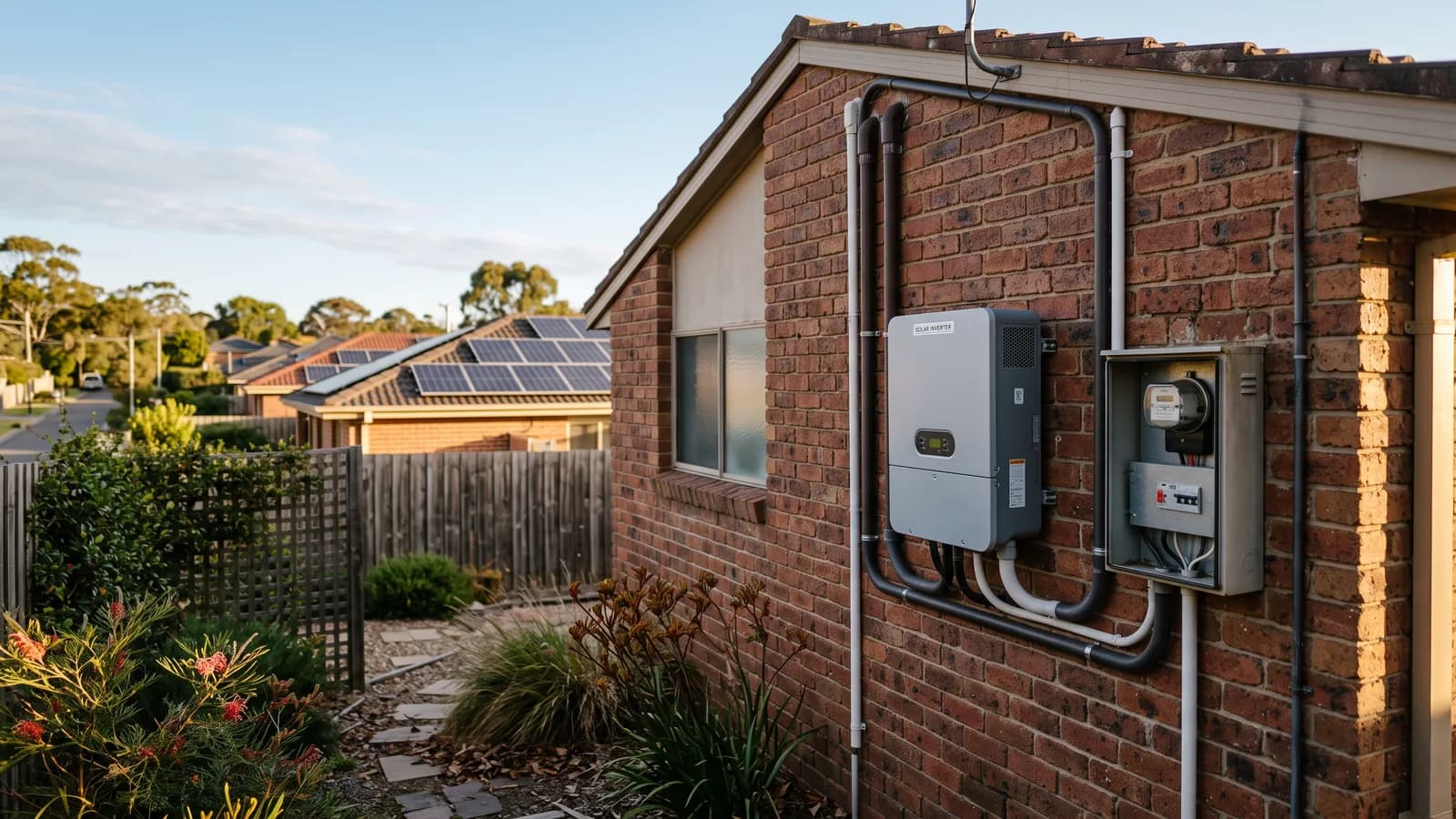
The trigger is not exotic. It is a meter box on the side of the house, three brick walls away from the router, with Wi-Fi that drops out. Solar inverters are routinely installed in garages, on external walls, in the worst possible spot for a wireless signal, and it has never mattered much before because nothing depended on it. From late 2026 it does.
The temporary hotspot catch. If a site has no permanent internet on commissioning day, the capability test can still be completed using something like a mobile hotspot. But exports stay capped at 1.5kW until a permanent connection is established. So passing the test with a phone is not the finish line. If the connection never gets sorted, the cap stays.
Genuine exemptions do exist. Sites without practicable access to the internet can apply, and the distribution network assesses each request independently. That is aimed at properties where connectivity is a real constraint, not at houses where nobody thought to check signal strength at the meter box during the site assessment.
So the practical advice is unglamorous: stand where the inverter is going and check what your Wi-Fi does there. If it is marginal, budget for an ethernet run or a mesh node. Against the cost of a system, it is trivial. Against the cost of a 1.5kW export cap for the next fifteen years, it is one of the better dollars you will spend.
The upside nobody is selling: flexible export limits
The same infrastructure that enables the backstop also enables the thing NSW solar owners have wanted for years.
Right now, Ausgrid, Endeavour and Essential all run a static 5kW per phase export limit. It is a blunt rule set for the worst case, applied at all times, everywhere. If your street has plenty of spare capacity at 2pm on a Tuesday, too bad. The cap does not know and does not care. Anyone who has read our breakdown of export limits by state knows how much generation this quietly throws away on larger systems.
The NSW Government lists support for flexible export limits as an explicit function of the CER Installer Portal, enabling customers to install larger systems and export more solar to the grid. A connected system that can receive a signal to wind down in an emergency is the same system that can receive a signal saying the network has room, push more.
South Australia has run flexible exports since 2023 and the outcome there has been more exported energy per household over a year, not less. Trading a handful of curtailed hours across several years for a materially higher ceiling the rest of the time is a good deal. It is just a harder story to tell than “they can turn off your solar”.
Your rebate, worked out to your address
Then one Why Solar Approved installer near you, and fifteen minutes with a solar expert before you sign.
Timing, and the 31 December 2026 date to watch
The requirements come in gradually through late 2026, tracking the rollout of the CER Installer Portal. The date has already shifted once: the March 2026 factsheet said the second half of 2026, and the June update narrowed it to late 2026. Treat any specific date you are quoted with mild suspicion and check the network's own page.
The one hard date currently published is a different thing, and it catches people out. Both Ausgrid and Endeavour Energy have advised that approved systems must be installed and commissioned by 31 December 2026. Miss that and a new application is required.
If you already have a connection approval sitting in a drawer, that is the number to care about. Not because the rules are punitive, but because reapplying wastes weeks for no reason.
What to do if you are getting solar in NSW right now
- Check the Wi-Fi where the inverter is going. Do it during the site assessment, not after commissioning. If the signal at the meter box is weak, sort out an ethernet run or a mesh point before install day. This single check is the difference between a 5kW export limit and a 1.5kW one.
- Ask whether the inverter is CSIP-AUS compliant with an approved client. Phrase it exactly that way. The inverter has to be on the Clean Energy Council approved list and use a Software Communication Client approved for that model. A vague "yes it is smart" is not an answer.
- Ask how they are handling the CER Installer Portal and capability test. Any installer quoting NSW work for late 2026 should be able to describe the portal, the capability test and the device registration step without reaching for a brochure. If they cannot, it tells you something about how the rest of the job will go.
- If you hold an approval already, book the install. Approved systems need to be installed and commissioned by 31 December 2026 under current Ausgrid and Endeavour guidance. Leaving it to December means competing with everyone else who left it to December.
- Do not let the backstop talk you out of a bigger system. The flexible export limits arriving on the same infrastructure push in the opposite direction. If anything, the case for a properly sized system plus a battery gets stronger, not weaker. Size the system for your roof and your usage, not for a curtailment scare story.
The honest take
The emergency backstop itself is close to a non-event for households. It is a rare, last resort action, instructed by AEMO, that reduces exports for a short period and never touches the power supply to your home. Four states already run one. South Australia has used its version once in six years. If someone is using it to talk you out of solar, they are either uninformed or selling something.
The part that deserves attention is the internet requirement, because that is where a real cost sits for a real number of households. A 1.5kW export cap on a system sized for 5kW of export is a permanent, silent tax on a poorly planned install. Nobody will notice it on commissioning day. They will notice it across fifteen years of bills.
And the trade being offered is a decent one. NSW gets a safety valve for the handful of hours a decade when the grid genuinely needs it, and households get the connected infrastructure that makes flexible exports and larger systems possible. If you are weighing up solar in NSW or adding a battery, this is a detail to get right in the quote, not a reason to wait.
Sources
The next step
If you're considering solar panels or batteries for your home, Andy and the team can match you with one Why Solar Approved installer near you for a free written quote, and fifteen minutes with a solar expert before you sign.

Written by
Solar Installer Partner Relations
Connects homeowners with trusted, vetted solar installers across Australia. Andy works directly with installation companies to ensure quality standards and helps homeowners through the quoting process.
If you have any questions about the information in this guide, email andy@whysolar.com.au or call +61 2 5657 6527.