
Battery Storage
BYD Battery Review Australia 2026: Battery-Box Premium HVS and HVM
The world's largest LFP battery manufacturer, sold through an established Australian network. Wide inverter compatibility and modular scaling from 5.1kWh to 22.1kWh.
Your battery rebate, checked before you sign
8 min read
The federal rebate takes about $3,610 off a 14 kWh battery installed before 1 January 2027, when it steps down.
Current battery rates end 1 January 2027 · 80 days remaining
BYD: More Than a Battery Brand
When evaluating home batteries, brand familiarity matters less than underlying capability. BYD is not a niche home storage brand: it is one of the largest manufacturing conglomerates in China, with divisions spanning electric vehicles, buses, trains, semiconductors, and energy storage. Their battery division supplies LFP cells to other home battery brands, including those sold under different names in Australia.
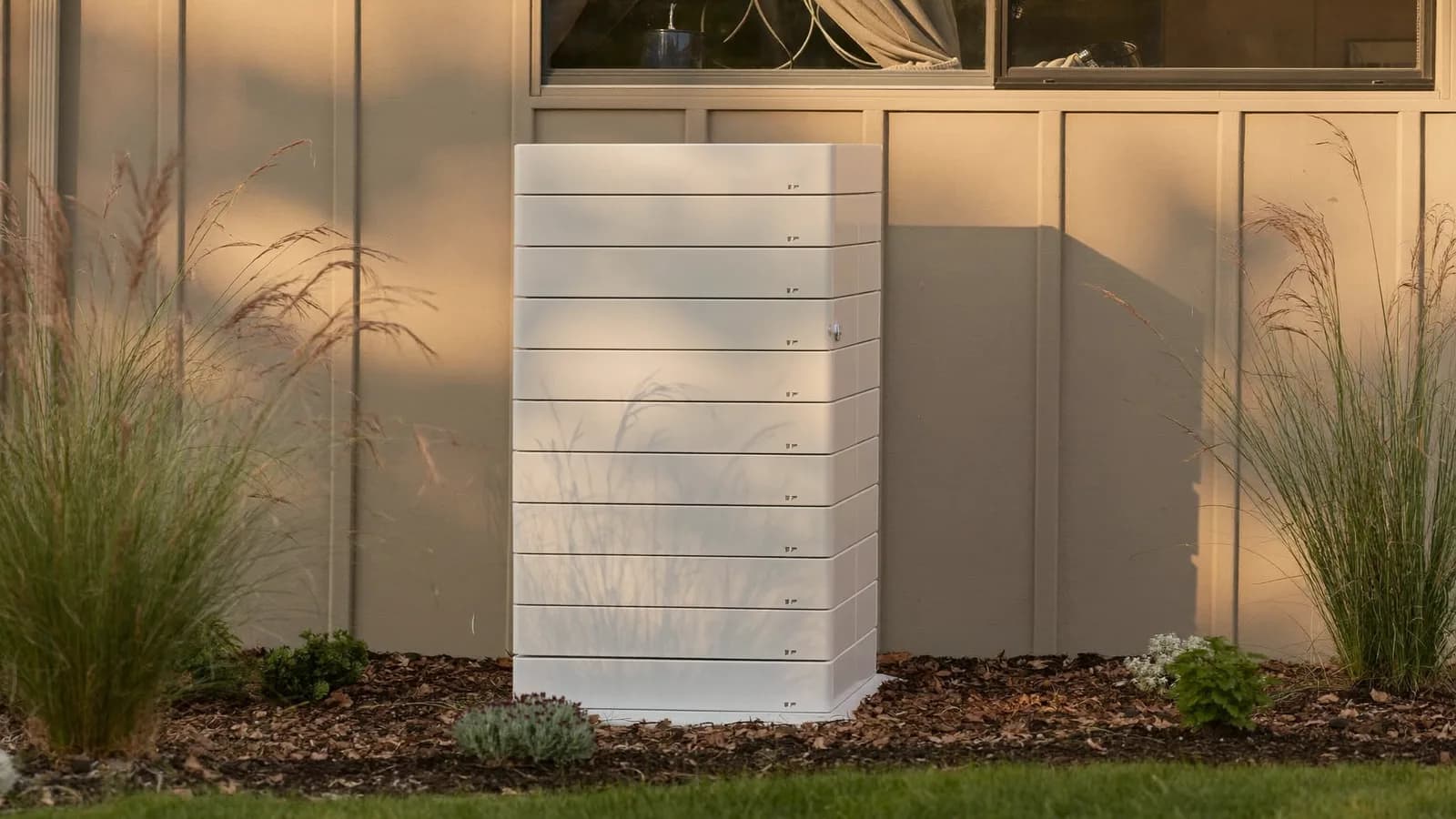
The Battery-Box Premium range is BYD's directly branded home storage product. Rather than selling cells to other manufacturers and letting them brand the product, BYD produces the Battery-Box as a complete system sold through a network of accredited installers across Australia. The implication is that when you buy a BYD battery, you are buying cells from the same company that manufactures cells for much of the industry.
HVS vs HVM: Which Series Is Right for You?
| Feature | HVS (High Voltage Small) | HVM (High Voltage Medium) |
|---|---|---|
| Module size | 2.56 kWh per module | 2.76 kWh per module |
| Capacity range | 5.1 to 22.1 kWh | 8.28 to 22.08 kWh |
| Best starting point | Small to medium households | Medium to large households |
| Inverter compatibility | Very broad | Broad |
For most Australian households adding a 10kWh battery to a solar system, the HVS 10.2 (four modules) is the natural choice. It works with the widest range of compatible inverters and provides a good starting point with clear expansion options.
Your battery rebate, checked before you sign
The federal rebate takes about $3,610 off a 14 kWh battery installed before 1 January 2027, when it steps down. One Why Solar Approved installer near you, and fifteen minutes with a solar expert before you sign.
Current battery rates end 1 January 2027 · 80 days remaining
Why Inverter Compatibility Matters
One of the BYD Battery-Box's strongest practical advantages is its wide inverter compatibility. Many home batteries are designed to work only with their own brand's inverter: a Sungrow battery pairs with a Sungrow hybrid inverter, a Fronius Reserva pairs with a GEN24. The BYD HVS works with high-voltage hybrid inverters from Fronius, SMA, Sungrow, GoodWe, Huawei, and others.
This matters for retrofit scenarios. If you installed a Fronius or SMA inverter several years ago and now want to add battery storage, the BYD Battery-Box is one of the few batteries that integrates cleanly with those existing inverters. Rather than replacing your inverter to add storage, you can often add BYD modules directly. Get your installer to confirm compatibility with your specific inverter model and firmware version before purchasing.
LFP Chemistry: What It Means in Practice
Lithium iron phosphate is the battery chemistry used by BYD, Sungrow, Tesla (Powerwall 3), and most other reputable home batteries. Its advantages over older NMC chemistry are meaningful: higher thermal stability (lower risk of thermal runaway or fire), longer cycle life, and better performance at high temperatures. For a battery installed in an Australian garage that may reach 40°C on a summer day, LFP chemistry is the appropriate choice.
BYD publishes a cycle life of 6,000 cycles at 80% depth of discharge for the Battery-Box Premium. At one full cycle per day, that represents 16 years of daily cycling, which is well beyond the 10-year warranty period. In practice, most Australian home batteries do not complete a full cycle every day, so the actual cycle degradation is less than a daily-cycle calculation suggests.
See the battery rebate your quote should show
The federal rebate takes about $3,610 off a 14 kWh battery installed before 1 January 2027, when it steps down. Then a solar expert goes through it with you, and your quote, before you sign.
Current battery rates end 1 January 2027 · 80 days remaining
2026 Pricing and the Federal Rebate
| Configuration | Installed price (pre-rebate) | After CHB rebate (approx.) |
|---|---|---|
| HVS 5.1 kWh | $6,500 to $8,500 | ~$5,208 to $7,208 |
| HVS 10.2 kWh | $9,000 to $12,000 | ~$6,378 to $9,378 |
| HVS 15.4 kWh | $13,000 to $17,000 | ~$9,200 to $13,200 |
| HVS 22.1 kWh | $18,000 to $25,000 | ~$13,136 to $20,136 |
The federal Cheaper Home Batteries Program applies a rebate of about $258 per kWh of eligible battery capacity on the first 14kWh, and less per kWh above that. Confirm with your installer that the BYD battery you are purchasing is on the eligible product list and that the rebate will be applied as a point-of-sale discount.
Who the BYD Battery-Box Suits
The BYD Battery-Box HVS is a strong option for households who want flexibility: flexibility in starting capacity (from 5.1kWh), flexibility to expand later, and flexibility to pair with a range of inverter brands. It suits both new installations where you are choosing an inverter and battery together, and retrofit installations where you want to add storage to an existing compatible inverter.
For households already committed to the Sungrow SBR or Tesla Powerwall ecosystem, switching to BYD primarily for its compatibility advantage is unlikely to be worth the installer effort. But for installers quoting across multiple inverter brands, and for homeowners with existing Fronius or SMA inverters looking to add storage, the BYD HVS is frequently the most practical choice.
The next step
If you're considering a home battery system, Andy and the team can match you with one Why Solar Approved installer near you for a free written quote, and fifteen minutes with a solar expert before you sign.

Written by
Solar Installer Partner Relations
Connects homeowners with trusted, vetted solar installers across Australia. Andy works directly with installation companies to ensure quality standards and helps homeowners through the quoting process.
If you have any questions about the information in this guide, email andy@whysolar.com.au or call +61 2 5657 6527.