
Battery Storage
Tesla Powerwall 3 Review Australia 2026: Price, Rebates and Is It Worth It
The Powerwall 3 is impressive hardware. But at up to $16,000 installed, it needs to earn its premium. This review works out who it suits and who should look elsewhere.
Your battery rebate, checked before you sign
13 min read
The federal rebate takes about $3,610 off a 14 kWh battery installed before 1 January 2027, when it steps down.
Current battery rates end 1 January 2027 · 80 days remaining
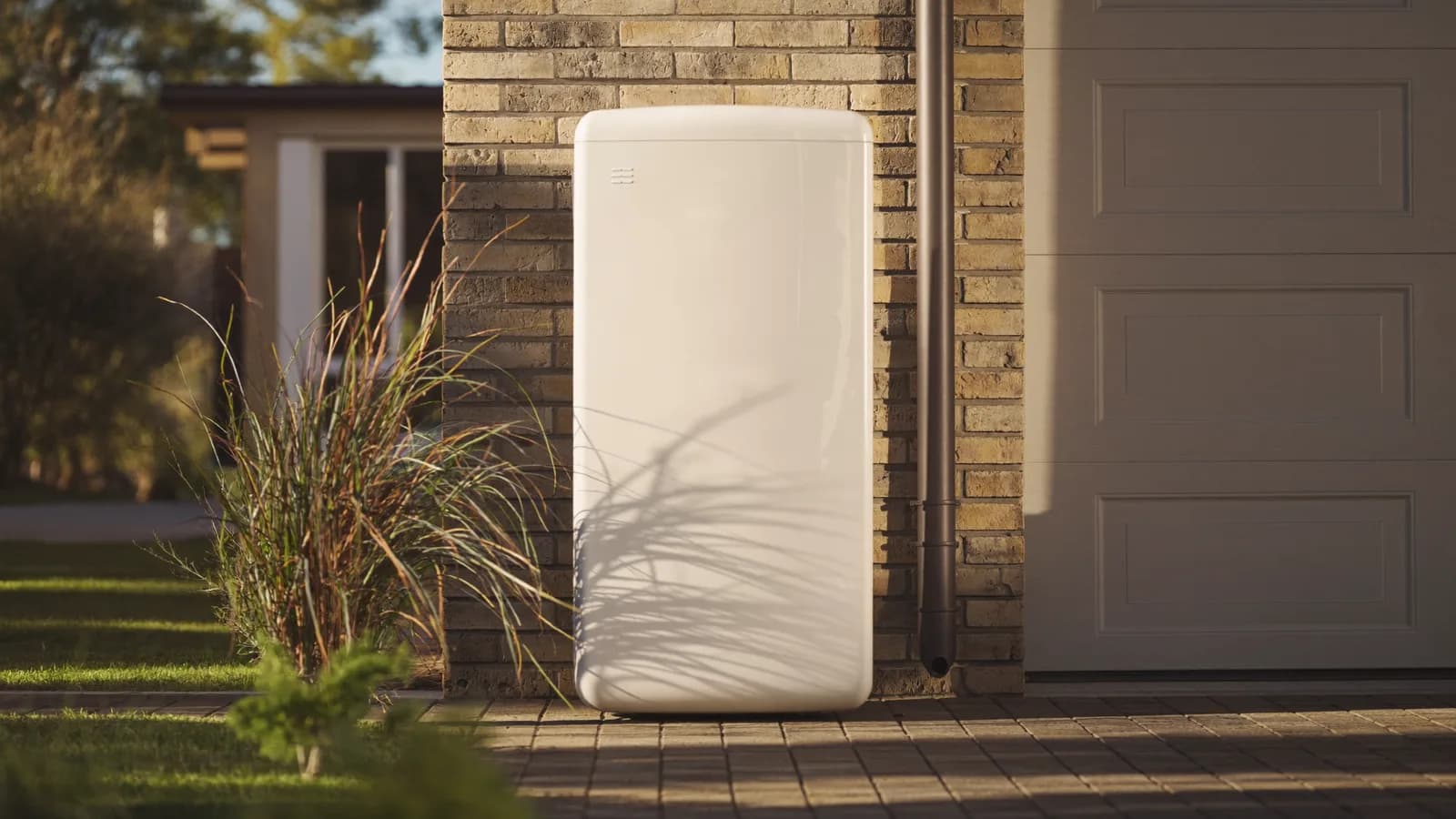
The Tesla Powerwall 3 arrived in Australia in 2024 and quickly became the most talked-about home battery on the market. That is partly because of the Tesla brand, and partly because the hardware changed what a home battery can do. The integrated solar inverter, the 11.5 kW continuous output, and the LiFePO4 chemistry are meaningful upgrades over previous generations.
But the Powerwall 3 also costs significantly more than its closest competitors. At $13,000 to $16,000 installed before rebates, it sits at the top of the mainstream battery market. The price is justified for some buyers and not others. It depends on whether you are doing a fresh solar and battery install or retrofitting an existing system, how much you care about backup power and VPP earnings, and how much the Tesla ecosystem matters to you.
This review covers the specs honestly, works through the real numbers after the federal battery rebate, and tells you clearly who should buy it and who should look elsewhere.
Powerwall 3 specifications at a glance
| Specification | Powerwall 3 | Powerwall 2 (previous gen) |
|---|---|---|
| Usable capacity | 13.5 kWh | 13.5 kWh |
| Continuous power output | 11.5 kW | 5 kW |
| Solar inverter integrated | Yes (up to 11.5 kW input) | No |
| Battery chemistry | LiFePO4 (LFP) | NMC |
| Backup transition time | <20 ms | <20 ms |
| Units in parallel | Up to 4 | Up to 10 |
| IP rating | IP67 | IP67 |
| Warranty | 10 years, unlimited cycles | 10 years, unlimited cycles |
Source: Tesla Energy product documentation. Specifications as of April 2026.
Your battery rebate, checked before you sign
The federal rebate takes about $3,610 off a 14 kWh battery installed before 1 January 2027, when it steps down. One Why Solar Approved installer near you, and fifteen minutes with a solar expert before you sign.
Current battery rates end 1 January 2027 · 80 days remaining
The two things that actually matter in the upgrade
The Powerwall 3 has the same usable capacity as the Powerwall 2, so the storage headline numbers look identical. The meaningful changes are the power output and the integrated inverter.
The jump from 5 kW to 11.5 kW continuous output is substantial. The Powerwall 2 could run most household circuits during a blackout, but struggled with high-draw appliances running simultaneously. A ducted air conditioner alone can pull 3.5 kW at startup. Add a hot water system cycling on and the Powerwall 2 was pushing its limits. The Powerwall 3 at 11.5 kW can handle virtually any Australian household load, including EV charging, without breaking a sweat.
The integrated solar inverter is the more consequential change for new buyers. Before the Powerwall 3, adding solar and a battery meant paying for a hybrid inverter separately, typically $1,500 to $3,000, plus the battery. The Powerwall 3 rolls inverter and battery into one unit. For a fresh install, the economics are meaningfully different from a straight battery comparison because you are replacing two products with one.
For people who already have a working solar inverter, this is the catch. The integrated inverter adds cost you will not extract full value from. That is why the Powerwall 3 is a better fit for new installs than for retrofits.
Price in Australia: what you actually pay after rebates
The Powerwall 3 costs approximately $13,000 to $16,000 installed in Australia before any rebates. The variation reflects differences in installer labour rates, roof configuration, and whether you need a switchboard upgrade. Metropolitan areas with many certified installers tend to have tighter pricing. Regional quotes often come in at the higher end.
The federal Cheaper Home Batteries rebate currently provides approximately $258 per kWh of eligible battery capacity as a point-of-sale discount. On a 13.5 kWh Powerwall 3, that is roughly $3,458 off. After the rebate, most buyers are looking at $9,542 to $12,542 installed.
| Scenario | Installed price | Federal rebate (est.) | Out-of-pocket cost |
|---|---|---|---|
| Low estimate (metro, straightforward install) | $13,000 | ~$3,458 | ~$9,542 |
| Mid estimate (typical install) | $14,500 | ~$3,458 | ~$11,042 |
| High estimate (complex or regional install) | $16,000 | ~$3,458 | ~$12,542 |
Federal rebate estimate based on ~$258/kWh on 13.5 kWh eligible capacity. Actual rebate depends on installer and system configuration. State rebates not included above.
What you pay after rebates, by state
State schemes stack on top of the federal rebate, but only two states pay anything on a battery that a typical household can count on, and both need the battery in a virtual power plant. This table starts from the $13,000 to $16,000 installed price, takes off the federal rebate of $3,458 on 13.5 kWh, then takes off the state add-on where one applies.
| State | State add-on on a 13.5 kWh battery | You pay after federal and state rebates |
|---|---|---|
| New South Wales | $400 to $1,500 from the Peak Demand Reduction Scheme, only if the battery joins an approved virtual power plant. The top of the range needs a bigger battery. | $8,042 to $12,142 |
| Victoria | Nothing on the battery. Solar Homes pays $1,400 on panels only, and the battery loan program has closed. | $9,542 to $12,542 |
| Queensland | No state add-on. | $9,542 to $12,542 |
| South Australia | Not counted. The REPS VPP incentive (up to $2,050) is open to priority applicants only, and the City of Adelaide rebate (up to $1,000) covers postcodes 5000 and 5006. | $9,542 to $12,542 |
| Western Australia, Synergy (Perth and the South West) | $1,300 from the Residential Battery Scheme, capped at 10 kWh. Virtual power plant participation is mandatory. | $8,242 to $11,242 |
| Western Australia, Horizon Power (regional) | $3,800 from the Residential Battery Scheme, capped at 10 kWh. Virtual power plant participation is mandatory. | $5,742 to $8,742 |
| Australian Capital Territory | Not counted. HESP pays up to $5,000 to concession card holders only. | $9,542 to $12,542 |
| Tasmania | No state add-on. | $9,542 to $12,542 |
| Northern Territory | No state add-on. The Home and Business Battery Scheme has closed. | $9,542 to $12,542 |
Federal rebate at ~$258/kWh on 13.5 kWh of eligible capacity. Schemes that are restricted to priority applicants, limited to concession card holders, limited to a few postcodes or paid on panels only are named but not taken off. Loans are not counted. Rebate figures correct as at 2 September 2026. See the full rebate guide for current details.
One timing note worth flagging: the federal rebate has been tiered since 1 May 2026, with the full rate on the first 14 kWh and less for each kWh above that, and the per-kWh discount steps down again on 1 January 2027 and every six months after that. If you are close to a decision, locking in the current rate before the next step-down makes financial sense.
LiFePO4 chemistry: why it matters for Australian conditions
The Powerwall 3 uses lithium iron phosphate (LiFePO4 or LFP) cells, switching from the nickel manganese cobalt (NMC) chemistry used in the Powerwall 2. This is not marketing. LFP chemistry suits Australia better in two ways: heat tolerance and cycle life.
NMC batteries degrade faster when exposed to high temperatures. Garage and outdoor installations in Australian summers, where ambient temperatures can exceed 40°C and enclosed spaces push even higher, accelerate capacity loss in NMC cells. LFP cells are more thermally stable. They still benefit from being installed in shaded, ventilated locations, but they handle our climate more gracefully.
LFP chemistry also supports more charge-discharge cycles before meaningful capacity degradation. In practical terms, a battery that is cycled once a day needs cells that can handle 3,650 cycles over 10 years. LFP manages this comfortably, which is why Tesla can offer unlimited cycle coverage under its warranty without it being a financial risk.
Whole-home backup: how it actually works
The Powerwall 3 is configured for whole-home backup by default, meaning your entire home switches to battery power during a grid outage, not just selected circuits. The transition takes under 20 milliseconds, fast enough that most sensitive electronics, including computers, modems, and smart home devices, do not notice the interruption.
How long your home runs on backup depends on how much you use. A typical household pulling 1 to 2 kW for lights, a fridge, and a TV would get six to ten hours from a full 13.5 kWh charge. Running air conditioning pushes that down to two to four hours. The Tesla app lets you reserve a percentage of charge specifically for backup, so you are not inadvertently using your backup buffer for overnight arbitrage and waking up to a flat battery during a storm.
The 11.5 kW continuous output means backup mode can handle almost any load combination. Most Australian homes do not draw more than 8 to 10 kW even with multiple high-draw appliances running simultaneously. The Powerwall 3 has headroom that most households will never use, but for homes with EV chargers, pool pumps, and ducted air conditioning, that headroom means the backup will not trip when several big loads start at once.
The Tesla app and VPP participation
The Tesla app is one of the strongest in the category. It shows real-time solar generation, battery state of charge, grid import and export, and home consumption. You can set the battery to prioritise self-consumption, backup reserve, or time-of-use arbitrage. The Storm Watch feature automatically charges the battery to full when severe weather is forecast in your area, using local weather data pulled automatically.
VPP participation is where the ecosystem advantage compounds. The Powerwall 3 has the widest VPP compatibility of any home battery in Australia. Amber Electric, AGL, Origin Energy, and Tesla's own Energy Plan all support Powerwall 3 integration. Through a VPP, your battery can export energy to the grid during evening peaks when spot prices spike, earning you credits or payments that offset your electricity bills further.
Tesla's own Energy Plan operates like a VPP managed entirely by Tesla: they dispatch your battery based on grid conditions and pay you for participation. Whether it beats a traditional electricity plan depends on your usage patterns and state, but the option is valuable and most other battery brands do not offer it.
Powerwall+ for shaded roofs
Tesla also offers the Powerwall+, a variant that adds integrated PV optimisers to the Powerwall 3 system. Optimisers allow individual panels to operate independently, which reduces the performance hit from partial shading. A tree casting shade on two panels out of twelve no longer drags down the entire string.
If your roof has significant shading from trees, neighbouring buildings, or chimneys, the Powerwall+ is worth discussing with your installer. If your roof has clean, unobstructed solar access, the standard Powerwall 3 is sufficient and avoids the added cost and complexity of optimisers.
See the battery rebate your quote should show
The federal rebate takes about $3,610 off a 14 kWh battery installed before 1 January 2027, when it steps down. Then a solar expert goes through it with you, and your quote, before you sign.
Current battery rates end 1 January 2027 · 80 days remaining
The certified installer restriction: a real limitation
Tesla requires all Powerwall 3 installations to be performed by a Tesla Certified Installer. You cannot use any CEC-accredited installer. This restriction has two practical consequences.
First, your ability to get competitive quotes is limited. In major cities the certified installer network is reasonably large and you can gather multiple quotes. In regional areas, you may have one or two certified installers within a reasonable distance. Less competition generally means less pressure on pricing.
Second, if your preferred local installer does not hold Tesla certification, you cannot use them regardless of their reputation or price. This is worth checking before you commit to the Powerwall 3 as your preferred product. If you find a certified installer whose work you cannot verify, take the time to check reviews and ask for references from recent Powerwall jobs specifically.
Who the Powerwall 3 suits
A strong fit for these buyers
- New solar installs: If you are installing solar from scratch, the integrated inverter means you are replacing two products with one. Compare the total system cost (Powerwall 3 plus panels) against a competitor battery plus a separate hybrid inverter and the price gap often narrows considerably.
- Households that care about backup power: The 11.5 kW output and whole-home backup configuration are best in class. If reliable backup during blackouts is a priority, no mainstream battery comes close.
- Households already in the Tesla ecosystem: If you own a Tesla vehicle, the car and the battery run from one app, and Tesla can coordinate car charging, battery dispatch, and solar generation automatically.
- VPP participants: The Powerwall 3 gives you the most options for VPP provider choice in Australia, and Tesla's own Energy Plan is a competitive offer.
- Larger homes with high loads: Homes regularly drawing 6 kW or more will find the 11.5 kW output provides headroom that competitors at similar price points cannot match.
Less suited to these buyers
- Existing solar owners retrofitting battery only: If you already have a working hybrid inverter, you are paying for an integrated inverter you will not use. BYD, Sungrow, or a brand compatible with your existing inverter will deliver more value per dollar spent.
- Budget-conscious buyers: At $9,542 to $12,542 after the federal rebate, the Powerwall 3 is the most expensive mainstream option. The Sungrow SBR paired with a Sungrow hybrid inverter can deliver a complete new solar and battery system for significantly less.
- Households wanting incremental expansion: The Powerwall 3 comes in fixed 13.5 kWh units. You can add a second unit later, but you cannot add a 3 to 5 kWh increment the way you can with modular systems like BYD or Sungrow. If you want to start small and grow, modular is better.
- Those in areas with few certified installers: Limited installer choice reduces your ability to get competitive pricing. Research certified installer density in your area before committing.
How it compares to the main alternatives
| Battery | Capacity | Inverter included | Est. price after rebate | Modular | VPP support |
|---|---|---|---|---|---|
| check_circleTesla Powerwall 3 | 13.5 kWh | Yes (11.5 kW) | $9,542 to $12,542 | No | Broadest in AU |
| BYD Battery-Box HVS/HVM | 5.1 to 22.1 kWh | No | $4,738 to $11,166 | Yes | Good |
| Sungrow SBR series | 9.6 to 25.6 kWh | No | $3,010 to $9,584 | Yes | Growing |
| Enphase IQ Battery 5P | 5.0 kWh (per unit) | AC-coupled | $3,708 to $6,708/unit | Yes | Good |
Prices are approximate installed costs as of April 2026. Federal rebate estimates based on ~$258/kWh on the first 14 kWh of each battery, less above that. State rebates not included. BYD and Sungrow require a compatible hybrid inverter, which is not included in the above pricing.
The comparison table captures the financial reality: the Powerwall 3 costs more, but it includes an inverter that the others do not. For a brand-new install, add $1,500 to $3,000 to the BYD and Sungrow figures to account for the hybrid inverter they require. That closes the gap meaningfully, though the Powerwall 3 still tends to land at the premium end even with that adjustment.
For a full side-by-side review of all major batteries available in Australia, see our best solar batteries comparison.
Price per kWh against the alternatives
Capacity varies too much for total price to be a fair comparison, so this table divides each installed price by usable capacity. It uses one configuration of each battery, as close to the Powerwall 3's 13.5 kWh as our battery price guide lists.
| Battery | Usable capacity | Installed price | Per kWh | Per kWh after federal rebate | Inverter |
|---|---|---|---|---|---|
| Tesla Powerwall 3 | 13.5 kWh | $13,000 to $16,000 | $963 to $1,185 | $707 to $929 | Built in (11.5 kW) |
| Sungrow SBR | 12.8 kWh | $8,500 to $10,500 | $664 to $820 | $406 to $562 | Separate Sungrow SH hybrid |
| BYD Battery-Box HVM | 13.8 kWh | $11,000 to $14,000 | $797 to $1,014 | $541 to $758 | Separate hybrid (Fronius Gen24 and others) |
| Enphase IQ Battery 5P (one unit) | 5 kWh | $5,000 to $8,000 | $1,000 to $1,600 | $742 to $1,342 | Works with your existing inverter (AC-coupled) |
| Alpha ESS SMILE | 10.1 kWh | $8,000 to $11,000 | $792 to $1,089 | $536 to $833 | Separate hybrid (GoodWe and others) |
| Sigenergy SigenStor | 10 kWh | $10,500 to $13,500 | $1,050 to $1,350 | $792 to $1,092 | Built in (all-in-one stack) |
Installed prices before any rebate. The Powerwall 3 row is this review's price. Sungrow, BYD, Alpha ESS and Sigenergy are from our battery price tracker (February 2026), and the Enphase IQ Battery 5P is the per-unit price from our best batteries comparison. The after-rebate column takes off the federal rebate on each battery's own capacity; state schemes are not included. Where the inverter is separate, add $1,500 to $3,000 for it on a new install.
Per kWh, the Powerwall 3 costs more than the Sungrow, BYD and Alpha ESS batteries and less than the Sigenergy SigenStor, the other battery here with an inverter built in, or a single Enphase unit. Add $1,500 to $3,000 for the inverter the first three need and the Sungrow still comes out cheaper, while the BYD and Alpha ESS land in much the same range as the Powerwall 3. That is why the sums favour the Powerwall 3 on a new install and not on a retrofit, where the inverter is already paid for.
Warranty: 10 years with unlimited cycles
Tesla offers a 10-year warranty with unlimited charge cycles and a minimum 70% capacity retention guarantee at the end of the warranty period. The unlimited cycles clause is the headline: many competitors cap cycles at 3,000 or 4,000, which at one cycle per day equates to roughly eight to eleven years. If you exceed that cap, warranty coverage gets complicated. Tesla simply removes the cap.
Ten years is now standard for the category rather than exceptional. The Enphase IQ Battery 5P offers a 15-year warranty, which remains the best in the mainstream market. The Powerwall 3 warranty is strong, not class-leading, but the combination of unlimited cycles and the 70% end-of-term capacity floor is a meaningful consumer protection.
Verdict: impressive hardware, but the price requires honest justification
The Powerwall 3 is good hardware. The 11.5 kW output, integrated inverter, LFP chemistry, and broad VPP compatibility are all real advantages, not marketing. For Australian conditions, the improved thermal tolerance of LFP over NMC is a practical benefit that will likely show up in long-term capacity retention.
The honest case for it is strongest when you are installing solar from scratch, need whole-home backup with serious power output, and want the convenience of a single-vendor ecosystem with strong app integration. When you factor in the avoided cost of a separate hybrid inverter, the price premium over BYD or Sungrow shrinks considerably, though it does not disappear entirely.
The honest case against it is equally clear: if you already have solar and just need a battery, or if your budget is tight, or if you want to start small and add capacity in 3 to 5 kWh increments later, the Powerwall 3 is the wrong tool. In those scenarios, a modular LFP battery from BYD or Sungrow paired with your existing inverter delivers comparable everyday performance at substantially lower cost.
The Powerwall 3 earns its place at the top of the market for the buyers it suits. It just does not suit everyone at its price point, and knowing which camp you are in before you sign is the most important part of the decision.
To see what a Powerwall 3 or any other battery would cost at your address after rebates, use the Why Solar rebate check. It takes 60 seconds and there is no obligation. If you go ahead, you get one Why Solar Approved installer near you and fifteen minutes with a solar expert before you sign.
Frequently asked questions
How much does the Tesla Powerwall 3 cost in Australia in 2026?
Is a Powerwall 3 worth it?
Why is Powerwall 3 so expensive?
How much does a 13.5 kWh solar battery cost?
How long will a 10kWh battery last?
Does the Tesla Powerwall 3 include a solar inverter?
What is the difference between Powerwall 2 and Powerwall 3?
Can I add a Powerwall 3 to my existing solar system?
What is the Tesla Powerwall 3 warranty?
Does the Powerwall 3 work during a blackout?
Can I use any installer for the Powerwall 3?
Is the Powerwall 3 compatible with VPPs in Australia?
Sources
- Tesla Energy: Powerwall 3 product specifications and warranty documentation (accessed April 2026)
- DCCEEW: Cheaper Home Batteries Program, rebate rates and eligibility (accessed April 2026)
- Installer pricing data gathered from Tesla Certified Installers across NSW, VIC, QLD, SA, and WA (March to April 2026)
- Clean Energy Council: Approved battery storage products list (accessed April 2026)
- State government rebate programs: NSW PDRS, SA REPS, WA Distributed Energy Buyback Scheme
The next step
If you're considering a home battery system, Andy and the team can match you with one Why Solar Approved installer near you for a free written quote, and fifteen minutes with a solar expert before you sign.

Written by
Solar Installer Partner Relations
Connects homeowners with trusted, vetted solar installers across Australia. Andy works directly with installation companies to ensure quality standards and helps homeowners through the quoting process.
If you have any questions about the information in this guide, email andy@whysolar.com.au or call +61 2 5657 6527.