
Battery Storage
Sungrow Battery Review Australia 2026: SBR Series Honest Assessment
The battery installers reach for when they want to avoid callbacks. We explain why, and where Sungrow falls short.
Your battery rebate, checked before you sign
11 min read
The federal rebate takes about $3,610 off a 14 kWh battery installed before 1 January 2027, when it steps down.
Current battery rates end 1 January 2027 · 80 days remaining
Ask a solar installer which battery they feel confident putting behind a customer's name and Sungrow comes up constantly. Not because it is the flashiest product on the market. Because it works, the warranty is serious, and if something does go wrong, Sungrow has the Australian support network to fix it without a six-week wait.
Sungrow was founded in 1997 and is now one of the world's largest inverter manufacturers, with over 25 years of power electronics experience behind it. The battery range, known as the SBR (Smart Battery Range), sits on top of that foundation. It uses lithium iron phosphate chemistry, a modular design that lets you start small and expand later, and a 10,000-cycle warranty that is genuinely one of the best in the business.
This review covers the full SBR product range, how the pricing stacks up before and after the federal rebate, what the pairing with Sungrow inverters actually means in practice, and the honest trade-offs compared to the competition.
The SBR range at a glance
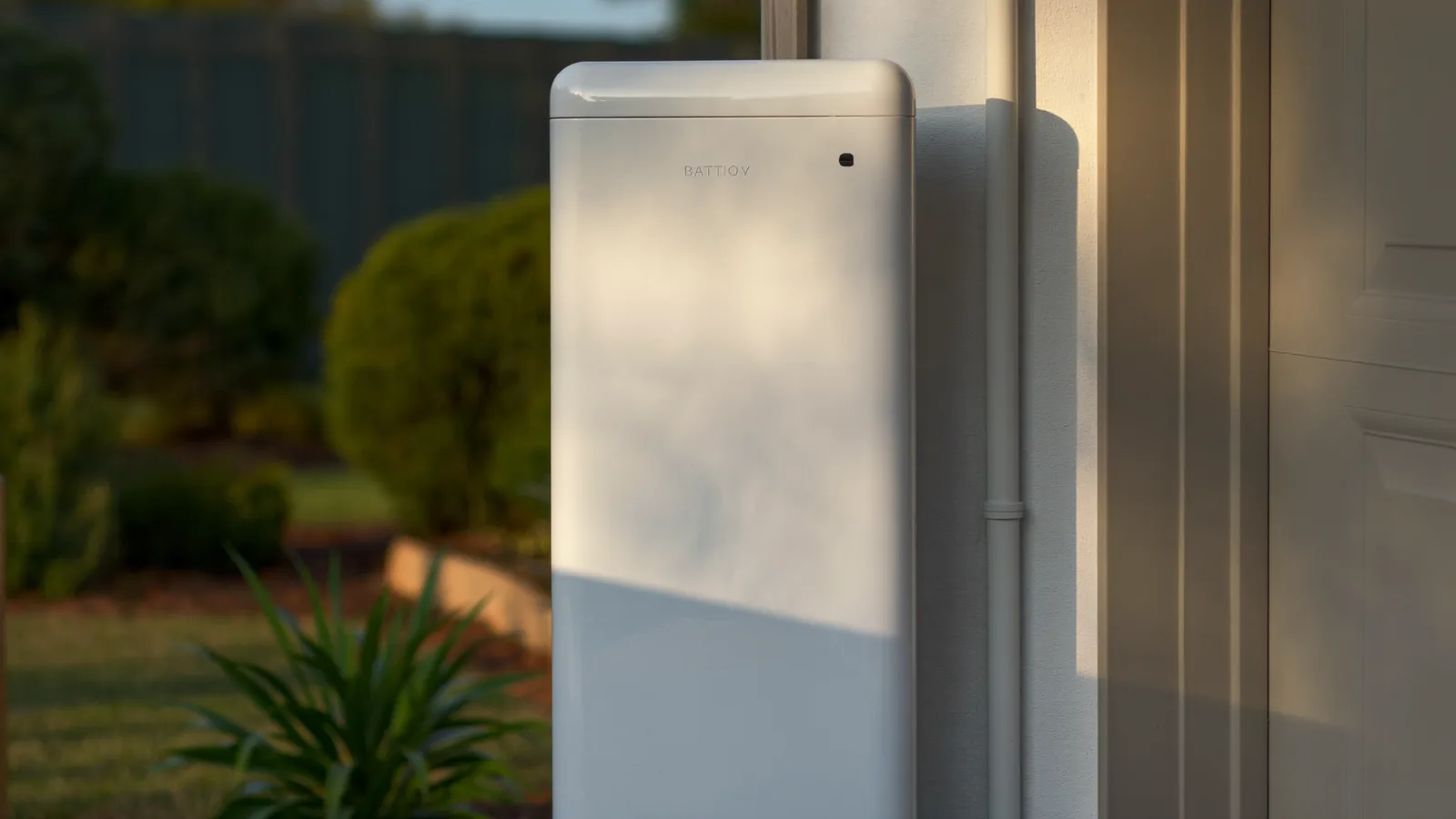
The Sungrow SBR is a high-voltage modular battery system. The base unit starts at 9.6 kWh (the SBR096) and you can stack 3.2 kWh modules on top of it to reach capacities of 12.8 kWh, 16 kWh, 19.2 kWh, 22.4 kWh, or 25.6 kWh. That modularity is genuinely useful: you are not locked into a fixed capacity at installation, and adding modules later is straightforward.
| Model | Usable capacity | Modules | Chemistry | IP rating |
|---|---|---|---|---|
| SBR096 | 9.6 kWh | 3 | LiFePO4 | IP55 |
| check_circleSBR128 | 12.8 kWh | 4 | LiFePO4 | IP55 |
| SBR160 | 16.0 kWh | 5 | LiFePO4 | IP55 |
| SBR192 | 19.2 kWh | 6 | LiFePO4 | IP55 |
| SBR224 | 22.4 kWh | 7 | LiFePO4 | IP55 |
| SBR256 | 25.6 kWh | 8 | LiFePO4 | IP55 |
The SBR128 (12.8 kWh) is the most commonly installed size for Australian households and is highlighted above as the sweet spot for most homes. All models share the same 10-year / 10,000-cycle warranty.
Your battery rebate, checked before you sign
The federal rebate takes about $3,610 off a 14 kWh battery installed before 1 January 2027, when it steps down. One Why Solar Approved installer near you, and fifteen minutes with a solar expert before you sign.
Current battery rates end 1 January 2027 · 80 days remaining
Why the 10,000-cycle warranty matters
Most home batteries carry a 10-year warranty. Some specify a cycle count, some do not. Sungrow specifies both: 10 years and 10,000 cycles to 80% retained capacity. That second number is the important one.
A cycle is one full charge and discharge of the battery. At one cycle per day, 10,000 cycles is 27 years of use. Even if your household cycles the battery twice a day (which would be unusual but not impossible for a large home with a VPP), you are still looking at 13 years before the cycle limit becomes relevant. The 80% retention threshold means the battery is guaranteed to still hold at least 80% of its original capacity at that point.
This matters because batteries degrade. Every cycle wears the cells down slightly. A warranty that only specifies years without mentioning cycles leaves you exposed: a battery that degrades to 60% capacity after eight years is technically still within its 10-year window. The Sungrow warranty closes that gap. It gives you a concrete, measurable promise about how much storage you will have left, not just how long the hardware stays attached to your wall.
LiFePO4 chemistry also helps here. Lithium iron phosphate is inherently more thermally stable and longer-lived than standard NMC (nickel manganese cobalt) lithium-ion. It handles the heat cycles that Australian summers impose on garage-mounted batteries better, and the cycle life of LiFePO4 chemistry is substantially longer at the cell level. Sungrow's cycle warranty is not just a marketing claim: the underlying chemistry backs it up.
Sungrow battery price in Australia
The Sungrow SBR range sits in the $9,000 to $15,000 installed bracket, depending on capacity, your state, and the specific installer. On a per-kWh basis, that works out to roughly $160 to $200 per usable kWh installed. For a premium brand with a serious warranty, that is competitive.
The federal Cheaper Home Batteries rebate currently takes approximately $258 per kWh off the price of the first 14 kWh at point of sale through approved installers. On a 12.8 kWh SBR128, that is roughly $3,306 off. The rebate has been tiered since May 2026, and the per-kWh discount steps down again on 1 January 2027, so locking in a quote before then is worth considering if you are already serious about buying.
| Model | Capacity | Approx. installed price | Est. after federal rebate |
|---|---|---|---|
| SBR096 | 9.6 kWh | $9,000 to $11,000 | ~$6,530 to $8,530 |
| check_circleSBR128 | 12.8 kWh | $11,000 to $13,000 | ~$7,694 to $9,694 |
| SBR160 | 16.0 kWh | $12,500 to $14,500 | ~$8,586 to $10,586 |
| SBR256 | 25.6 kWh | ~$15,000 | ~$9,604 |
Prices are approximate installed costs as of April 2026. Federal rebate estimates based on ~$258 per kWh discount on the first 14 kWh of eligible capacity and ~$155 per kWh above that. Actual rebate depends on the installer and system configuration. State rebates not included above.
Several states let you stack additional rebates on top of the federal one. South Australia offers up to $2,050 through REPS. Western Australia offers $1,300 to $3,800 depending on location and battery size. NSW has up to $1,500 via the PDRS VPP incentive. See our state battery rebate guide for current details.
Sungrow inverters: the natural pairing
Sungrow makes both the battery and the inverter, and the two are designed to work together as a single ecosystem. The SBR battery pairs with Sungrow's SH series hybrid inverters, which handle both the solar generation side and the battery charging and discharging in one unit.
Sungrow inverters are among the most widely installed in Australia. The brand sits in the same tier as Fronius and SolarEdge for reliability, with a significantly lower price tag than either. For installers, recommending Sungrow inverters is a low-risk call: the products are well-supported, spare parts are available, and the local technical team is reachable.
When you buy a Sungrow inverter and SBR battery together, they work as one system. The iSolarCloud monitoring platform covers both the solar generation and battery state in a single app. The EPS (Emergency Power Supply) blackout mode works automatically through the inverter, switching to battery power within milliseconds of a grid outage. There is no third-party compatibility question to sort out: one manufacturer makes and backs both parts.
If you are installing solar and a battery from scratch, quoting a Sungrow hybrid inverter alongside the SBR battery is worth doing. The combined system typically costs less than pairing a Sungrow battery with a hybrid inverter from another brand, and the warranty support is simpler with one manufacturer responsible for both components.
See the battery rebate your quote should show
The federal rebate takes about $3,610 off a 14 kWh battery installed before 1 January 2027, when it steps down. Then a solar expert goes through it with you, and your quote, before you sign.
Current battery rates end 1 January 2027 · 80 days remaining
Where Sungrow sits in the market
Sungrow is not the cheapest option. Budget brands exist at lower price points, but they tend to carry shorter warranties, thinner Australian support networks, and less-proven long-term reliability data. The Sungrow SBR sits in a different bracket: premium reliability at a price that is still well below Tesla.
The Tesla Powerwall 3 is the most recognised home battery in Australia, and it earns that position: the integrated inverter is a genuine convenience, the active liquid cooling handles heat better than passive-cooled alternatives, and the VPP compatibility is the widest of any battery on the market. But it costs more per kWh, and the cycle warranty is standard rather than exceptional.
BYD, Sungrow's closest competitor in this segment, is similarly priced and similarly well-regarded. The BYD Battery-Box is also modular, also uses LiFePO4 chemistry, and has a strong installer network. The main differentiator is that BYD works across a wider range of third-party inverters, while Sungrow's integration is tightest with its own SH series. If you already have a Fronius or SMA inverter, BYD may be the easier fit. If you are starting fresh, Sungrow offers a more cohesive single-brand system.
The honest trade-offs
No battery is perfect for every household. Here is where Sungrow falls short, and for whom it still makes sense.
The SBR uses passive cooling. In a hot garage in Western Sydney or Townsville, that means the cells will experience higher temperatures than a liquid-cooled system like the Powerwall 3. LiFePO4 chemistry handles heat better than NMC, which mitigates this, but if your battery location regularly exceeds 45°C, active cooling would be preferable. Positioning matters: a south-facing wall or shaded garage is noticeably better than a west-facing wall in direct afternoon sun.
VPP compatibility is more limited than Tesla. Most major VPP providers in Australia have built their integrations around the Powerwall first. Sungrow is adding VPP partnerships, but if maximising VPP earnings across multiple providers is a priority, check which providers specifically support your Sungrow model before committing.
It is not glamorous. The iSolarCloud app is functional rather than delightful. The hardware is solid and unremarkable. If the consumer experience and visual design of a battery system matter to you, Tesla wins on that dimension without contest.
For households that want proven reliability, a genuinely strong cycle warranty, a competitive price, and a wide installer network across Australia, those trade-offs rarely outweigh the advantages. The Sungrow SBR is the product an experienced installer orders when they want to avoid a callback three years later.
Installation: where can it go?
The SBR carries an IP55 rating. That means it is protected against dust ingress and water jets from any direction. In practice, this makes it suitable for indoor and outdoor installation, including garages, carports, and covered outdoor areas. It does not need to live inside a climate-controlled utility room, which matters for older Australian homes without that kind of space.
The modular stack mounts to the wall vertically. Installation takes a few hours for an experienced team. The Sungrow network of CEC-accredited installers covers all major cities and most regional areas, so finding a qualified installer is rarely difficult.
One practical note: the SBR must be installed by a Sungrow-approved installer to maintain the warranty. Most installers who stock and recommend Sungrow batteries will have this accreditation, but it is worth confirming before you sign a contract.
Who should consider the Sungrow SBR?
The Sungrow SBR makes most sense for households who are installing a new solar and battery system together and want a single-brand solution. Pairing a Sungrow SH series hybrid inverter with the SBR battery gives you a well-integrated, warranty-backed system with a straightforward support path, at a price that is consistently below Tesla without dropping into the uncertain territory of cheaper brands.
It also suits homeowners who value the modular design. If you want to start with 9.6 kWh now and add capacity when you buy an EV in a few years, the SBR is designed for exactly that use case. You are not locked into a fixed size at installation.
Homeowners who already have a Sungrow inverter are in the simplest position: adding the SBR battery to an existing Sungrow hybrid inverter is a clean upgrade with no compatibility questions.
If your priority is VPP earnings above all else, look at the Powerwall 3 first. If you already have a non-Sungrow hybrid inverter from Fronius, SMA, or Goodwe, BYD may be a more flexible fit. But for most Australians installing solar and storage together in 2026, the Sungrow SBR deserves serious consideration.
It is a strong choice if you are installing solar and battery together, want a modular system you can expand over time, and want a 10,000-cycle warranty without paying Tesla prices. It is reliable and well supported, and few competitors match that cycle warranty.
Sources
- Sungrow Australia: SBR series product specifications and warranty documentation
- Clean Energy Regulator: Cheaper Home Batteries program eligibility and rebate rates
- SolarQuotes: Sungrow battery user ratings and installer feedback
- Installer pricing data gathered from CEC-accredited installers across NSW, VIC, QLD, SA, and WA (March to April 2026)
- Sungrow: Company history and global inverter shipment figures
The next step
If you're considering a home battery system, Andy and the team can match you with one Why Solar Approved installer near you for a free written quote, and fifteen minutes with a solar expert before you sign.

Written by
Solar Installer Partner Relations
Connects homeowners with trusted, vetted solar installers across Australia. Andy works directly with installation companies to ensure quality standards and helps homeowners through the quoting process.
If you have any questions about the information in this guide, email andy@whysolar.com.au or call +61 2 5657 6527.