
Solar Hot Water Systems
Rooftop collectors heat your water straight from the sun, with a gas or electric booster for cloudy days. A 300 litre system costs $3,500 to $5,500 installed before the federal STC discount, which Solahart puts at $532 for its 302 litre system in Zone 3 (as at October 2026).
- 300L installed
- $3,500 to $5,500
- STC example, 302L, Zone 3
- $532
- Years of service
- 15 to 20
- Most popular size
- 300L
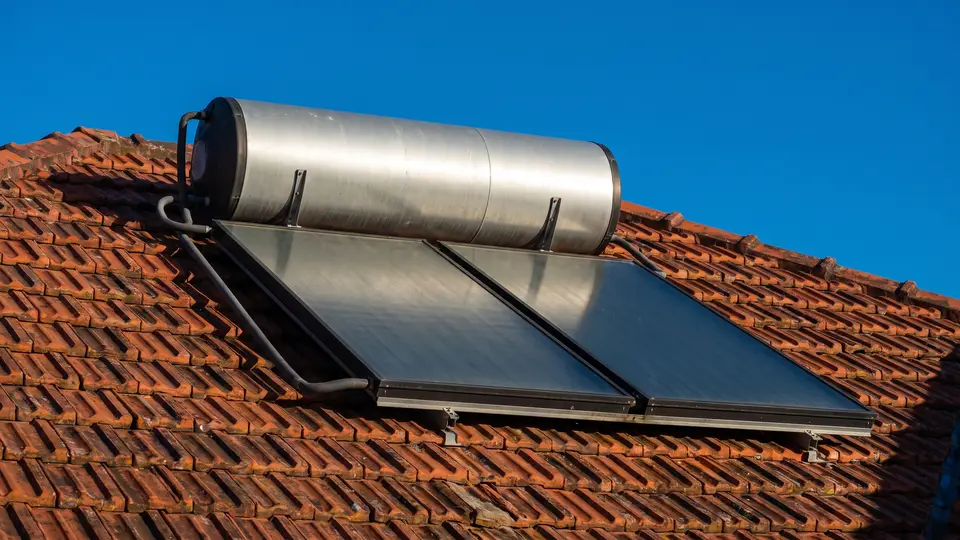
How solar hot water works
Collect
Rooftop collectors absorb sunlight and turn it into heat.
Transfer
The heat moves into the water by direct flow or through a heat exchanger.
Store
Hot water is stored in an insulated tank, on the roof or at ground level.
Boost
A gas or electric booster switches on when the sun is not enough.
Solar hot water system types
Flat plate collector
The traditional design: a dark absorber plate under glass. Simple, durable and cost-effective.
Advantages
- Lower upfront cost
- Very durable
- Easy maintenance
- Good in warm climates
Watch for
- Less efficient in cold or cloudy weather
- Needs more roof area
- Can overheat in summer
- Best for
- Warm climates (QLD, NT, northern WA)
- Price
- $3,000 to $5,000
Evacuated tube collector
Glass tubes with vacuum insulation around the absorber. Holds heat better and performs better in the cold.
Advantages
- Higher efficiency
- Works well in cold or cloudy conditions
- Individual tubes replaceable
- Needs less roof space
Watch for
- Higher upfront cost
- Tubes can break
- More complex installation
- Best for
- Cooler climates (VIC, TAS, SA, highlands)
- Price
- $4,000 to $7,000
Solar hot water vs heat pump
| Factor | Solar hot water | Heat pump |
|---|---|---|
| Upfront cost | $3,000 to $7,000 | $3,500 to $5,500 |
| Running cost | $50 to $150 a year | $150 to $250 a year |
| Cloudy days | Needs booster | Full performance |
| Roof space | Required (north-facing) | Not required |
| Maintenance | Periodic cleaning | Minimal |
| Lifespan | 15 to 20 years | 10 to 15 years |
| Best climate | Sunny (QLD, WA, NT) | All climates |
Choose solar hot water if
- You live in a sunny climate (QLD, NT, WA)
- You have good north-facing roof space
- You want the lowest possible running costs
- You prefer simple, proven technology
Choose a heat pump if
- You live in a cooler or cloudier climate (VIC, TAS)
- You have limited or shaded roof space
- You want steady performance all year
- You already have solar PV panels
Solar hot water brands
Rheem
Warranty 5 to 10 years
Flat plate & evacuated tube
Solahart
Warranty 5 to 10 years
Flat plate & thermosiphon
Apricus
Warranty 10 years
Evacuated tube specialist
Chromagen
Warranty 5 to 7 years
Flat plate systems
Hills
Warranty 5 years
Flat plate & evacuated tube
Solar hot water rebates
- FederalSTCs on every eligible system until 31 December 2030. Example: 14 certificates, about $532, on a 302 litre Solahart solar hot water system in Zone 3 installed in 2026.
- New South WalesFederal STCs. The ESS page lists no amount for solar
- VictoriaHalf the cost up to $1,000, or up to $1,400 for an Australian-made product, households with income under $150,000
- South AustraliaRetailer discount under REPS WH1 (solar electric or solar gas), no set amount
- ACTCheck with the scheme whether solar hot water qualifies for the loan
- QueenslandFederal STCs. No state hot water scheme on our records
- Western AustraliaFederal STCs. No state hot water scheme on our records
- TasmaniaFederal STCs. No state hot water scheme on our records
- Northern TerritoryFederal STCs. No state hot water scheme on our records
Rebate figures as at October 2026, at $38 a certificate. Sources checked October 2026. Sources: Clean Energy Regulator, solar water heaters and air source heat pumps; Clean Energy Regulator, register of air source heat pump models (updated 10 August 2026); Solahart, STC incentives (published 7 May 2025); NSW Government, Hot water upgrade incentive (updated 6 February 2026); Solar Victoria, Solar Homes hot water rebate (open as at 12 October 2026); SA Department for Energy and Mining, REPS activity WH1 specification 2026.1; ACT Government, Sustainable Household Scheme.
View all rebates by stateSolar hot water system prices by size
For a breakdown by collector type, brand and tank size, see the solar hot water system price guide.
180 to 250L
- Best for
- 1 to 2 people
- Price installed
- $3,000 to $4,500
300LMost popular
- Best for
- 3 to 4 people
- Price installed
- $3,500 to $5,500
325 to 400L
- Best for
- 5+ people
- Price installed
- $4,500 to $7,000
Prices are indicative and vary by collector type, brand and installation requirements. The STC discount depends on the model and your STC zone; the installer shows the certificate count on the quote.
300 litre solar hot water system
The 300L system is the most popular size for Australian families (3 to 4 people). It gives enough hot water for daily showers, laundry and the kitchen while staying cost-effective to install and run.
- Installed price
- $3,500 to $5,500
- STC example (Solahart 302L, Zone 3)
- $532
- Ideal household
- 3 to 4 people
Solar hot water in South Australia
SA solar hot water benefits
- High sunshine hours, so the collectors perform well
- Federal STCs, with the number set by the model and zone
- Retailer discount under REPS activity WH1: heat pump, solar electric, solar gas or gas water heaters only. No set amount
- SA’s high electricity prices mean faster payback
- Flat plate collectors work very well in the SA climate
Recommended for SA
Adelaide's warm climate means flat plate collectors are usually the best choice: simpler, more durable and cheaper than evacuated tubes. A 300L system typically costs $3,500 to $5,500 installed before the STC discount.
View SA rebatesFrequently asked questions
How does solar hot water work?
What is the difference between flat plate and evacuated tube solar?
How much does a solar hot water system cost?
Do solar hot water systems work on cloudy days?
What size solar hot water system do I need?
How long do solar hot water systems last?
Get a solar hot water quote
Find out if solar hot water suits your home. A licensed local installer looks at your roof, climate and usage, and recommends the system that fits.