
Cost Guide
Solar Hot Water System Cost in Australia (2026)
Full price breakdown by system type, tank size, and brand for 2026.
8 min read
Find out which hot water system suits your home
Short answer: a solar hot water system costs $3,000 to $7,200 installed before rebates, depending on the type (flat plate, evacuated tube, or heat pump) and tank size (160L to 400L). After federal STC rebates of $600 to $1,000, most households pay $2,000 to $6,000. Running costs sit between $100 and $300 per year, saving $500 to $900 annually compared to a standard electric system.
Solar hot water prices by type and tank size
Prices below are fully installed estimates including GST. The three main system types each suit different roof layouts and climates.
- Flat plate
- $3,000 to $4,000
- Evacuated tube
- $3,500 to $4,500
- Heat pump
- $3,000 to $4,200
- Flat plate
- $3,800 to $5,000
- Evacuated tube
- $4,200 to $5,500
- Heat pump
- $3,500 to $4,800
- Flat plate
- $4,200 to $5,500
- Evacuated tube
- $4,800 to $6,200
- Heat pump
- $3,800 to $5,200
- Flat plate
- $5,000 to $6,500
- Evacuated tube
- $5,500 to $7,200
- Heat pump
- $4,500 to $6,000
Prices include standard installation. Actual costs vary by location, roof type, and plumber rates.
What affects solar hot water cost?
The price you are quoted can vary by $1,000 or more depending on several factors. Here is what drives the final number.
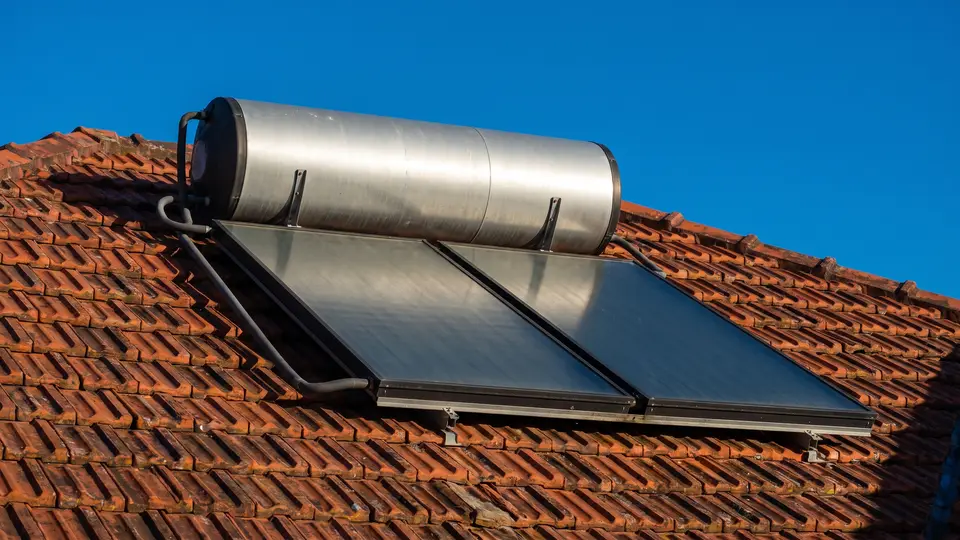
System type
Flat plate collectors are the most affordable. Evacuated tube systems cost 15 to 25% more but perform better in cooler climates. Heat pumps sit in a similar range but do not need roof-mounted collectors.
Tank size
Bigger tanks cost more. A 160L system suits a couple, while families of four or more typically need 300L or larger. Going one size up is common, to cover the days of peak demand.
Roof mount vs split system
Close-coupled (tank on roof) systems are cheaper to install because they use thermosiphon flow with no pump. Split systems with ground-level tanks add $500 to $1,000 for the circulation pump and extra plumbing.
Boosting method
Most solar hot water systems include an electric or gas booster for cloudy stretches. Gas-boosted models cost $300 to $600 more than electric-boosted equivalents, and need a gas connection.
Plumber and location
Labour rates vary between cities and regional areas. Metropolitan installs tend to be slightly cheaper because of competition. If your existing hot water system is in a difficult spot (tight roof access, long pipe runs), expect to add $300 to $800 to the base price.
Brand pricing guide
Prices vary a lot between brands. Here is where the most common names sit in the market.
Prices are indicative for a 250 to 300L system. Solahart pricing includes their installation service.
Find out which hot water system suits your home
Free, no obligation.
Rebates that reduce your cost
Government incentives bring the out-of-pocket cost down a long way. These are the main ones to know about.
Federal STCs (all states)
Small-scale Technology Certificates are the main rebate for solar hot water. Your installer claims them on your behalf and passes the value on as an upfront discount of $600 to $1,000, depending on your climate zone and system type. The discount comes off at the point of sale, so there is no paperwork for you to do.
Learn more about federal rebatesVictoria: $1,000 VEU rebate
The Victorian Energy Upgrades program provides an additional $1,000 when you replace an old electric or gas system with a solar or heat pump alternative. This stacks on top of federal STCs, so Victorian households can save $1,600 to $2,000 in total.
View Victorian rebate detailsACT: interest-free loan
The ACT Government offers interest-free loans of up to $15,000 for energy-efficient upgrades, including solar hot water. Repayments are made through your rates over up to 10 years, which makes the upfront cost easier to cover without dipping into savings.
Running cost: solar vs electric hot water
The real value of solar hot water shows up on your energy bills. Here is how annual running costs compare for a typical household of three to four people.
| System type | Running cost a year | Saving a year vs electric |
|---|---|---|
| Electric storage (off-peak) | $500 to $700 | Baseline |
| Electric storage (anytime tariff) | $800 to $1,200 | Baseline |
| Gas storage | $400 to $600 | $200 to $600 |
| Solar hot water (flat plate/tube) | $100 to $300 | $500 to $900 |
| Heat pump hot water | $150 to $300 | $500 to $900 |
Based on average electricity rates of 30 to 35c/kWh and gas rates of 3 to 4c/MJ. Actual costs depend on your tariff, usage patterns, and climate.
Over 10 years, switching from electric storage to solar hot water saves about $5,000 to $9,000 in running costs. With the upfront rebate as well, many systems pay for themselves within 4 to 7 years.
See what a new hot water system would cost you
Based on your household size, current system and climate zone.
Payback period
The payback period depends on what system you are replacing and how much sun your area gets. Replacing an anytime-tariff electric system in Brisbane or Perth gives the fastest return, often under four years. In Melbourne or Hobart, where winter sun is weaker and the booster kicks in more often, expect five to seven years.
If you are replacing a gas system, the payback stretches to six to eight years because gas running costs are already lower than electric. With gas prices rising steadily, though, the economics of switching to solar improve each year.
The next step
If you're considering a new hot water system, Andy and the team can match you with one licensed local installer for a free written quote.

Written by
Solar Installer Partner Relations
Connects homeowners with trusted, vetted solar installers across Australia. Andy works directly with installation companies to ensure quality standards and helps homeowners through the quoting process.
If you have any questions about the information in this guide, email andy@whysolar.com.au or call +61 2 5657 6527.