How much does a solar and battery package cost in Australia?add
A typical 6.6kW solar + 10kWh battery package costs $18,000 to $24,000 before rebates. After the federal rebates (about $4,520 in STC Zone 3), expect to pay $13,480 to $19,480. The solar rebate moves a little with your STC zone, and in Victoria the Solar Homes rebate takes a further $1,400 off for eligible households. These are indicative installed prices, checked 30 September 2026, not quotes.
Is it cheaper to buy solar and battery together?add
Usually. On the indicative prices on this page, a 6.6 kW and 10 kWh package costs about $500 to $3,000 less than putting in solar now and the battery later, because there is one installation visit and one hybrid inverter instead of an inverter swap. Get the bundle priced line by line before you sign, as the saving depends on the quote.
Is it worth getting battery storage with solar?add
Usually, if you use most of your power in the evening and your feed-in tariff is low. Installing both at once also avoids paying for a second inverter later.
How long will a 20 kWh battery last?add
A 20 kWh battery covers a 1 kW evening load for about 16 to 20 hours, enough for most homes overnight with charge to spare. It earns less rebate per kWh than a small battery: since 1 May 2026 the federal rate is paid in full on the first 14 kWh and at 60% from 14 to 28 kWh.
What size solar and battery package do I need?add
For an average 3 to 4 person household using 20 to 30 kWh per day, a 6.6kW solar system with a 10kWh battery is the most popular choice. Larger homes or those with EVs should consider 10kW solar with 13.5kWh+ battery. We recommend analysing your energy bills to right-size your system.
Can I get rebates on a solar and battery package?add
Yes. The federal STC rebate takes $1,560 to $2,120 off a 6.6kW solar system depending on your STC zone, and the Cheaper Home Batteries Program pays about $272/kWh on the first 14kWh of battery capacity (about $2,720 on a 10kWh battery). Some states add more: Victoria's Solar Homes rebate is $1,400 on panels for eligible households, and the WA Residential Battery Scheme pays up to $1,300 (Synergy) or $3,800 (Horizon Power). The SA Home Battery Scheme and the QLD Battery Booster have closed.
Where does "up to $8,000+" in rebates come from?add
It is the two federal programs, plus a state scheme where your state runs one. The solar STC rebate on a 13.3kW system, the largest a normal single-phase home can install, is worth $3,640 in STC Zone 3. The federal Cheaper Home Batteries discount is worth about $272 per kWh of usable capacity on the first 14kWh, roughly 30% off a typical battery, and keeps paying at a lower rate above that, so it grows with the battery. A 14kWh battery earns $3,800, which puts the two programs at $7,440. With a 24kWh battery they come to $9,080 on their own. Some states add more on top: in Perth, for example, the WA Residential Battery Scheme pays $1,300 to Synergy customers who meet its conditions, taking the 13.3kW and 14kWh system to $8,740. Your own figure depends on your system size, your STC zone and your state, and the quiz works it out.
What is included in a solar and battery package?add
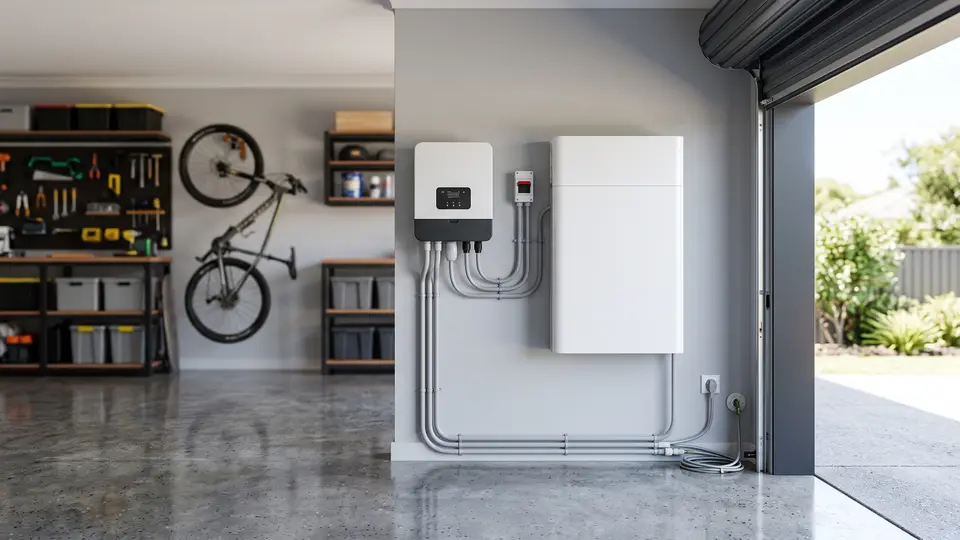
A complete package typically includes: solar panels, a hybrid inverter (handles both solar and battery), the battery unit, all mounting hardware, wiring and electrical work, council approval if needed, meter reconfiguration, system monitoring setup, and the installer's workmanship warranty on top of product warranties.
How long does a solar and battery package take to install?add
Most residential solar and battery packages are installed in 1 to 2 days. The solar panels and battery are typically installed on the same day. From signing the contract, allow 4 to 8 weeks total for paperwork, approvals, and scheduling. The actual on-site work is usually completed within a single day for standard installations.