
Battery Storage
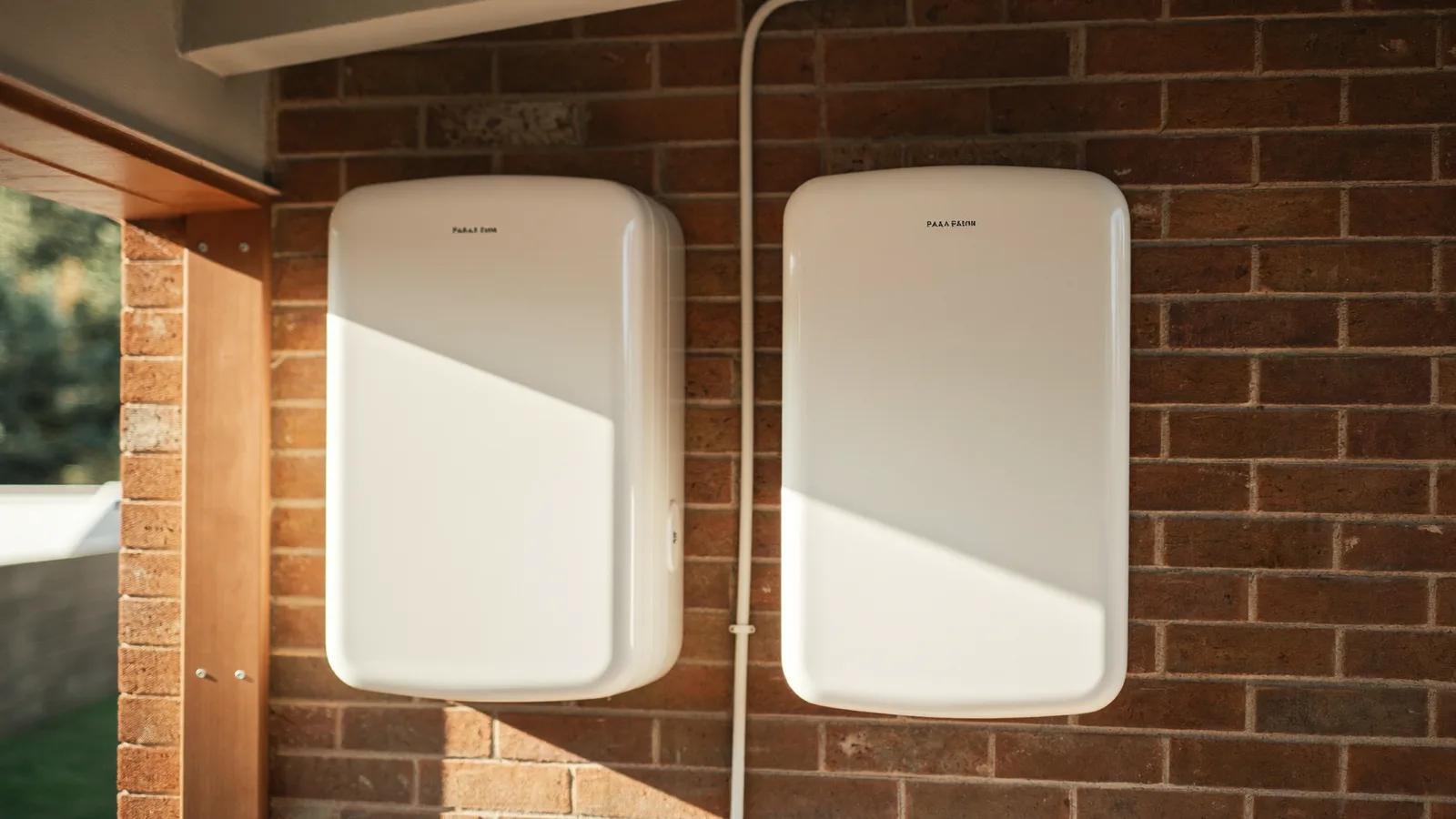
Enphase IQ Battery Review Australia 2026: AC-Coupled Storage for Any Solar System
AC coupling means the Enphase IQ Battery 5P works with any solar inverter already on your roof. The 15-year warranty is the longest available in Australia. Here is what homeowners need to know.
Your battery rebate, checked before you sign
9 min read
The federal rebate takes about $3,610 off a 14 kWh battery installed before 1 January 2027, when it steps down.
Current battery rates end 1 January 2027 · 80 days remaining
AC Coupling: The Feature That Changes Who This Battery Is For
Most home batteries sold in Australia are DC-coupled. That means they connect between your solar panels and the inverter on the DC side of the system, and they require a compatible hybrid inverter to function. If you already have a solar system with a standard grid-tied inverter, DC-coupled batteries often mean replacing your inverter entirely, adding $1,500 to $3,000 to the cost of a battery retrofit.
The Enphase IQ Battery 5P is AC-coupled. It connects on the AC side of your existing inverter, after the inverter has already converted solar DC to grid AC. The battery charges and discharges as AC power, independently of whatever inverter is on your roof. The practical result: you can add the Enphase battery to a system with a Fronius, SMA, ABB, Delta, or any other grid-tied inverter without touching your existing equipment.
For the large number of Australian homeowners who installed solar five to ten years ago and now want to add storage, this is a meaningful advantage. It removes the inverter replacement cost from the retrofit calculation and lets your existing, functioning inverter keep doing its job.
Specifications at a Glance
| Specification | Enphase IQ Battery 5P |
|---|---|
| Usable capacity | 5.0 kWh per unit |
| Maximum configuration | Up to 4 units (20 kWh) |
| Continuous power output | 3.84 kW per unit (15.36 kW at 4 units) |
| Coupling type | AC-coupled (inverter agnostic) |
| Battery chemistry | LFP (LiFePO4) |
| Warranty | 15 years |
| IP rating | IP55 |
| Operating temperature | -20°C to 50°C |
| Monitoring | Enphase App (via IQ System Controller) |
Source: Enphase product documentation. Specifications as of April 2026.
Your battery rebate, checked before you sign
The federal rebate takes about $3,610 off a 14 kWh battery installed before 1 January 2027, when it steps down. One Why Solar Approved installer near you, and fifteen minutes with a solar expert before you sign.
Current battery rates end 1 January 2027 · 80 days remaining
The 15-Year Warranty: What It Actually Means
Ten years has become the standard warranty term for home batteries in Australia. The Enphase IQ Battery 5P offers 15 years, which is the longest standard warranty of any mainstream battery currently sold here. This is not a minor marketing point.
A battery installed today with a 15-year warranty is covered until 2041. By that point, time-of-use electricity tariffs, VPP participation, and demand charges will have evolved considerably. A battery that is still under manufacturer coverage in 2041 maintains options for the homeowner in ways a 10-year battery that expired in 2036 does not.
The performance guarantee within the warranty specifies 70% remaining capacity at end of term, which is consistent with the rest of the category. The LFP chemistry supports this comfortably. LFP cells typically retain well above 80% capacity at the 3,000-cycle mark, and 15 years of daily cycling at one cycle per day is 5,475 cycles. Enphase's rated cycle life significantly exceeds that number.
2026 Pricing and the Federal Rebate
The Enphase IQ Battery 5P is priced per unit, which is important to account for correctly when comparing to single-unit batteries like the Tesla Powerwall 3.
| Configuration | Installed price (pre-rebate) | After CHB rebate (approx.) |
|---|---|---|
| 1 unit (5 kWh) | $5,500 to $8,500 | ~$4,208 to $7,208 |
| 2 units (10 kWh) | $10,000 to $15,000 | ~$7,416 to $12,416 |
| 3 units (15 kWh) | $14,500 to $21,000 | ~$10,738 to $17,238 |
| 4 units (20 kWh) | $18,500 to $26,000 | ~$13,978 to $21,478 |
Prices are estimates as of April 2026. Federal rebate based on approximately $258/kWh on the first 14 kWh, less above that. Actual price varies by installer, location, and electrical complexity.
The per-unit pricing reflects the modular nature of the product. You start with one unit and add more if your needs grow. There is no large upfront commitment to a 13.5 kWh system if a 5 kWh or 10 kWh system suits your current usage. For households that want to test battery economics before committing to a full system, this is a genuine advantage.
Note that the federal Cheaper Home Batteries rebate applies per unit installed, so each 5 kWh unit attracts approximately $1,292 of rebate at the current rate. Installing two units at the same time attracts roughly $2,584 total, which is proportionally similar to other 10 kWh batteries in the market.
Retrofitting to an Existing Solar System
This is where the Enphase IQ Battery genuinely earns its place in the market. Australian homeowners who installed solar between 2012 and 2020 often have string inverters from Fronius, SMA, ABB, Growatt, or other manufacturers. Most of those inverters are still functioning well and have no reason to be replaced. Adding DC-coupled battery storage to those systems typically requires an inverter swap, which most installers will tell you adds $2,000 to $3,000 to the project.
With AC coupling, the Enphase IQ Battery sidesteps this completely. Your existing inverter keeps converting solar DC to AC. The Enphase unit connects on the AC side and charges from the same AC power. At night, it discharges AC power back to your home. The existing inverter is untouched.
The only additional hardware required is an Enphase IQ System Controller, which manages the battery units, monitors energy flows, and enables backup functionality. This is a standard component of any Enphase installation and is included in installer quotes.
AC Coupling: The Efficiency Trade-Off
AC coupling is not without a trade-off. DC-coupled batteries are slightly more efficient because solar energy flows directly from panels to battery at DC voltage, avoiding the DC-to-AC conversion step. AC-coupled batteries convert DC solar to AC first (via the solar inverter), then convert AC back to DC to charge the battery, then convert DC back to AC when discharging. Each conversion step loses a small amount of energy as heat.
In practice, the round-trip efficiency difference is roughly 3 to 5 percentage points across a daily cycle. For a 10 kWh system cycling once per day, that is approximately 0.3 to 0.5 kWh of additional loss per day, or roughly $60 to $100 per year at typical electricity tariff rates.
Whether this matters depends on your situation. If you are retrofitting to a system where the alternative is replacing a functioning $2,500 inverter to accommodate DC coupling, the AC coupling efficiency loss will take many years to cost you what you would have paid for the inverter replacement. For new installs where you are choosing all equipment from scratch, DC-coupled systems from BYD or Sungrow paired with a compatible hybrid inverter are marginally more efficient but require you to commit to a specific inverter ecosystem.
See the battery rebate your quote should show
The federal rebate takes about $3,610 off a 14 kWh battery installed before 1 January 2027, when it steps down. Then a solar expert goes through it with you, and your quote, before you sign.
Current battery rates end 1 January 2027 · 80 days remaining
Monitoring and App Experience
Enphase has built its business around monitoring hardware as much as energy hardware. Their IQ System Controller connects to the Enphase app and provides detailed visibility into solar production, battery state, grid import and export, and individual unit performance. The app is well-regarded for clarity and reliability.
Enphase also offers a web-based monitoring portal for installers and homeowners who want more detailed reporting than the mobile app provides. Historical data, energy flow charts, and performance comparisons are all available. For homeowners who like to track their system closely, the Enphase monitoring platform is among the better options in the category.
How It Compares to the Main Alternatives
| Battery | Coupling | Capacity range | Warranty | Works with any inverter |
|---|---|---|---|---|
| check_circleEnphase IQ Battery 5P | AC (inverter agnostic) | 5 to 20 kWh | 15 years | Yes |
| Tesla Powerwall 3 | DC (integrated inverter) | 13.5 to 54 kWh | 10 years | No (requires Tesla Certified Installer) |
| BYD Battery-Box HVS | DC (high-voltage) | 5.1 to 22.1 kWh | 10 years | Compatible inverters only |
| Sungrow SBR | DC (high-voltage) | 9.6 to 25.6 kWh | 10 years | Sungrow hybrid inverters only |
Comparison as of April 2026. Inverter compatibility information is indicative; confirm with your installer for your specific setup.
Who the Enphase IQ Battery 5P Suits
Strong fit for these buyers
- Existing solar owners with non-compatible inverters: If your current inverter is not compatible with DC-coupled batteries, AC coupling removes the inverter replacement cost from your retrofit. This is the Enphase IQ Battery's clearest advantage.
- Households that want to start small: A single 5 kWh unit lets you test battery economics without committing to 10 or 13.5 kWh upfront. You can add units later as your confidence and budget allow.
- Buyers who prioritise warranty longevity: A 15-year warranty provides coverage five years beyond every other mainstream battery in Australia. If long-term manufacturer backing is important to you, Enphase is the clear leader.
- Existing Enphase microinverter owners: If your solar system already uses Enphase IQ8 microinverters, adding the IQ Battery keeps everything in the same monitoring platform and ecosystem.
Less suited for these buyers
- New installs optimising for efficiency: If you are starting fresh with no existing inverter, DC-coupled systems from BYD or Sungrow are slightly more efficient and often cheaper for a complete new system when you account for the hybrid inverter cost.
- High-draw households needing peak power output: A single IQ Battery 5P delivers 3.84 kW continuous output. If you need 8+ kW during backup (ducted air conditioning plus other loads), you need at least two or three units to match the continuous power of the Tesla Powerwall 3.
- Budget-first buyers wanting maximum kWh per dollar: The BYD and Sungrow DC-coupled systems typically deliver more storage per dollar on a new install. The Enphase premium is justified by flexibility and warranty, not raw cost efficiency.
Verdict: The Right Battery for Retrofit Flexibility
The Enphase IQ Battery 5P occupies a specific and well-defined position in the Australian battery market. It is not the cheapest option per kWh, and it is not the highest-output option. What it offers is genuine inverter agnosticism, modular flexibility, and the longest warranty in the category.
For the homeowner who installed solar in 2015 with a Fronius or SMA inverter and now wants to add storage without replacing functioning equipment, the Enphase IQ Battery is the most logical choice. The inverter compatibility advantage alone removes a cost and complexity barrier that would otherwise make the project harder to justify.
For new installs where you are starting with a blank slate, compare the total system cost carefully. The AC coupling efficiency trade-off and per-unit pricing can push the total cost above comparable DC-coupled systems at the same capacity, though the 15-year warranty partially offsets this over the long term.
To compare quotes including Enphase alongside other battery options for your home, use the Why Solar quote tool. It takes about two minutes and there is no obligation.
The next step
If you're considering a home battery system, Andy and the team can match you with one Why Solar Approved installer near you for a free written quote, and fifteen minutes with a solar expert before you sign.

Written by
Solar Installer Partner Relations
Connects homeowners with trusted, vetted solar installers across Australia. Andy works directly with installation companies to ensure quality standards and helps homeowners through the quoting process.
If you have any questions about the information in this guide, email andy@whysolar.com.au or call +61 2 5657 6527.