
EVs in Australia
The most popular electric cars Australians can buy, compared on price, range, charging speed and who each one suits best.
Prices shown are approximate driveaway from manufacturer. Always confirm with your dealer.
Popular EVs in Australia
Tesla Model YTop seller
Mid-size SUV
From$65,900
- Range (WLTP)
- 533km
- DC fast charge
- 250kW
- Connector
- NACS (with adapter)
- Top speed
- 217km/h
Best for: Families and those wanting best charging network access
Tesla Model 3
Mid-size Sedan
From$55,900
- Range (WLTP)
- 629km
- DC fast charge
- 170kW
- Connector
- NACS (with adapter)
- Top speed
- 225km/h
Best for: Commuters and those prioritising range
BYD Atto 3
Compact SUV
From$44,990
- Range (WLTP)
- 420km
- DC fast charge
- 88kW
- Connector
- CCS2
- Top speed
- 160km/h
Best for: Budget-conscious buyers wanting a practical SUV
BYD Seal
Mid-size Sedan
From$54,990
- Range (WLTP)
- 570km
- DC fast charge
- 150kW
- Connector
- CCS2
- Top speed
- 180km/h
Best for: Tesla Model 3 alternative with longer range
MG4
Hatchback
From$38,990
- Range (WLTP)
- 435km
- DC fast charge
- 117kW
- Connector
- CCS2
- Top speed
- 160km/h
Best for: First-time EV buyers on a tighter budget
Hyundai Ioniq 6
Mid-size Sedan
From$55,000
- Range (WLTP)
- 614km
- DC fast charge
- 220kW
- Connector
- CCS2
- Top speed
- 185km/h
Best for: Long-distance drivers and efficiency-focused buyers
Kia EV6
Mid-size Crossover
From$60,000
- Range (WLTP)
- 528km
- DC fast charge
- 233kW
- Connector
- CCS2
- Top speed
- 185km/h
Best for: Style-conscious buyers who want fast charging
Polestar 2
Fastback
From$65,400
- Range (WLTP)
- 551km
- DC fast charge
- 205kW
- Connector
- CCS2
- Top speed
- 205km/h
Best for: Premium buyers wanting Scandinavian design and performance
Range figures are WLTP estimates. Real-world range varies based on driving conditions, speed, temperature and load. Prices are approximate and change regularly.
EV against petrol: the real cost of ownership
- Purchase price
- Petrol car$35,000 to $55,000Electric car$38,000 to $66,000
- EVs typically cost more upfront
- Fuel / charging (15,000km/yr)
- Petrol car~$2,160Electric car~$112 to $675
- Grid or solar charging
- Servicing (annual)
- Petrol car$400 to $800Electric car$150 to $300
- No oil changes, fewer brakes
- Registration
- Petrol carStandardElectric carStandard (some state concessions)
- 5-year total running cost
- Petrol car~$16,000Electric car~$3,000 to $5,000
- Excludes depreciation
Running costs based on 15,000km/year. EV charging cost assumes a mix of grid ($0.30/kWh) and solar.
State incentives for EVs
- NSW
- Stamp duty: Exempt under thresholdRegistration: StandardOther: EV Ready Communities program
- QLD
- Stamp duty: Zero stamp duty on eligible EVsRegistration: StandardOther: $3,000 subsidy program (check current status)
- VIC
- Stamp duty: Exempt under $40,000, concessional aboveRegistration: StandardOther: Road user charge applies (2.8c/km)
- SA
- Stamp duty: Exempt on eligible new EVsRegistration: StandardOther: Subsidy program has ended. Check for updates
- WA
- Stamp duty: Exempt on eligible new EVsRegistration: StandardOther: EV Ready Homes program for charger rebates
- ACT
- Stamp duty: Zero duty on eligible EVsRegistration: Discount appliesOther: Interest-free EV loan scheme
The federal Fringe Benefits Tax exemption applies to eligible EVs under the luxury car tax threshold when acquired through a novated lease. This can effectively reduce the purchase cost by 20 to 40% for employees. Talk to your employer or a novated lease provider for details.
Frequently asked questions
What is the most popular EV in Australia?
Can I get an EV rebate in Australia?
What connector type do Australian EVs use?
How do I charge my EV at home?
Is the EV range good enough for Australian conditions?
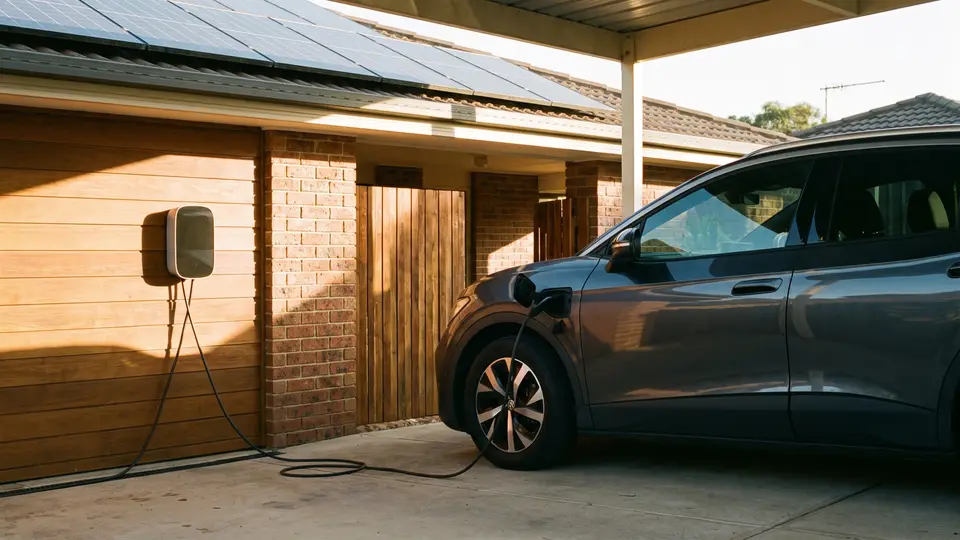
Charge your new EV with solar
A 6.6kW solar system can charge a typical EV most summer days. Up to $8,000+ in solar and battery rebates. One Why Solar Approved installer, one free written quote, and fifteen minutes with a solar expert before you sign. Ask them about a home charger while you are at it.