
Solar Technology
Microinverters vs String Inverters: Which Is Right for Your Roof?
The inverter is the brain of your solar system, yet most buyers barely think about it. Here's an honest, data-backed guide to microinverters, string inverters, and the hybrid option most people overlook.
Your solar rebate, checked before you sign
10 min read
Find out what your home actually needs
In short
Microinverters (Enphase IQ8) cost 20 to 30% more but offer 25-year warranties, panel-level monitoring, and 5 to 20% more energy on complex roofs. String inverters (Fronius, Sungrow) are cheaper with 10 to 15 year warranties and ideal for simple, unshaded, single-plane roofs. Neither is universally better. It depends on your roof.
If you have been looking at solar panel solutions or just starting to understand how solar works, chances are someone has told you that the inverter matters just as much as the panels themselves. They are right. The inverter converts the raw DC electricity your panels produce into usable AC power for your home, and the type you choose affects performance, reliability, monitoring, and what happens when something goes wrong.
Browse any thread on Reddit's r/AusSolar or Whirlpool and you will find passionate arguments for both microinverters and string inverters. Neither is universally “better.” The right choice depends on your roof shape, your shading situation, your budget, and whether you plan to add a battery down the track.
Let me walk you through exactly how each type works, when each one wins, the shading myth most people get wrong, and the third option, hybrid inverters, that most new installs should seriously consider.
How string inverters work: One box for the whole array
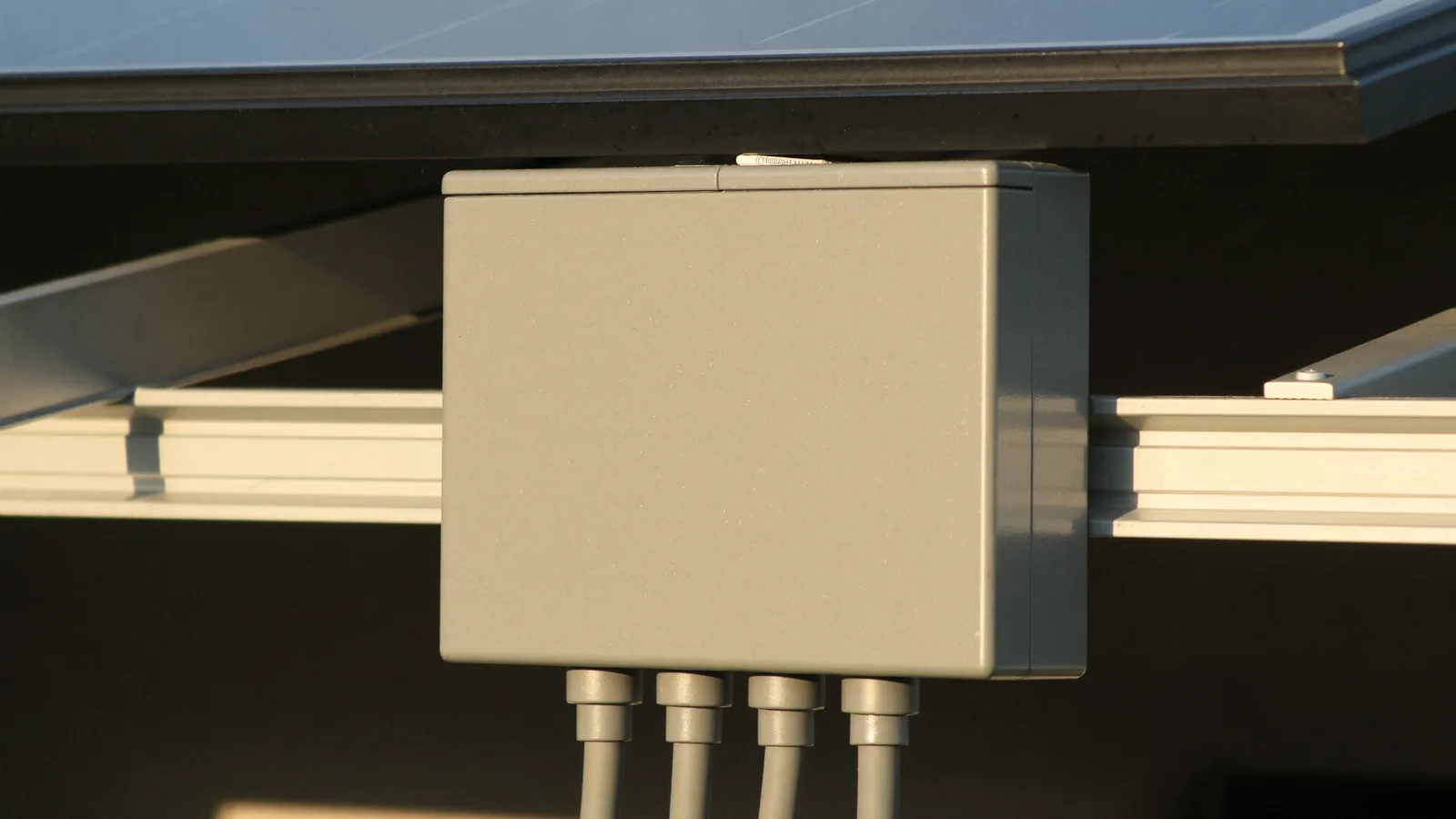
A string inverter is a single unit, roughly the size of a briefcase, mounted on your garage wall or beside your meter box. All of your solar panels are wired together in one or two “strings,” and the combined DC power from the entire array flows into this central box. The inverter then converts it to 240V AC electricity your home can use.
Every string inverter contains a feature called Maximum Power Point Tracking (MPPT). Each MPPT input handles one string of panels and constantly adjusts voltage to extract the maximum possible power. A typical residential inverter has one or two MPPT inputs, which means you can split your panels across two different roof faces (for example, north and west) and each string is optimised independently.
The limitation? Within each string, panels are connected in series. This means the lowest-performing panel on a string drags down the output of every other panel on that same string. If one panel cops shade from a chimney at 3pm, the whole string suffers. Think of it like fairy lights wired in series: one weak link dims them all.
To combat this, you can add power optimisers (from brands like SolarEdge or Tigo) to each panel. Optimisers do panel-level MPPT before feeding power to the string inverter. They do not eliminate the central inverter, but they do neutralise the “weakest link” problem. More on that later.
Find out what your home actually needs
Free, takes 60 seconds, no obligation.
How microinverters work: One brain per panel
A microinverter is a small unit fitted directly underneath each individual solar panel. Instead of sending DC power down to a central box on your wall, every panel converts its own DC to AC right there on the roof. Each panel operates completely independently of its neighbours.
This architecture means that if one panel is shaded, dirty, or underperforming, only that panel's output drops. The other nineteen panels keep producing at full capacity. It also means you get per-panel monitoring: you can open an app on your phone and see exactly how much each panel produced today, this week, or this year.
Enphase dominates the microinverter market in Australia. Their latest IQ8 and IQ8+ models carry a 25-year warranty, more than double the standard 10 to 12 year warranty on most string inverters. Given that the inverter is the component most likely to fail during a solar system's life, that warranty difference is significant.
The reliability numbers
Microinverters have a documented annual failure rate of just 0.055%, compared to 0.89% for string inverters. That makes a string inverter roughly 16 times more likely to fail in any given year. When a string inverter does fail, it is a single wall-mounted unit to swap. When a microinverter fails, someone needs to get on the roof and access the specific panel, which costs more per event but happens far less often.
Head-to-head comparison
| Feature | String Inverter | Microinverter |
|---|---|---|
| Upfront Cost (6.6kW) | ✓ $5,500 to $7,500 | $7,500 to $9,500 |
| Peak Efficiency | ✓ 97 to 98% | 96 to 97% |
| Monitoring | System-level (per-string) | ✓ Individual panel-level |
| Shading Tolerance | Poor without optimisers | ✓ Excellent (panel-level) |
| Warranty | 10 to 12 yr (ext. to 15) | ✓ 25 years (Enphase) |
| Failure Impact | Whole system goes down | ✓ Only one panel affected |
| Scalability | Limited by inverter capacity | ✓ Add panels anytime |
| Battery Compatibility | ✓ Hybrid models have built-in port | Requires separate AC-coupled battery |
| Replacement | ✓ Easy: single wall-mounted unit | Requires roof access per unit |
Neither column is a clean sweep. String inverters win on cost, peak efficiency, battery readiness, and ease of replacement. Microinverters win on monitoring, shading tolerance, warranty, failure isolation, and future expandability. Your roof and your priorities determine which advantages matter more. For a deeper side-by-side, see our full inverter comparison tool.
When a string inverter makes more sense
For many Australian homes, a quality string inverter is genuinely the smartest choice, not a compromise:
Simple roof with a single plane and no shading
If all your panels sit on one clean, unshaded, north-facing roof section, a string inverter will perform almost identically to microinverters. The production gain from panel-level optimisation is negligible when conditions are already ideal.
Budget is a primary concern
The 20-30% saving on total system cost is meaningful. If you are choosing between a quality string inverter system now or waiting another year to afford microinverters, go with the string inverter. The best time to start saving on electricity is today.
You want a battery-ready (hybrid) inverter from day one
Hybrid string inverters from Fronius, GoodWe, and Sungrow have a built-in battery port. Adding a battery later is as simple as plugging it in. With microinverters, you need a separate AC-coupled battery system, which can be more expensive.
Easy replacement access matters to you
When a string inverter fails, it is a single wall-mounted box. Your installer swaps it in an hour or two with no roof access required. Microinverter replacement means scaffolding, removing a panel, and swapping the unit underneath.
When microinverters are the better choice
Microinverters are not always worth the premium, but there are clear situations where they pull ahead significantly:
Complex roof with multiple orientations or dormers
If you have panels facing north, west, and east across different roof sections with varying pitches, microinverters let each panel optimise independently. String inverters with just two MPPT inputs cannot handle three or four orientations well.
Genuine partial shading from structures or neighbours
A chimney shadow that moves across several panels throughout the day, or a neighbouring building that blocks afternoon sun on half your array, is where microinverters truly shine. Each shaded panel drops independently without dragging down its neighbours.
You plan to expand the system in future
Adding panels to a microinverter system is straightforward: bolt on new panels, each with its own microinverter. With a string inverter, you are limited by the inverter capacity and string configuration. Expanding often means oversizing the inverter from day one or replacing it later.
You want per-panel monitoring and diagnostics
The Enphase Enlighten app shows production for every individual panel. If a panel underperforms, you will know exactly which one and by how much. String inverters only show system-level or string-level data, making fault diagnosis slower.
Long-term reliability is your top priority
With a 25-year warranty and a 0.055% annual failure rate, Enphase IQ8+ microinverters are the set-and-forget option. If minimising future maintenance and replacement costs matters most, the numbers favour microinverters.
Your rebate, worked out to your address
Then one Why Solar Approved installer near you, and fifteen minutes with a solar expert before you sign.
The shading myth: Often overstated, sometimes real
“You need microinverters because of shading” is one of the most common lines you will hear from salespeople pushing the higher-margin product. Let me give you the nuanced truth.
Partial shading is a real issue. It absolutely does reduce the output of a string inverter system. But the impact is often overstated, and there are cheaper ways to deal with it than jumping straight to microinverters.
Power optimisers (SolarEdge, Tigo) fitted to a string inverter handle most moderate shading scenarios perfectly well. They cost a fraction of a full microinverter system and give you panel-level MPPT plus panel-level monitoring. For a roof where one corner catches shadow from a tree for two hours in the afternoon, optimisers on a string inverter are usually the sweet spot.
Where microinverters genuinely win on shading is when the roof is complex and the shading is extensive: multiple orientations, large dormers, chimneys casting shadows that sweep across half the array, or neighbouring multi-storey buildings blocking significant portions of the sky. In those scenarios, the per-panel independence of microinverters delivers meaningfully higher lifetime output.
A good installer will run a shade analysis using tools like Nearmap or a SunEye device and tell you honestly whether your shading situation warrants microinverters, optimisers, or neither. If they skip the shade analysis entirely, that is a red flag. Check our guide on how to vet a solar installer.
Rule of thumb: If your roof has light, intermittent shading on a few panels, optimisers on a string inverter are usually enough. If your roof has heavy shading, multiple orientations, or complex geometry, microinverters are the safer bet. If your roof is clean and unshaded, you do not need either. A standard string inverter does the job.
Popular inverter options in Australia
Here are the brands and models you will see quoted most often by Australian installers. All are on the Clean Energy Council's approved list and are widely available locally.
| Brand | Type | Warranty | Approx Price | Best For |
|---|---|---|---|---|
| Enphase IQ8+ | Microinverter | 25 years | $2,500 to $4,000 (full set) | Complex roofs, shading, long-term reliability |
| Fronius Gen24 Plus | String / Hybrid | 10 yr (ext. 15 yr) | $1,500 to $2,500 | Simple roofs, battery-ready, #1 installer pick |
| Sungrow SG / SH | String / Hybrid | 10 yr (ext. 15 yr) | $1,000 to $2,000 | Great value, strong hybrid range |
| SolarEdge | String + Optimisers | 12 yr (ext. 25 yr) | $1,500 to $3,000 (incl. optimisers) | Moderate shading, panel-level monitoring |

Fronius Primo / Symo
#1 installer choice
String inverter · CEC approved
Austrian-made, voted number one by Australian installers in the SAA industry survey. Exceptional build quality, strong local warranty support. The benchmark for string inverters.

GoodWe DNS / EH
Popular hybrid option
String + Hybrid · CEC approved
Solid mid-range option with strong hybrid models. The EH series is one of the most popular hybrid inverters in Australia, offering a battery port at a competitive price.

Sungrow SG / SH
Great value performer
String + Hybrid · CEC approved
Excellent performance at a lower price point. Strong Australian presence and good monitoring app. Hybrid SH series is well-regarded for battery integration.

Enphase IQ8 / IQ8+
Industry-leading reliability
Microinverter · 25yr warranty · CEC approved
The dominant microinverter in Australia and globally. 0.055% annual failure rate, per-panel monitoring via Enlighten app. IQ8+ handles panels up to 460W.
Hybrid inverters: The third option most people overlook
If the microinverter vs string inverter debate dominates online forums, the hybrid inverter is the quiet third option that deserves far more attention. A hybrid inverter is essentially a string inverter with a built-in battery connection port. It does everything a standard string inverter does, plus it can take a battery whenever you want one. Our inverter battery compatibility guide covers which inverters pair with which batteries.
Why does this matter? Because battery prices are dropping every year, and there is a strong chance you will want to add one within the next 5 to 10 years. If you install a standard string inverter today and decide to add a battery in 2030, you will likely need to either replace the inverter entirely or install a separate battery inverter, both of which add significant cost.
A hybrid inverter costs only $300 to $800 more than an equivalent standard string inverter. That modest premium buys you optionality. When battery prices hit your sweet spot, you simply plug one in. No inverter swap, no extra electrician visit, no system redesign.
The most popular hybrid inverters in Australia include the Fronius Gen24 Plus, the GoodWe EH series, and the Sungrow SH series. All three are well-proven, CEC-approved, and widely supported by local installers.
Our recommendation: go hybrid
If you are choosing a string inverter and have even a slight interest in adding a battery in the future, spend the extra $300 to $800 for a hybrid model. It is one of the cheapest forms of future-proofing in solar. The alternative, retrofitting a battery onto a standard inverter later, typically costs $1,500 to $3,000 more than if you had gone hybrid from day one. For a deeper look at the battery decision, see our guide on whether solar is worth it.
What about microinverters and batteries? You can absolutely pair microinverters with a battery, but the battery needs to be AC-coupled (like the Enphase IQ Battery or Tesla Powerwall). AC-coupled batteries work well but are generally more expensive than DC-coupled batteries connected directly to a hybrid inverter. It is not a dealbreaker, just an additional cost consideration. Our battery comparison guide covers the key differences between AC-coupled and DC-coupled options.
Making your decision
If you have read this far, you probably have a decent sense of which direction suits your situation. Here is a simple decision framework to confirm:
String / Hybrid
- Single roof plane, no shading
- Budget-conscious
- Want battery-ready from day one
- Prefer simple, proven tech
- Easy wall-mounted replacement
Microinverters
- Multiple roof orientations
- Significant shading or dormers
- Want per-panel monitoring
- Plan to expand later
- Prioritise 25-year warranty
String + Optimisers
- Moderate shading on a few panels
- Want panel-level monitoring
- Prefer lower cost than micros
- Two or fewer roof orientations
- Good middle-ground option
Whichever path you choose, the most important thing is pairing quality hardware with a competent, accredited installer. A well-installed Fronius system will outperform a poorly installed Enphase system every time, and vice versa. The installer matters as much as the hardware. If you need help evaluating quotes, our guide on how to choose solar panels covers what to look for.
Still running the numbers on whether solar makes sense at all? Our solar panel cost guide breaks down current pricing by state and system size.
Frequently Asked Questions
Are microinverters worth the extra cost in Australia?expand_more
For complex roofs with multiple orientations, partial shading, or plans for future panel expansion, microinverters are usually worth the 20-30% premium. The 25-year Enphase warranty, 0.055% annual failure rate, and 5-20% higher lifetime energy yield often deliver better long-term value. For simple, unshaded, single-plane roofs on a tighter budget, a quality string inverter like Fronius or Sungrow performs almost identically at lower upfront cost.
Do I need microinverters if I have partial shading?expand_more
Not necessarily. Partial shading is real, but power optimisers fitted to a string inverter (such as SolarEdge or Tigo) handle most shading scenarios well. Microinverters are the stronger choice when your roof has genuinely complex geometry: multiple orientations, dormers, or significant obstruction from chimneys and neighbouring buildings. For light shading on an otherwise simple roof, optimisers on a string inverter are often the more cost-effective solution.
What is a hybrid inverter and should I get one?expand_more
A hybrid inverter is a string inverter with a built-in battery connection port. It lets you add a battery later without replacing the inverter. Brands like Fronius, GoodWe, and Sungrow all offer hybrid models at only a modest premium over their standard string inverters. If there is any chance you will add a battery within the next 5-10 years, choosing a hybrid inverter from day one is usually the smarter move.
Is Enphase better than Fronius for solar in Australia?expand_more
They serve different purposes. Enphase microinverters excel on complex roofs with shading or multiple orientations, and their 25-year warranty is unmatched. Fronius string inverters are the top-rated choice among Australian installers for simple, clean roof layouts, offering premium build quality and a 10-year warranty extendable to 15 years. The best choice depends on your specific roof and priorities, not on which brand is better in absolute terms.
How long do solar inverters last in Australia?expand_more
String inverters from premium brands like Fronius typically last 10-15 years, with warranties of 10 years extendable to 15. Budget string inverters may last 8-12 years. Microinverters from Enphase carry a 25-year warranty and have a documented annual failure rate of just 0.055%. Hybrid inverters follow similar lifespans to standard string inverters. Budget for at least one string inverter replacement over a 25-year solar system lifetime.
Sources
- linkClean Energy Council: Approved inverter list and accreditation standards for Australian solar installations
- linkSAA (Smart Automation Australia): Installer survey data on inverter brand preferences (161 Australian respondents)
- linkEnphase Energy: IQ8/IQ8+ product specifications, reliability data, and 25-year warranty documentation
- linkFronius International: Primo, Symo, and Gen24 Plus product datasheets and warranty terms
- linkReddit r/AusSolar: Community-reported inverter experiences, real-world failure rates, and brand comparisons
- linkWhirlpool Forums: Solar inverter discussion threads and performance data from Australian households
The next step
If you're considering solar panels or batteries for your home, Andy and the team can match you with one Why Solar Approved installer near you for a free written quote, and fifteen minutes with a solar expert before you sign.

Written by
Solar Installer Partner Relations
Connects homeowners with trusted, vetted solar installers across Australia. Andy works directly with installation companies to ensure quality standards and helps homeowners through the quoting process.
If you have any questions about the information in this guide, email andy@whysolar.com.au or call +61 2 5657 6527.