
Battery Storage
GoodWe Battery and Inverter Review for Australian Homeowners (2026)
GoodWe built its name on inverters. Now the batteries are here. Here is whether they live up to the reputation.
Your battery rebate, checked before you sign
11 min read
The federal rebate takes about $3,610 off a 14 kWh battery installed before 1 January 2027, when it steps down.
Current battery rates end 1 January 2027 · 80 days remaining
GoodWe is not a newcomer. The Chinese manufacturer, founded in 2010 and listed on the Shanghai Stock Exchange, has been selling inverters into Australia for years. Walk into most installer warehouses and you will find a GoodWe hybrid inverter on the shelf. It is the kind of brand that does not generate a lot of consumer buzz, but has quietly earned the trust of the people who matter most: the tradespeople who have to stake their reputation on the equipment they recommend.
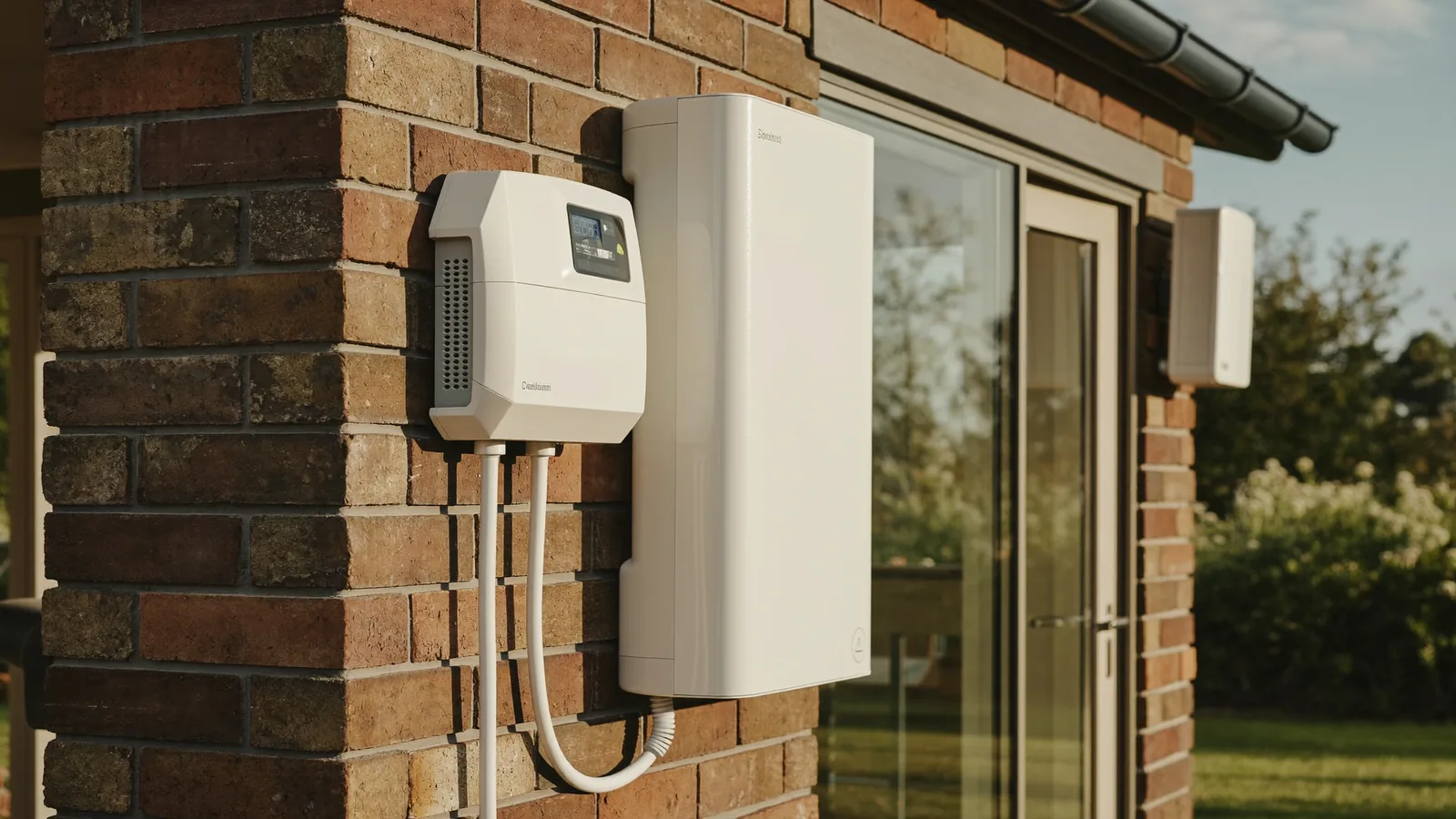
The Lynx Home battery range is GoodWe extending that track record into storage. This review covers both sides of the GoodWe equation: the hybrid inverters that established the brand, and the Lynx Home batteries that complete the system. If you are an existing GoodWe inverter owner weighing up whether to add a Lynx battery, or you are starting fresh and considering GoodWe as your all-in-one platform, this is the detail you need.
GoodWe inverters: where the reputation was built
GoodWe sits in what you might call the trusted mid-tier of the inverter market. Above the budget brands like Growatt, below the premium end of Fronius, and competitive with Sungrow across the 5kW to 10kW hybrid range that suits most Australian homes. The GW-ET and GW-ES series hybrid inverters are the workhorses of the range.
The GW-ET series (three-phase) handles larger homes and small commercial setups, while the GW-ES series (single-phase) covers the majority of residential installations. Both are battery-ready, meaning they can be installed ahead of a battery and connected to the Lynx Home system when the budget allows. That hybrid-ready approach is one reason GoodWe has accumulated such a large installed base in Australia.
On efficiency, GoodWe hybrid inverters are respectable without being exceptional. Peak efficiency sits around 97.6%, which is competitive but does not match the 99%+ figures that Fronius claims for some of its premium units. For most households, the difference in real-world generation is small. What matters more is reliability over the 10-year warranty term, and GoodWe has a solid record there.
Warranty is 10 years on all current hybrid models. GoodWe has an Australian service and support structure, which matters when something eventually needs attention.
| Model | Phase | Output range | Battery compatible | Warranty |
|---|---|---|---|---|
| GW-ES series | Single-phase | 3.6 kW to 6 kW | Yes (Lynx Home) | 10 years |
| GW-ET series | Three-phase | 5 kW to 10 kW | Yes (Lynx Home) | 10 years |
Your battery rebate, checked before you sign
The federal rebate takes about $3,610 off a 14 kWh battery installed before 1 January 2027, when it steps down. One Why Solar Approved installer near you, and fifteen minutes with a solar expert before you sign.
Current battery rates end 1 January 2027 · 80 days remaining
The Lynx Home battery range: U series and F series
GoodWe offers two Lynx Home battery lines for residential use. The U series is the flagship and the one most commonly quoted for Australian homes. The F series is a lower-cost fixed-capacity alternative aimed at buyers who know their storage needs and do not need room to expand.
Lynx Home U series
The flagship modular battery. Starts at 5.4 kWh and stacks up to six units for 32.4 kWh total. LiFePO4 chemistry, IP65 rated for outdoor installation, and designed to pair directly with GoodWe hybrid inverters.
- Base capacity: 5.4 kWh per module
- Max capacity: 32.4 kWh (6 modules)
- Chemistry: LiFePO4
- IP rating: IP65
- Warranty: 10 years
Lynx Home F series
The more affordable fixed-capacity option. Available in set sizes, making it simpler to quote and install. Suits buyers who want a no-fuss battery at a lower entry price and have no plans to expand capacity later.
- Fixed capacity: available in set sizes
- Chemistry: LiFePO4
- IP rating: IP65
- Warranty: 10 years
- Lower cost than U series
LiFePO4 (lithium iron phosphate) chemistry is the right choice for Australian conditions. It handles heat better than standard NMC lithium-ion chemistry, has a longer cycle life, and does not carry the same thermal runaway risk. Given that Australian garages regularly exceed 45°C in summer, that thermal stability is not a minor detail.
IP65 rating means the Lynx Home U can be installed outdoors or in an unventilated garage without exposure concerns. That said, GoodWe still recommends avoiding direct sunlight on the unit, as sustained radiant heat will affect long-term performance regardless of ingress protection.
GoodWe battery pricing in Australia
For a 10 to 13.5 kWh GoodWe Lynx Home U system, expect to pay roughly $10,000 to $16,000 installed before the federal Cheaper Home Batteries rebate. After the rebate (approximately $258 per kWh of eligible capacity), that comes down to around $7,416 to $12,542. These figures assume the battery is being paired with an existing compatible GoodWe hybrid inverter. If you need a new inverter as well, add another $1,500 to $3,000.
Pricing varies by installer and location. Queensland and regional areas sometimes attract a premium due to travel time. Getting two or three quotes from accredited installers remains the best way to calibrate what you should actually pay.
| System size | Before rebate (approx.) | After federal rebate (approx.) |
|---|---|---|
| 5.4 kWh (1 module) | $6,000 to $8,500 | $4,632 to $7,132 |
| 10.8 kWh (2 modules) | $10,000 to $13,500 | $7,226 to $10,726 |
| check_circle16.2 kWh (3 modules) | $13,500 to $18,000 | $9,548 to $14,048 |
| 21.6 kWh (4 modules) | $17,000 to $22,000 | $12,212 to $17,212 |
Prices are approximate installed costs as of April 2026. Federal rebate estimates based on ~$258/kWh discount on the first 14 kWh of eligible battery capacity, less above that. State rebates not included. Inverter costs not included for existing inverter owners.
The federal Cheaper Home Batteries rebate has been tiered since 1 May 2026: the full rate applies to the first 14 kWh and each kWh above that earns less. The per-kWh discount steps down again on 1 January 2027. Several states also offer rebates you can stack on top: NSW up to $1,500, South Australia up to $2,050, and Western Australia $1,300 to $3,800 depending on location and system size.
How GoodWe compares to Sungrow and Tesla
The three brands that come up most often in Australian battery conversations are Tesla, Sungrow, and GoodWe. Here is where GoodWe sits in that comparison.
| Feature | GoodWe Lynx Home U | Sungrow SBR | Tesla Powerwall 3 |
|---|---|---|---|
| Chemistry | LiFePO4 | LiFePO4 | LFP |
| Modular | Yes (5.4 kWh base) | Yes (3.2 kWh base) | No (13.5 kWh fixed) |
| Max capacity | 32.4 kWh | 25.6 kWh | 13.5 kWh (per unit) |
| Inverter included | No (needs GoodWe hybrid) | No (needs Sungrow hybrid) | Yes (built in) |
| Battery warranty | 10 years | 10 years | 10 years |
| IP rating | IP65 | IP55 | IP67 |
| Cost per kWh (after rebate) | ~$620 to $750 | ~$500 to $650 | ~$590 to $810 |
| Federal rebate eligible | Yes | Yes | Yes |
Sungrow wins on raw cost per kWh. If price is your primary concern and you are open to either brand, Sungrow will usually come out cheaper. GoodWe's advantage is its modular approach starting from a smaller base (5.4 kWh versus Sungrow's 3.2 kWh base module in a practical three-module minimum), its IP65 outdoor rating, and the existing trust that Australian installers have built up with the brand over years of inverter sales.
Tesla Powerwall 3 is a different proposition: it includes its own inverter, removing the need for a separate hybrid unit. That makes it appealing for new installations without existing inverters, and it has the widest VPP compatibility in Australia. But you pay a premium for the integration, and you lose the modular flexibility that GoodWe and Sungrow offer.
The honest assessment: GoodWe sits between Sungrow and Tesla in both price and profile. Not the cheapest, not the most feature-rich, but a genuinely well-made system backed by a manufacturer with a proven Australian track record.
Monitoring: the SEMS portal
GoodWe's monitoring platform, the SEMS portal (Smart Energy Management System), handles both inverter and battery data in one place. You get real-time visibility of solar generation, battery state of charge, home consumption, and grid import and export. It works through a web browser or the SEMS mobile app.
Among installers, SEMS has a good reputation for reliability and clarity. It is not the flashiest interface in the market, but it gives you the data you need without unnecessary complexity. Historical data is stored and accessible, which is useful when you want to review your system's performance over time or provide information to your retailer about billing disputes.
One practical note: SEMS requires the inverter to be connected via Wi-Fi or a physical Ethernet connection. Most residential installations use the Wi-Fi connection, which means the quality of your home's wireless network in the area where the inverter is installed matters. If your inverter is in a garage or meter box with poor Wi-Fi coverage, you may need a range extender to maintain a reliable monitoring connection.
See the battery rebate your quote should show
The federal rebate takes about $3,610 off a 14 kWh battery installed before 1 January 2027, when it steps down. Then a solar expert goes through it with you, and your quote, before you sign.
Current battery rates end 1 January 2027 · 80 days remaining
Who GoodWe suits
GoodWe is the most natural choice for households that already have a GoodWe hybrid inverter installed. Adding a Lynx Home battery to an existing GW-ET or GW-ES inverter is straightforward, the integration is tight, and you stay within a single ecosystem for monitoring and support. Swapping to a different brand of battery just to save a few hundred dollars rarely makes sense once you factor in compatibility testing and the reduced integration quality.
GoodWe also suits buyers who want the flexibility of modular capacity without the complexity of a new ecosystem. Starting with one 5.4 kWh Lynx Home U module and adding a second later is a legitimate strategy for households whose budget is limited now but who expect their energy needs to grow, for instance when an EV arrives or when feed-in tariffs drop further and self-consumption becomes more valuable.
If you are starting completely from scratch with no existing inverter, GoodWe is still a solid choice, but worth comparing directly with Sungrow on price. Both will give you a reliable 10-year system. The decision often comes down to which brand your preferred installer has more experience with, since installation quality matters as much as the hardware itself.
GoodWe is probably not the right call if you prioritise VPP earnings above everything else. GoodWe batteries have VPP capability, but the breadth of VPP provider support does not match Tesla Powerwall 3. If maximising grid services revenue is your primary goal, check VPP compatibility with your preferred provider before committing.
GoodWe is a strong choice if:
- You already have a GoodWe hybrid inverter and want to add battery storage
- You want modular capacity with room to expand
- You want a brand that Australian installers know and trust
- You want solid value without compromising on quality or warranty
The verdict
GoodWe does not need to reinvent the battery market. It just needs to apply the same consistent, installer-backed reliability that earned it a place in thousands of Australian homes as an inverter brand. From what the Lynx Home series delivers, that is exactly what it has done.
The 10-year warranty, LiFePO4 chemistry, modular design, IP65 outdoor rating, and tight integration with GoodWe hybrid inverters make for a compelling package. It is priced between Sungrow (cheaper) and Tesla (more expensive and more integrated), which is exactly where you would expect it to sit given its market positioning.
For most Australian households considering a GoodWe battery, the decision is less about whether GoodWe is good enough and more about which size makes sense for your household. Use the battery savings calculator to model your payback based on your actual usage, then get a few quotes from accredited installers to confirm the installed price in your area.
If you want a comparison across all the major battery brands currently available in Australia, the best solar batteries in Australia guide covers them side by side.
Sources
- GoodWe Australia: Lynx Home U and Lynx Home F product specifications and warranty documentation
- GoodWe: GW-ET and GW-ES hybrid inverter datasheets
- DCCEEW: Cheaper Home Batteries Program, rebate eligibility and rates
- Installer pricing data from CEC-accredited installers across NSW, VIC, QLD, SA, and WA (March to April 2026)
- GoodWe SEMS Portal product documentation
The next step
If you're considering a home battery system, Andy and the team can match you with one Why Solar Approved installer near you for a free written quote, and fifteen minutes with a solar expert before you sign.

Written by
Solar Installer Partner Relations
Connects homeowners with trusted, vetted solar installers across Australia. Andy works directly with installation companies to ensure quality standards and helps homeowners through the quoting process.
If you have any questions about the information in this guide, email andy@whysolar.com.au or call +61 2 5657 6527.