
Battery Storage
Fox ESS Battery Review Australia 2026: EasyCube Honest Assessment
Fox ESS is making a lot of noise in 2025 and 2026, and for good reason. Near-premium specs at mid-tier pricing, a genuine supply chain story behind the price, and a modular system that scales. Here is what you need to know before buying.
Your battery rebate, checked before you sign
10 min read
The federal rebate takes about $3,610 off a 14 kWh battery installed before 1 January 2027, when it steps down.
Current battery rates end 1 January 2027 · 80 days remaining
Fox ESS has gone from unknown to one of the most-quoted battery brands in Australia in just a few years. At installer expos and in homeowner forums, the EasyCube keeps coming up, usually in the same breath as questions about whether a relatively young company can be trusted for a 10-year battery commitment. That is the tension this review sits in. The specs are genuinely competitive, the price is hard to argue with, and the supply chain story is more interesting than most battery brands can tell. But the brand only launched in 2019, and some experienced installers still want to see another few years of track record before they commit to it as their first recommendation.
This review covers what Fox ESS actually is, how the EasyCube battery system works, what you can expect to pay in 2026, and where the brand still has something to prove.
Who is Fox ESS and why does the parent company matter?
Fox ESS was founded in 2019 as a wholly owned subsidiary of Tsingshan Group. That name might not mean much to most homeowners, but Tsingshan is the world's largest producer of nickel, which happens to be a critical raw material in lithium iron phosphate (LFP) battery cells. The Fox ESS EasyCube uses LFP chemistry, and Tsingshan's vertical control over the nickel supply chain gives the company a genuine cost advantage at the manufacturing level. It is one of the more credible explanations for why Fox ESS can price its batteries below most Western and Japanese competitors without appearing to cut corners on the hardware.
In Q4 2024, Fox ESS was added to the BloombergNEF Tier 1 energy storage manufacturer list. That designation is meaningful: it is not awarded for brand recognition, but for demonstrated manufacturing scale, financial stability, and quality management systems. Achieving Tier 1 status after only five years in business is uncommon, and it gives Australian buyers more confidence that this is not a fly-by-night operation.
Fox ESS also manufactures its own hybrid inverters, notably the H3 series and the all-in-one AIO-H3. These have gained traction in Australia independently of the battery, which means there are now installers with Fox ESS inverter experience who can also install the EasyCube. That installer familiarity matters for post-installation support.
Your battery rebate, checked before you sign
The federal rebate takes about $3,610 off a 14 kWh battery installed before 1 January 2027, when it steps down. One Why Solar Approved installer near you, and fifteen minutes with a solar expert before you sign.
Current battery rates end 1 January 2027 · 80 days remaining
The EasyCube: what it is and how it works
The EasyCube E is Fox ESS's main residential battery. Each module holds 5.12 kWh of usable capacity and can be stacked with additional modules to build a system from 5.12 kWh up to 30.72 kWh. For most Australian households, the sweet spot is two modules (10.24 kWh) or three modules (15.36 kWh), depending on daily consumption and how much solar generation the household produces.
The high-voltage architecture is one of the EasyCube's more interesting technical features. Most low-cost residential batteries operate at 48V or thereabouts. The EasyCube operates above 200V. Higher voltage means lower current for the same power output, which in turn reduces resistive heat losses in the cabling and the battery management system. The practical result is a better round-trip efficiency: more of the energy you charge into the battery comes back out when you need it. On a system cycling daily, even a one or two percentage point improvement in round-trip efficiency compounds into meaningfully more savings over the battery's lifetime.
The EasyCube also uses lithium iron phosphate chemistry. LFP is more thermally stable than standard lithium nickel manganese cobalt (NMC) chemistry, making it better suited to the high temperatures Australian garages and outdoor enclosures reach in summer. The IP65 rating means the unit can handle dust and water jets, so outdoor installation is viable where the home design calls for it.
| Specification | EasyCube E |
|---|---|
| Chemistry | Lithium iron phosphate (LFP) |
| Base module capacity | 5.12 kWh |
| Maximum stackable capacity | 30.72 kWh (6 modules) |
| Architecture | High-voltage (200V+) |
| IP rating | IP65 |
| Warranty | 10 years |
| Cycle life | 6,000 cycles to 80% capacity |
| Approvals | CEC listed, BNEF Tier 1 |
Specifications based on Fox ESS EasyCube E product documentation. Verify with your installer for the most current datasheet.
What does the Fox ESS EasyCube cost in Australia?
Based on installer pricing gathered in early 2026, a Fox ESS EasyCube system for a typical household works out to approximately $8,000 to $13,000 installed before any rebates. For a two-module setup (10.24 kWh), most households are landing in the $9,000 to $11,000 range before rebates.
After applying the federal Cheaper Home Batteries rebate (approximately $258 per kWh of eligible capacity), a 10 kWh system effectively drops by around $2,584, bringing the out-of-pocket cost to roughly $5,416 to $10,416 installed. That puts Fox ESS at the more affordable end of reputable batteries in Australia, below Tesla Powerwall 3 and broadly in line with, or slightly below, Sungrow at comparable capacities.
If you are in New South Wales, South Australia, or Western Australia, state rebates can be stacked on top. NSW offers up to $1,500 via the PDRS VPP incentive. South Australia adds up to $2,050 through its REPS scheme. Western Australia offers $1,300 to $3,800 depending on location and battery size. Check the rebates page for current state-by-state details.
The federal rebate also moved to a tiered structure on 1 May 2026. The previous flat rate of approximately $300/kWh became about $258/kWh on the first 14 kWh, with less paid on capacity above that, so a typical 10 kWh Fox ESS setup receives the full current rate on all of its capacity.
What the Fox ESS EasyCube does well
The value proposition is the starting point. At roughly $130 to $160 per usable kWh installed (before rebates), the EasyCube sits among the most competitively priced LFP batteries available in Australia from a brand that has achieved proper industry recognition. That price point is not an accident: it is the Tsingshan supply chain advantage made tangible.
The modular design genuinely works. Starting with a single 5.12 kWh module and adding capacity later is practical and cost-effective, which suits households who want to start small and expand as an EV arrives or consumption grows. The expansion process is clean: additional modules connect to the same inverter without needing a system overhaul.
The Fox ESS app and monitoring platform is polished for a brand this young. Real-time energy flow data, historical usage graphs, and remote diagnostics are all present. Homeowners who want to watch their system closely tend to rate the app well.
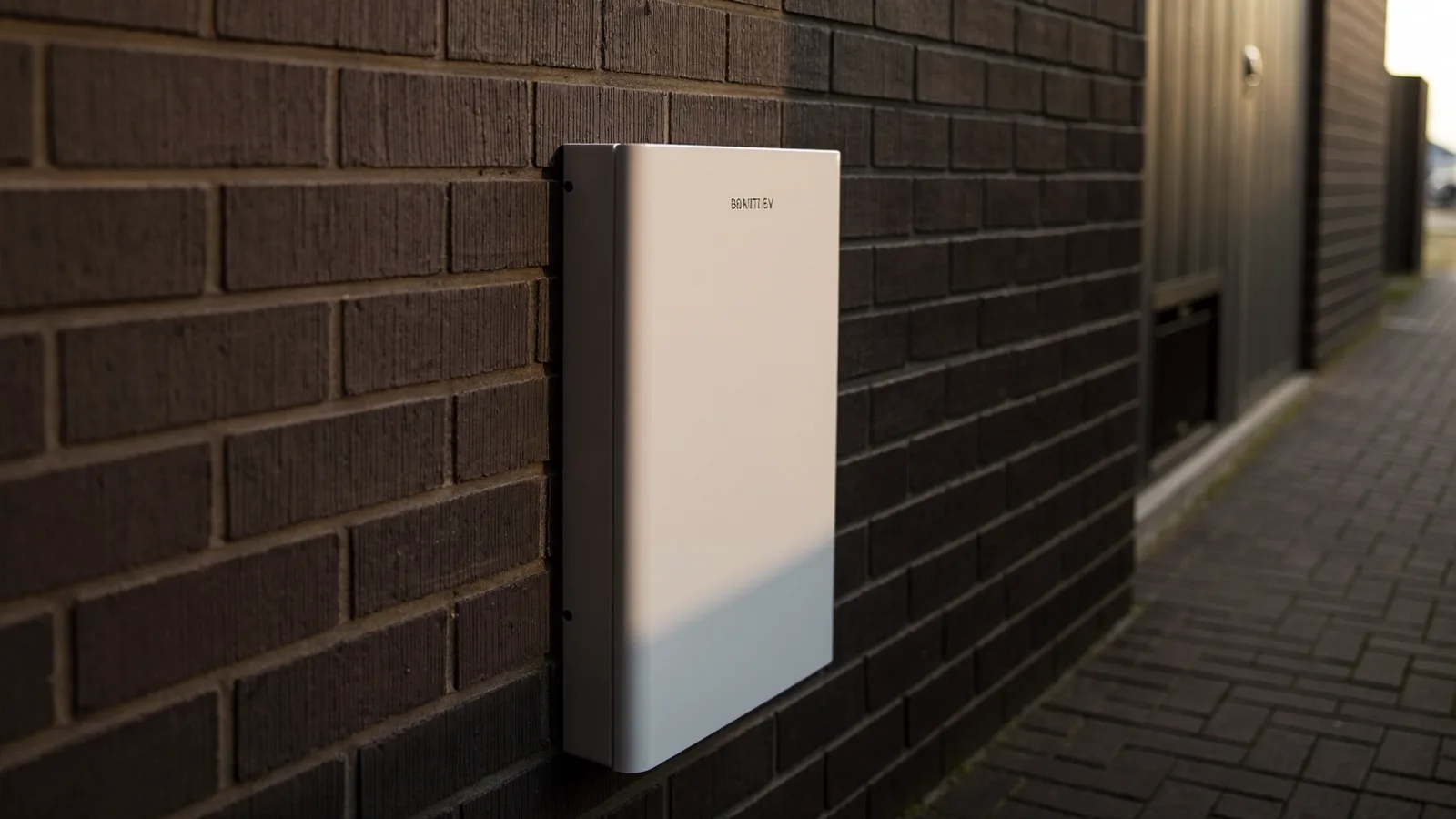
Design is subjective, but the EasyCube has a clean, modern aesthetic that does not look out of place in a contemporary garage. For households where the installation is visible, that matters more than it used to.
See the battery rebate your quote should show
The federal rebate takes about $3,610 off a 14 kWh battery installed before 1 January 2027, when it steps down. Then a solar expert goes through it with you, and your quote, before you sign.
Current battery rates end 1 January 2027 · 80 days remaining
The honest concern: brand age and long-term support
Fox ESS was founded in 2019. That means the brand is seven years old as of this writing. A battery warranty is a 10-year commitment, and for that warranty to be meaningful, the company needs to still be around, still have a local support presence, and still have parts and firmware updates available in year eight or nine.
Experienced installers who have been in the industry for 15 or 20 years have seen brands appear, gain popularity, and then quietly exit the Australian market when servicing costs outpaced their growth ambitions. Fox ESS is not showing any of those warning signs: the BNEF Tier 1 rating, the Tsingshan financial backing, and the growing installer network all point in the right direction. But it is a fair concern to raise, and any installer who tells you the brand age does not matter at all is probably not giving you the full picture.
On a more technical note, some Fox ESS models have limitations around AC coupling, which affects how the battery integrates with existing solar systems that use third-party inverters. If you are retrofitting a Fox ESS battery onto an existing solar installation with a non-Fox inverter, confirm compatibility with your installer before signing anything. This is not a deal-breaker, but it is worth understanding before you commit.
VPP compatibility is also less developed than Tesla Powerwall 3. If earning money from your battery through a virtual power plant is a primary goal, check which VPP providers currently support Fox ESS in your state, as the options are more limited than with Tesla or some Sungrow configurations.
Who the Fox ESS EasyCube suits best
The EasyCube is a strong fit for households that are installing new solar and battery together and are open to a Fox ESS hybrid inverter. Buying the inverter and battery from the same brand simplifies installation, maximises compatibility, and gives you a single point of contact for warranty claims. The H3 series hybrid inverters are competitively priced and well regarded by Australian installers who have used them.
It also suits homeowners who want to start with a modest capacity and expand later. A single EasyCube E module at 5.12 kWh is a low-cost entry point into home storage, and the modular path to 30.72 kWh is one of the more generous scaling options in the residential market.
Where it is less compelling: households with an existing non-Fox inverter where AC coupling would add cost and complexity, or those where VPP earnings are a primary financial consideration. In those cases, Sungrow or BYD may be easier to integrate, and the Powerwall 3 offers better VPP optionality.
Our assessment
Fox ESS EasyCube is a genuinely good battery at a price that is hard to ignore. The Tsingshan supply chain backing, BNEF Tier 1 status, and high-voltage architecture all lend it credibility beyond its age. The honest caveat is the brand's relatively short history, which is worth weighing against the 10-year warranty commitment. For households installing a complete Fox ESS inverter and battery system from scratch, the value case is compelling. For retrofits onto existing non-Fox inverters, do your compatibility homework first.
How Fox ESS compares to the field
| Battery | Capacity range | Est. installed (10 kWh or fixed size, after rebate) | Warranty | Architecture |
|---|---|---|---|---|
| check_circleFox ESS EasyCube | 5.12 to 30.72 kWh | ~$5,416 to $10,416 | 10 yr / 6,000 cycles | High-voltage LFP |
| Sungrow SBR | 9.6 to 25.6 kWh | ~$5,916 to $9,416 | 10 yr / 10,000 cycles | LFP (various) |
| BYD Battery-Box HVS | 5.1 to 22.1 kWh | ~$7,416 to $11,416 | 10 years | High-voltage LFP |
| Tesla Powerwall 3 | 13.5 kWh (fixed) | ~$8,592 to $11,592 | 10 years | LFP, integrated inverter |
Prices are approximate installed costs as of early 2026. Federal rebate estimates based on approximately $258/kWh discount on the battery component ($2,584 on 10 kWh, and $3,458 on the Powerwall 3's fixed 13.5 kWh). State rebates not included. Actual costs vary by installer and location.
Sungrow edges Fox ESS on cycle warranty (10,000 cycles versus 6,000), which is a meaningful long-term consideration for high-cycling households. BYD has deeper roots in the Australian market and broader inverter compatibility. Tesla Powerwall 3 offers the best VPP optionality and active thermal management. Fox ESS's competitive position is the high-voltage efficiency architecture at a price that rivals Sungrow while delivering a more modern feature set than some of the budget alternatives.
For a broader look at how all these batteries compare, see our best solar batteries in Australia 2026 guide.
Is Fox ESS worth buying in 2026?
For a household getting a new solar and battery system together, Fox ESS deserves serious consideration. The EasyCube's combination of high-voltage LFP chemistry, genuine modularity, competitive pricing, and a well-built app puts it ahead of many alternatives at its price point. The Tsingshan backing means this is not a brand surviving on venture capital and hope: there is a vertically integrated manufacturing group behind it with real supply chain leverage.
The honest caveat remains: seven years is a shorter track record than Sungrow, BYD, or Tesla can claim. That is not a reason to walk away, but it is a reason to ensure your installer has genuine Fox ESS installation experience, that your warranty is registered correctly from day one, and that you understand what the support pathway looks like if something goes wrong in year eight.
If you want quotes that include Fox ESS as an option alongside other reputable brands, our installer matching service connects you with CEC-accredited installers who can assess your home and provide comparable pricing across multiple battery brands.
Sources
- Fox ESS: EasyCube product specifications and warranty documentation (2025)
- BloombergNEF: Tier 1 Energy Storage Manufacturer list, Q4 2024
- DCCEEW: Cheaper Home Batteries Program, rebate rates and eligibility (2026)
- Tsingshan Group: corporate background and nickel production data
- Installer pricing data gathered from approved CEC-accredited installers across NSW, VIC, QLD, SA, and WA (March to April 2026)
The next step
If you're considering a home battery system, Andy and the team can match you with one Why Solar Approved installer near you for a free written quote, and fifteen minutes with a solar expert before you sign.

Written by
Solar Installer Partner Relations
Connects homeowners with trusted, vetted solar installers across Australia. Andy works directly with installation companies to ensure quality standards and helps homeowners through the quoting process.
If you have any questions about the information in this guide, email andy@whysolar.com.au or call +61 2 5657 6527.