
Battery Storage
Alpha ESS Battery Review Australia 2026: Honest Assessment
Not the newest brand, not the most marketed. But Alpha ESS has been in Australian homes since 2016, and that track record counts for something.
Your battery rebate, checked before you sign
11 min read
The federal rebate takes about $3,610 off a 14 kWh battery installed before 1 January 2027, when it steps down.
Current battery rates end 1 January 2027 · 80 days remaining
Alpha ESS does not dominate trade publications or get mentioned in every comparison article. It does not have Tesla's marketing budget or Sungrow's scale. What it does have is a genuine track record in Australian homes stretching back to 2016, well before most of the newer entrants were even selling into this market.
Founded in China in 2012, Alpha ESS entered the Australian residential market at a time when home batteries were still a novelty for early adopters. The systems installed back then are still running. That longevity matters when you are committing to a product with a 10-year warranty: the company has already demonstrated it will be around to honour it.
This review covers the Smile T range (the main residential products), pricing before and after the federal rebate, the AC-coupling flexibility that makes Alpha ESS a smart option for retrofit situations, and the honest trade-offs versus the competition.
The Smile T range: what Alpha ESS actually sells
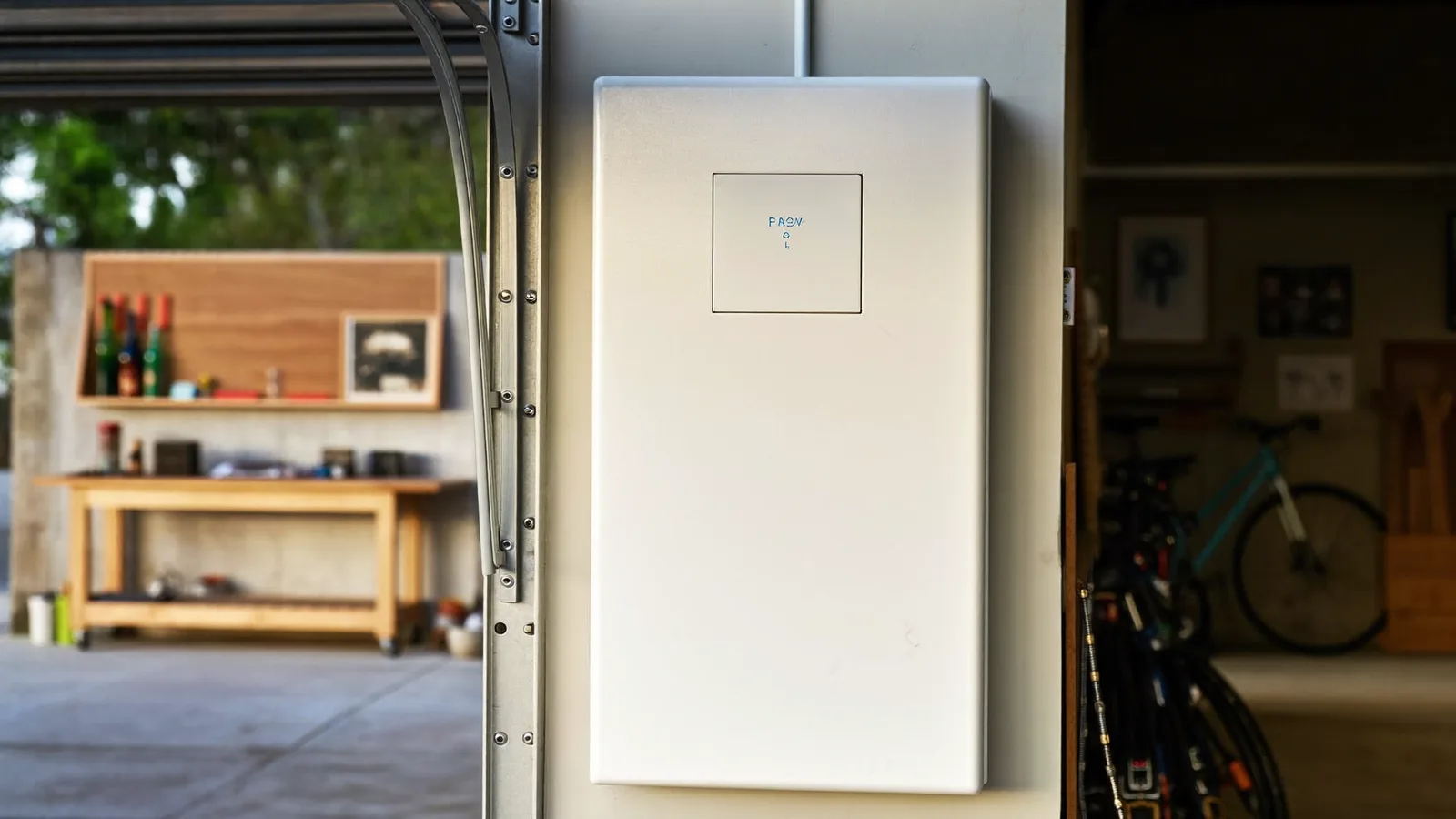
The residential Alpha ESS range is built around the Smile T series. The two main units are the Smile T10 (10.1 kWh) and the Smile T5 (5.05 kWh). Both use lithium iron phosphate (LiFePO4) chemistry, which is the preferred cell type for residential batteries in Australia: it handles heat better than standard NMC lithium-ion and carries a longer cycle life at the cell level.
Alpha ESS also sells the Smile B3, a 2.9 kWh expansion module that can be added to a T5 or T10 base unit to increase total capacity. It is a modest form of modularity compared to Sungrow's fully stackable SBR design, but it gives you a path to expand without replacing the whole system.
| Model | Usable capacity | Chemistry | IP rating | Warranty |
|---|---|---|---|---|
| check_circleSmile T10 | 10.1 kWh | LiFePO4 | IP55 | 10 years / 6,000 cycles |
| Smile T5 | 5.05 kWh | LiFePO4 | IP55 | 10 years / 6,000 cycles |
| Smile B3 (add-on module) | 2.9 kWh | LiFePO4 | IP55 | 10 years / 6,000 cycles |
The Smile T10 is the most commonly installed size for Australian households. The STORION T30 is a larger commercial-grade unit outside the scope of this residential review.
Your battery rebate, checked before you sign
The federal rebate takes about $3,610 off a 14 kWh battery installed before 1 January 2027, when it steps down. One Why Solar Approved installer near you, and fifteen minutes with a solar expert before you sign.
Current battery rates end 1 January 2027 · 80 days remaining
Alpha ESS battery price in Australia
The Smile T10 (10.1 kWh) comes in at roughly $10,000 to $14,000 installed before the federal rebate, depending on your state and installer. The Cheaper Home Batteries rebate currently applies approximately $258 per kWh of eligible capacity as a point-of-sale discount, which takes around $2,584 off a 10 kWh system. After the rebate, most households are looking at $7,416 to $11,416 all-in for the T10.
That positions Alpha ESS as one of the more affordable reputable brands in Australia. It is not the cheapest option on the market: you can find lesser-known Chinese brands at lower price points. But among brands with a demonstrated multi-year track record in Australian homes, Alpha ESS sits at the accessible end of the price range.
The rebate has been tiered since May 2026, and the per-kWh discount steps down again on 1 January 2027 and every six months after that. Locking in a quote before the next step-down is worth considering if you are already serious about buying.
| Model | Capacity | Approx. installed price | Est. after federal rebate |
|---|---|---|---|
| Smile T5 | 5.05 kWh | $5,000 to $8,000 | ~$3,708 to $6,708 |
| check_circleSmile T10 | 10.1 kWh | $10,000 to $14,000 | ~$7,416 to $11,416 |
| Smile T10 + B3 module | 13.0 kWh | $12,000 to $16,000 | ~$8,656 to $12,656 |
Prices are approximate installed costs as of April 2026. Federal rebate estimates based on ~$258 per kWh discount on eligible capacity. Actual rebate depends on the installer and system configuration. State rebates not included above.
Several states let you stack additional rebates on top of the federal one. South Australia offers up to $2,050 through REPS, but only to priority applicants at the moment, and the full amount needs a battery far larger than a typical home battery. Western Australia offers $1,300 to $3,800 depending on location and battery size. NSW has a VPP incentive through the PDRS. See our state battery rebate guide for current details.
AC coupling: why Alpha ESS suits retrofits
One of Alpha ESS's most practical strengths is the AC-coupling option via the SMILE5 inverter. This matters most for homeowners who already have a solar system and want to add storage without replacing their existing inverter.
Most batteries are DC-coupled, meaning they connect directly to the solar array through a hybrid inverter. That is the cleaner, more efficient option for new installations where you are choosing everything from scratch. But if your current string inverter is working fine and has several good years left in it, replacing it purely to enable battery storage is a wasteful cost.
AC-coupled batteries connect to the household's AC circuits instead. They charge from the grid or from excess solar generation as alternating current, using their own built-in inverter. The Alpha ESS SMILE5 handles this conversion, and the Smile T battery plugs into it cleanly. The result is a battery system that sits alongside your existing inverter without touching it.
There is a small efficiency penalty with AC coupling compared to DC coupling: energy goes through an extra conversion step (DC to AC for export, AC back to DC for battery storage, then DC to AC again for household use). In practice, the round-trip efficiency difference is usually 3 to 5 percentage points. For most households, saving the cost of an inverter replacement more than offsets that efficiency difference over the life of the system.
Alpha ESS also offers a DC-coupled path with its own hybrid inverter for new installations. The flexibility to support both routes from the same product range is genuinely useful, and it is one of the reasons Alpha ESS has maintained relevance against newer entrants with more limited integration options.
Alpha ESS inverters and the wider ecosystem
For new installations, Alpha ESS sells its own hybrid inverter range to pair with the Smile T batteries. The Alpha ESS SMILE5 inverter handles both solar generation and battery management, similar to how the Sungrow SH series works with the SBR battery. It is a reasonable unit: not the most feature-rich hybrid inverter on the market, but functional, well-supported in Australia, and covered by the same manufacturer warranty as the battery.
Alpha ESS's monitoring app covers both solar generation and battery state of charge. It is functional rather than polished. The data is there, the charts work, and you can set charge and discharge schedules without difficulty. If you are expecting an app experience comparable to Tesla's or Fronius Solar.web, adjust your expectations. If you just want to know how much your battery charged and discharged yesterday, it does the job.
The installer network covers all major cities and most regional areas. Alpha ESS has been training and accrediting Australian installers since 2016, which means the depth of field experience in the network is broader than brands that entered the market more recently. Finding a qualified Alpha ESS installer is not difficult in any capital city.
Warranty: 10 years and 6,000 cycles
The Alpha ESS residential battery warranty is 10 years, with a cycle life rating of 6,000 cycles to 80% retained capacity. At one cycle per day, 6,000 cycles is 16 years of use, so the cycle limit is unlikely to be reached before the 10-year warranty period expires under normal household usage.
The 6,000-cycle figure is honest and competitive for a 10-year warranty, though it sits below Sungrow's 10,000-cycle rating, which is genuinely exceptional in the residential market. For context: BYD offers a similar 10-year warranty, and Tesla's Powerwall 3 warranty specifies years rather than cycles. Alpha ESS at least gives you the number, which is more transparent than a warranty that avoids the question.
LiFePO4 chemistry underpins the cycle life claims. These cells are inherently more thermally stable and longer-lived than NMC alternatives, which means the warranty promise is built on solid electrochemistry rather than optimistic marketing.
See the battery rebate your quote should show
The federal rebate takes about $3,610 off a 14 kWh battery installed before 1 January 2027, when it steps down. Then a solar expert goes through it with you, and your quote, before you sign.
Current battery rates end 1 January 2027 · 80 days remaining
Where Alpha ESS sits in the market
Alpha ESS occupies a specific and useful position. It is cheaper than Sungrow and Tesla at comparable capacities, while being more established than newer Chinese brands like Fox ESS that entered the Australian market more recently. That middle ground suits a clear set of buyers.
Tesla Powerwall 3 is the benchmark for quality and integration: active liquid cooling, an integrated inverter, the widest VPP compatibility in Australia, and a brand name that most households recognise. You pay for all of that. After the federal rebate, the Powerwall 3 still sits at the upper end of the market. For households where budget is a genuine constraint, it is often out of reach.
Sungrow is the closest like-for-like competitor to Alpha ESS. Both use LiFePO4 chemistry, both have serious Australian installer networks, and both are Chinese manufacturers with established reputations. Sungrow has a stronger cycle warranty (10,000 versus 6,000 cycles) and is often preferred by installers who stock a single battery brand and want one with the widest support coverage. Alpha ESS counters with a slightly lower price point and superior AC-coupling flexibility, which tips the comparison in its favour for retrofit situations.
Newer Chinese brands at lower prices do exist. The question for any unfamiliar brand is whether the Australian support infrastructure will be there in year six when you need a warranty call. Alpha ESS has already answered that question for its existing customers.
The honest trade-offs
Alpha ESS is not the right choice for every household. Here is where the product falls short, and where the alternatives are worth considering instead.
The cycle warranty is lower than Sungrow's best. Six thousand cycles to 80% capacity is a reasonable number, but if maximising guaranteed longevity is the priority, the Sungrow SBR's 10,000-cycle warranty is the better option. This is not a dealbreaker for most households, but it is a real difference.
VPP compatibility is limited. Alpha ESS batteries are not as widely supported by Australia's major VPP providers as Tesla or even Sungrow. If earning ongoing income through a virtual power plant is central to your battery economics, this is worth checking carefully before you commit. Ask any installer which VPP providers currently integrate with Alpha ESS in your state.
The modularity is modest. Adding a B3 expansion module gives you some flexibility, but the system is less scalable than Sungrow's SBR, which can be expanded in 3.2 kWh increments up to 25.6 kWh. If you anticipate wanting significantly more capacity in a few years, Sungrow or BYD offer more headroom.
Brand awareness is lower than Tesla or Sungrow. For homeowners who want to feel confident that their installer and neighbour have heard of the brand, that may feel like a minor friction. In practice, the installers who work with Alpha ESS regularly know the product well. The lower profile is partly a consequence of lower marketing spend, not lower quality.
Installation: where can it go?
The Smile T range carries an IP55 rating, the same as Sungrow and most other reputable residential batteries. This means protection against dust and water jets from any direction, making the units suitable for garages, carports, and covered outdoor areas. You do not need a climate-controlled utility room, which is practical for most Australian homes.
Like all passive-cooled batteries, placement matters in hot climates. A south-facing wall or shaded garage keeps the operating temperature lower than a west-facing wall exposed to afternoon sun. LiFePO4 chemistry handles heat better than NMC alternatives, but no battery benefits from sustained high temperatures.
Installation must be completed by a CEC-accredited installer to maintain the warranty and meet grid connection requirements. Alpha ESS-approved installers are present across all capital cities and most regional centres, so sourcing a qualified tradesperson is not a barrier in the vast majority of locations.
Who should consider an Alpha ESS battery?
Alpha ESS makes the most sense in two situations. The first is homeowners who already have an existing solar system and want to add storage without replacing a working inverter. The AC-coupling flexibility via the SMILE5 is the clearest practical differentiator Alpha ESS holds over most of its direct competitors. If your current string inverter has years of life left in it, the Alpha ESS AC-coupled path often produces a better total cost outcome than forcing an inverter replacement.
The second is budget-conscious buyers who want a proven brand without paying Sungrow or Tesla prices. Alpha ESS is not dramatically cheaper than Sungrow, but the gap is real, and for households where the rebate-adjusted price still feels like a stretch, that difference can tip the decision. You are not making a compromise on longevity or reliability by choosing Alpha ESS over Sungrow: you are making a trade-off on cycle warranty depth and VPP flexibility.
If you are installing solar and battery from scratch and have no preference either way, Sungrow is probably the cleaner single-brand choice for most new installations. If you want active liquid cooling and maximum VPP compatibility, the Tesla Powerwall 3 is worth the premium. But if you are retrofitting storage onto an existing system, or if you want a reputable brand at a price that leaves room in the budget for a larger capacity, Alpha ESS deserves a genuine look.
Alpha ESS is a strong choice for homeowners retrofitting storage onto an existing solar system (AC coupling avoids an inverter swap) and for buyers who want a genuinely proven brand at a price below Sungrow and Tesla. It is the quiet achiever of the Australian battery market: established, affordable, and still running in homes that installed it a decade ago.
Sources
- Alpha ESS Australia: Smile T series product specifications and warranty documentation
- Clean Energy Regulator: Cheaper Home Batteries program eligibility and rebate rates
- Installer pricing data gathered from CEC-accredited installers across NSW, VIC, QLD, SA, and WA (March to April 2026)
- Alpha ESS: Company history and global installation figures
- SolarQuotes: Alpha ESS user ratings and installer feedback
The next step
If you're considering a home battery system, Andy and the team can match you with one Why Solar Approved installer near you for a free written quote, and fifteen minutes with a solar expert before you sign.

Written by
Solar Installer Partner Relations
Connects homeowners with trusted, vetted solar installers across Australia. Andy works directly with installation companies to ensure quality standards and helps homeowners through the quoting process.
If you have any questions about the information in this guide, email andy@whysolar.com.au or call +61 2 5657 6527.