
Heat Pump Installation
What happens when a heat pump hot water system goes in, from the site assessment to the handover.
Installation process
Takes 15 to 30 mins
Site assessment
The installer inspects your property to find the best spot for the heat pump. They check electrical capacity, water connections and ventilation.
- How close it is to the existing hot water system
- Electrical switchboard capacity
- Noise for the neighbours
- Enough space for ventilation
Takes 30 to 60 mins
Old system removal
Your existing hot water system is disconnected and removed. For electric systems this is straightforward. Gas systems need the gas line capped.
- Disposal of the old unit included
- Gas line safely capped if applicable
- Area cleaned and prepared
Takes 2 to 3 hours
New unit installation
The heat pump is positioned, levelled and secured. Water connections are made to the existing plumbing, then the unit is filled and tested for leaks.
- Unit positioned for good airflow
- Anti-vibration mounts installed
- Drainage connected for condensation
Takes 30 to 60 mins
Electrical connection
A licensed electrician connects the heat pump to your electrical supply. This may need a new circuit if your existing setup doesn't have the capacity.
- May need a switchboard upgrade
- Dedicated circuit recommended
- Timer installation optional
Takes 30 mins
Testing and handover
The system is tested, the temperature settings are configured, and you're shown how to run the unit. You get the documentation and warranty information.
- System tested at full operation
- Settings set for your usage
- Warranty registration completed
Where can it be installed?
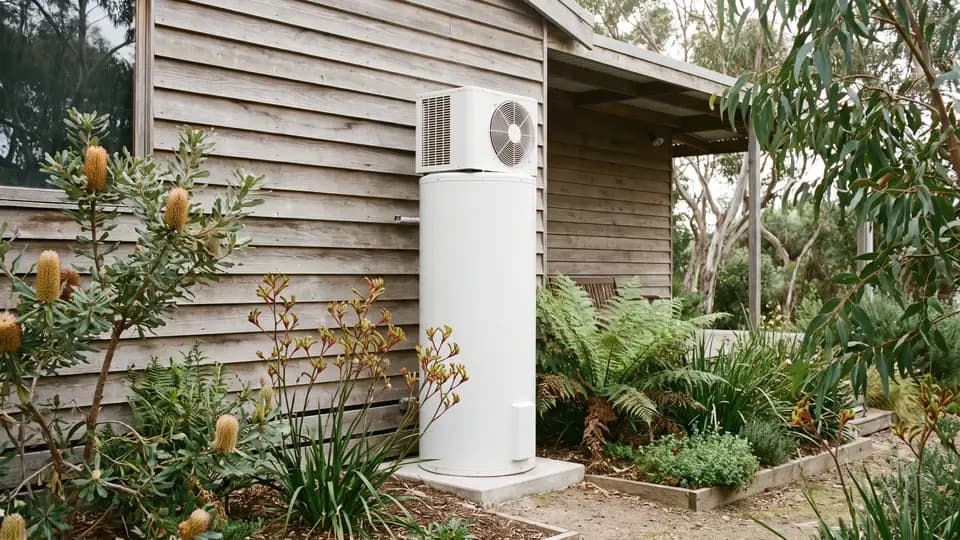
Outdoor (most common)
Ideal for: Most Australian homes
Good
- No ventilation issues
- Easy access for maintenance
- Noise kept away from living areas
Watch for
- Exposed to the weather
- Needs frost protection in cold areas
Garage
Ideal for: Cold climates, or where looks matter
Good
- Protected from the weather
- Out of sight
- Good for cold climates
Watch for
- Needs enough ventilation
- May cool the garage down
Under eaves
Ideal for: Where outdoor space is limited
Good
- Weather protection
- Close to existing plumbing
- Less visible
Watch for
- Harder to reach for maintenance
- Limited airflow if enclosed
Electrical requirements
- Power supply
- 240V single phase (most units)
- Standard in Australian homes
- Circuit breaker
- 16 to 20 amp dedicated circuit
- May need an electrician to install
- Running power
- 0.5 to 1.5 kW while heating
- Lower than an electric element
- Standby power
- 5 to 15 watts
- Minimal ongoing cost
Good news if you have solar. Heat pumps draw little power (0.5 to 1.5kW) and can be timed to run while your panels are generating, so many owners heat their water with surplus solar for next to nothing.
Related pages
Heat pump guide
Compare brands, types and refrigerants, and find the right system for your home.
Cost guide
2026 prices by brand and size, plus the rebates that cut your upfront cost.
All rebates
Solar, battery and heat pump rebates, state by state.
Get a heat pump installed
Get a free quote from a licensed local installer. Most installs take a single day.