
How to Become a Solar Installer in Australia
A practical guide to the qualifications, training, and career pathway for anyone looking to enter the solar installation industry in Australia.
- Typical salary range
- $80K to $130K+
- Training pathway
- 4 to 5 years
- Accredited installers in Australia
- 8,000+
Career overview
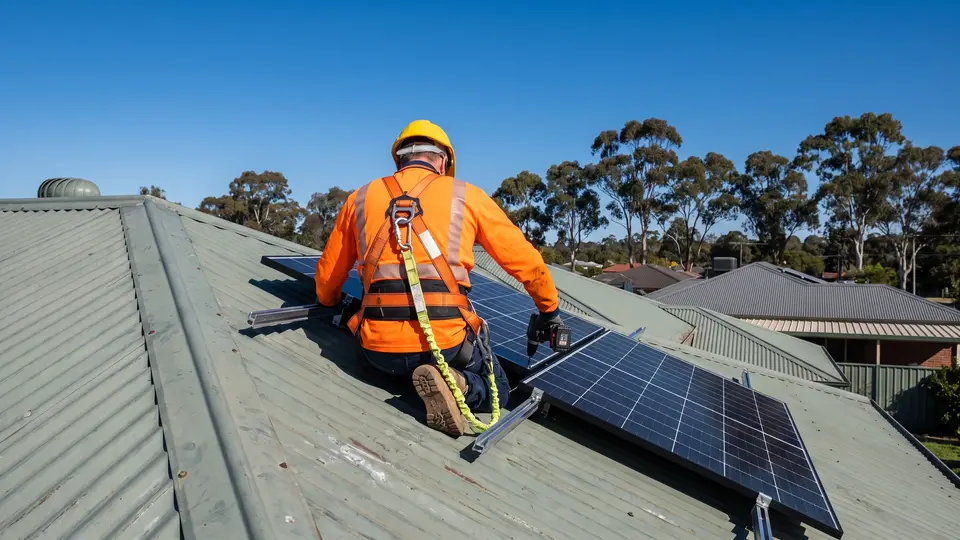
Solar installers design and install photovoltaic (PV) systems on residential and commercial properties. The work combines electrical expertise with practical construction skills. A typical day might involve surveying a roof, designing a system layout, mounting racking and panels, wiring the system, installing an inverter, and connecting everything to the switchboard and electricity grid.
The role is physically demanding. You will spend most of your time on rooftops, often in hot conditions, lifting panels that weigh around 20 to 25 kilograms each. Good physical fitness, a head for heights, and comfort working outdoors year-round are essential. Most installers work in teams of two or three, so communication and teamwork matter.
Beyond the physical work, there is a growing design and consulting element to the role. Customers increasingly expect their installer to advise on system sizing, battery storage, export limiting, and how to maximise self-consumption. Installers who handle these conversations well tend to win more work at better margins.
Step-by-step career pathway
- 01
Complete an electrical apprenticeship
The first step is completing a Certificate III in Electrotechnology Electrician (UEE30820) through a registered training organisation (RTO). This is a formal apprenticeship that combines on-the-job training with structured coursework, and typically takes four years to complete.
During your apprenticeship, you will learn the fundamentals of electrical systems, wiring, safety procedures, and compliance with Australian Standards. This foundation is essential because solar installation is, at its core, electrical work. A strong grasp of AC and DC circuits, switchboard work, and earthing systems will serve you well throughout your solar career.
- 02
Obtain your electrical licence
Once you have completed your apprenticeship, you need to apply for an electrical licence through your state or territory regulator. The licensing body varies by jurisdiction: Energy Safe Victoria handles Victorian licences, Fair Trading NSW covers New South Wales, and each other state has its own equivalent body.
Your electrical licence is a legal requirement to perform any electrical work, including solar installations. Keep in mind that licence requirements and renewal processes differ between states, so check the specific requirements for the state where you intend to work. Some installers hold licences in multiple states to expand their service area.
- 03
Complete an SAA-accredited solar course
With your electrical licence in hand, the next step is completing a solar design and installation course accredited by Solar Accreditation Australia (SAA). These courses are delivered by approved RTOs and typically run for five days, covering system design, installation best practices, grid-connection requirements, and the relevant Australian Standards.
Course costs generally range from $2,000 to $4,000 depending on the provider and location. Some RTOs offer both in-person and blended learning options. Choose a provider with a strong reputation and up-to-date course materials, as the quality of training varies. Look for courses that include hands-on practical components rather than purely theoretical content.
- 04
Apply for SAA accreditation
After completing your solar course, you can apply for accreditation through Solar Accreditation Australia. The application requires evidence of your electrical licence, completed solar training, and any other supporting documentation. SAA replaced the former CEC accreditation scheme in mid-2024.
SAA accreditation is not optional if you want to work in the mainstream residential solar market. Homeowners can only claim Small-scale Technology Certificates (STCs) on their installation if the work is performed by an accredited installer. Since STCs typically reduce the upfront cost by $1,482 to $2,014, customers almost always require an accredited installer.
- 05
Start working or join an established company
With your accreditation sorted, you need to decide how to enter the market. Most newly accredited installers start by joining an established solar company or working as a subcontractor. This gives you the chance to build experience, learn business operations, and develop a track record of quality work.
Working under an experienced team also helps you understand the commercial side of the industry, from quoting jobs and managing customer expectations to dealing with grid-connection applications and inspections. Once you have built enough experience and confidence, you may choose to start your own installation business.
- 06
Add battery endorsement for additional revenue
Battery storage is a fast-growing part of the residential energy market. Adding a battery endorsement to your accreditation allows you to design and install battery systems alongside solar panels, which raises the average job value.
Battery endorsement requires additional training covering battery chemistry, safety protocols, and integration with existing solar systems. With the cost of batteries falling and consumer interest rising, installers with battery capabilities are in strong demand.
Qualifications and training
The formal qualification pathway involves two main stages. First, you complete a Certificate III in Electrotechnology Electrician (UEE30820) through a registered training organisation. This is delivered as a four-year apprenticeship and is the same qualification required for any electrician in Australia.
Second, you complete a solar-specific course accredited by Solar Accreditation Australia. These courses are offered by RTOs across the country and typically run for five days. Course content covers PV system design, installation procedures, Australian Standards (particularly AS/NZS 5033 and AS/NZS 4777), and grid-connection requirements.
Expect to pay between $2,000 and $4,000 for a solar design and install course. Some employers will cover this cost for their electricians, particularly if there is a shortage of accredited installers in the area. Ask before you pay out of pocket.
For battery endorsement, additional training modules are required. These cover battery chemistry, safety requirements under AS/NZS 5139, and integration with existing solar and grid systems. Battery courses typically add another one to two days and $1,000 to $2,000 to the total training cost.
Salary and earning potential
| Experience level | Typical salary range | Notes |
|---|---|---|
| Apprentice (years 1 to 4) | $25,000 to $55,000 | Increases each year of apprenticeship |
| Newly accredited (0 to 2 years) | $70,000 to $90,000 | Employed or subcontracting |
| Experienced (3 to 5 years) | $90,000 to $120,000 | Often leading a team |
| Business owner / senior | $130,000+ | Running own crew or business |
Earnings vary significantly by location, with installers in regional areas sometimes commanding higher rates due to limited competition. Installers who add battery storage and EV charger installations to their offering typically earn more per job. For a deeper look at the financial side of running a solar business, see our solar installer profit margins analysis.
The solar designer path
Not everyone wants to spend their career on rooftops. Solar system design is a complementary career path that focuses on the technical planning side of installations. Designers use software tools to model roof layouts, calculate energy production, assess shading, and produce compliance documentation.
Many experienced installers transition into design roles as they progress in their careers, particularly if they want to reduce the physical demands of rooftop work. Some installers combine both roles, designing the systems they install, which gives them complete control over the quality of the outcome.
If you are interested in the design side of the industry, take a look at our guide to solar design tools used by Australian installers and designers.
Standards you need to know
Solar installation in Australia is governed by a set of key standards that every installer must understand and follow. Non-compliance can result in failed inspections, loss of accreditation, and liability issues.
- AS/NZS 5033
- Covers the installation and safety requirements for PV arrays, including wiring, earthing, and labelling.
- AS/NZS 4777
- Governs grid connection of energy systems via inverters, including power quality and export limiting.
- AS/NZS 5139
- Sets out safety requirements for battery storage installations, including ventilation and fire separation.
- AS/NZS 3000 (Wiring Rules)
- The overarching standard for electrical installations in Australia, applicable to all electrical work including solar.
For more detail on each one, see our solar installation standards reference page.
Frequently asked questions
How long does it take to become a solar installer?
It takes a minimum of 4 to 5 years. You need to complete a 4-year electrical apprenticeship first, then a solar design and install course (typically 5 days), followed by your SAA accreditation application.
Do I need to be an electrician first?
Yes. Holding a current electrical licence is a prerequisite for SAA accreditation. You cannot legally perform solar installations that are eligible for STCs without being a licensed electrician with SAA accreditation.
How much do solar installers earn in Australia?
Solar installers in Australia typically earn between $80,000 and $130,000 or more per year, depending on experience, location, and whether they operate their own business. Installers with battery endorsements and those in high-demand areas can earn at the upper end of this range.
What is SAA accreditation?
SAA stands for Solar Accreditation Australia. It replaced the former CEC accreditation scheme in mid-2024. SAA accreditation is required for installers to perform solar installations that are eligible for Small-scale Technology Certificates (STCs), which provide the upfront rebate for homeowners.
Can I install solar without accreditation?
You cannot install solar systems that are eligible for STCs without SAA accreditation. Since STCs provide a significant discount (often $1,482 to $2,014 on a typical system), virtually all residential customers require an accredited installer. Working without accreditation severely limits your market.
Is solar installation a good career?
Solar installation is a strong career choice in Australia. The industry continues to grow with over 3.5 million rooftop systems already installed and strong ongoing demand. Earning potential is good, the work is varied, and there is increasing demand for battery and EV charger installations that add to the revenue opportunity.
Apply to become a Why Solar partner
Family owned, and we do not install solar. Free to apply, then you pay per lead delivered with 7 days to raise a problem. We assess every application, and access is not automatic.