
Solar Installation Standards in Australia
Every solar installation in Australia must comply with a set of national standards covering electrical safety, grid connection, wiring, and cable selection. This guide breaks down the key standards that installers and inspectors need to know.
| Standard | What it covers | Where it applies |
|---|---|---|
| AS/NZS 5033 | Installation and safety of PV arrays | DC side, from the panels to the inverter input |
| AS/NZS 4777 | Grid connection of energy systems via inverters | The inverter and its interface with the grid |
| AS/NZS 3000 | Wiring Rules for all electrical installations | AC side, from the inverter to the switchboard and grid |
| AS/NZS 3008 | Cable selection | Cable sizing on both the DC and AC sides |
Standards landscape overview
Australia's solar installation standards are developed jointly by Standards Australia and Standards New Zealand, which is why they carry the AS/NZS prefix. These standards are referenced in state and territory electrical safety legislation, making compliance a legal requirement rather than a recommendation. Electricians, solar installers, and electrical inspectors all rely on these documents to make sure systems are safe and compatible with the electricity grid.
The four most relevant standards for solar PV work are AS/NZS 5033 (PV array safety), AS/NZS 4777 (grid-connected inverters), AS/NZS 3000 (wiring rules), and AS/NZS 3008 (cable selection). While each standard has a distinct scope, they overlap in practice. A compliant solar installation requires consideration of all four, along with any additional requirements set by the local Distribution Network Service Provider (DNSP).
AS/NZS 5033: Installation and safety of PV arrays
AS/NZS 5033 is the primary standard governing the DC side of a solar installation. It sets out requirements for the design, construction, and verification of photovoltaic array wiring from the panels through to the inverter input. This includes DC isolator placement, earthing and bonding of array frames, overcurrent protection, and cable management.
One of the most critical aspects of 5033 is its fire safety provisions. The standard specifies maximum allowable voltages for rooftop arrays, requires rapid shutdown capabilities in certain configurations, and mandates clearances between DC cabling and combustible building materials. These requirements have become more stringent over successive revisions as rooftop fire risks have become better understood.
The standard also addresses less common installation types including ground-mounted arrays, building-integrated PV (BIPV), and systems with battery storage on the DC side. Installers working across different system configurations need to be familiar with the full scope of 5033, not just the rooftop-specific clauses.
AS/NZS 4777: Grid connection of energy systems
AS/NZS 4777 governs how inverter-connected energy systems interact with the electricity grid. It is split into two parts. Part 1 deals with the installation requirements for grid-connected systems, covering topics such as protection settings, metering arrangements, and the interface between the inverter and the main switchboard. Part 2 specifies the technical requirements for the inverters themselves.
The 2020 revision of AS/NZS 4777.2 introduced changes that reshaped the Australian solar market. New requirements for demand response modes (DRM) mean modern inverters must be capable of receiving and acting on signals from network operators. This allows DNSPs to manage voltage and frequency issues on the grid by remotely adjusting the output of residential and commercial solar systems.
Part 2 also tightened power quality requirements, including stricter limits on voltage rise at the point of connection and updated anti-islanding protection. These changes were driven by the rapid growth of rooftop solar in Australia and the engineering problems that come with high solar penetration on low-voltage networks.
AS/NZS 3000: Wiring Rules
AS/NZS 3000, commonly known as the Wiring Rules, is the foundational standard for all electrical installations in Australia and New Zealand. While not specific to solar, it underpins every aspect of the AC wiring in a solar installation: from the inverter output through to the main switchboard, metering, and grid connection point.
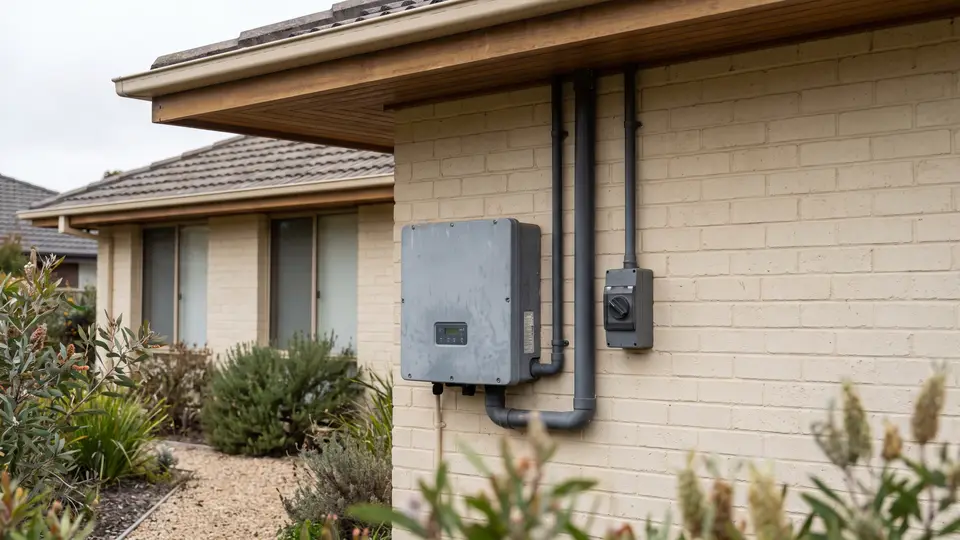
For solar installers, key sections of AS/NZS 3000 include requirements for circuit protection, switchboard layout, cable installation methods, and earthing systems. The standard also sets out the general requirements for verification and testing that apply after any electrical work is completed, including solar installations.
AS/NZS 3008: Cable selection
AS/NZS 3008 provides the methodology for selecting electrical cables based on current-carrying capacity and voltage drop. In solar installations, correct cable sizing is essential on both the DC side (from panels to inverter) and the AC side (from inverter to switchboard and grid connection).
Undersized cables create fire risks and reduce system efficiency through resistive losses. The standard includes derating factors for installation conditions such as ambient temperature, grouping of cables, and installation method (for example, cables in conduit on a hot roof versus cables clipped to a wall in shade). Solar installers must apply these derating factors correctly to ensure cable sizes are adequate for the worst-case operating conditions of a PV system.
State-specific requirements
Although the AS/NZS standards form a national baseline, each state and territory has its own electrical safety regulator that may impose additional requirements. For example, some jurisdictions have specific rules around DC isolator placement, rooftop signage, or the maximum system size that can be connected without prior approval from the DNSP. Network operators themselves also publish connection standards and technical guidelines that must be followed.
Installers working across multiple states need to stay across these variations. A system that complies perfectly in one jurisdiction may require modifications to meet the rules in another.
For a detailed breakdown of state-by-state compliance requirements, see our compliance checklists.
Standards and accreditation
Knowledge of these standards is a core requirement for SAA (Solar Accreditation Australia) accreditation. Accredited installers are expected to design and install systems that comply with all relevant standards, and accreditation audits specifically test for standards compliance. Maintaining accreditation requires staying current with amendments and revisions as they are published.
If you are working towards accreditation or need to understand how standards fit into the broader accreditation framework, see our guide to Solar Accreditation Australia (SAA).
Frequently asked questions
What are the main solar installation standards in Australia?
The three core standards governing solar installations in Australia are AS/NZS 5033 (installation and safety of PV arrays), AS/NZS 4777 (grid connection of energy systems via inverters), and AS/NZS 3000 (the Wiring Rules). Together these form the regulatory backbone for every residential and commercial solar installation.
What is AS/NZS 5033?
AS/NZS 5033 is the standard for the installation and safety requirements of photovoltaic (PV) arrays. It covers DC wiring, earthing, overcurrent protection, isolation requirements, and fire safety measures for solar panel arrays on rooftops and ground-mounted systems.
What is AS/NZS 4777?
AS/NZS 4777 is the standard for grid connection of energy systems via inverters. Part 1 covers the requirements for grid connection, while Part 2 specifies inverter requirements including power quality, anti-islanding protection, and demand response capabilities.
Do standards differ by state?
The base AS/NZS standards are national and apply uniformly across all states and territories. However, each jurisdiction may impose additional requirements through their electrical safety regulators, local planning rules, or network operator connection agreements. It is important to check state-specific overlays in addition to the national standards.
How often do solar standards get updated?
Australian Standards are reviewed periodically by Standards Australia technical committees. Major updates typically occur every few years, though amendments can be released between full revisions. AS/NZS 4777.2 received a significant update in 2020, and AS/NZS 5033 was revised in 2021 with further amendments following.
Where can I buy Australian Standards?
Australian Standards are published and sold through Standards Australia at standards.org.au. Individual standards can be purchased as PDF or hard copy. Some industry bodies and training organisations provide access to relevant standards as part of membership or course materials.
Apply to become a Why Solar partner
Family owned, and we do not install solar. Free to apply, then you pay per lead delivered with 7 days to raise a problem. We assess every application, and access is not automatic.