
Clean Energy Council (CEC)
Australia's peak body for the clean energy industry. The CEC represents over 1,000 member companies, maintains approved product lists for solar and storage, and advocates for renewable energy policy at all levels of government.
- Member companies
- 1,000+
- Established
- 2004
- Approved inverter models
- 7,000+
- Approved battery models
- 400+
What is the Clean Energy Council?
The Clean Energy Council is Australia's peak industry association for the clean energy sector. Founded in 2004, it represents businesses working across solar, wind, hydro, bioenergy, energy storage, hydrogen, and electric vehicles. The CEC is a not-for-profit organisation, funded by membership fees and government contracts. Its Melbourne headquarters coordinates policy advocacy, industry programs, and product standards work that affects every solar installation in the country.
A common misconception is that the CEC is a government body. It is not. The CEC is an industry association that works alongside government but has no legislative or enforcement powers. The government counterpart most people confuse it with is the Clean Energy Regulator (CER), which administers the Renewable Energy Target and issues Small-scale Technology Certificates (STCs). The CEC's role is to represent the industry, set voluntary standards, and maintain the approved product lists that underpin the STC scheme.
For homeowners, the CEC matters because its approved product lists determine which solar panels, inverters, and batteries are eligible for government rebates. For installers, the CEC historically managed accreditation, though that function has now transitioned to Solar Accreditation Australia (SAA).
CEC approved products
The CEC maintains registers of approved solar panels, inverters, and batteries. A product must appear on the relevant CEC approved list to be eligible for STCs under the Small-scale Renewable Energy Scheme. Manufacturers submit products for testing against Australian and international standards before they are listed. The CEC periodically reviews and removes products that no longer meet requirements.
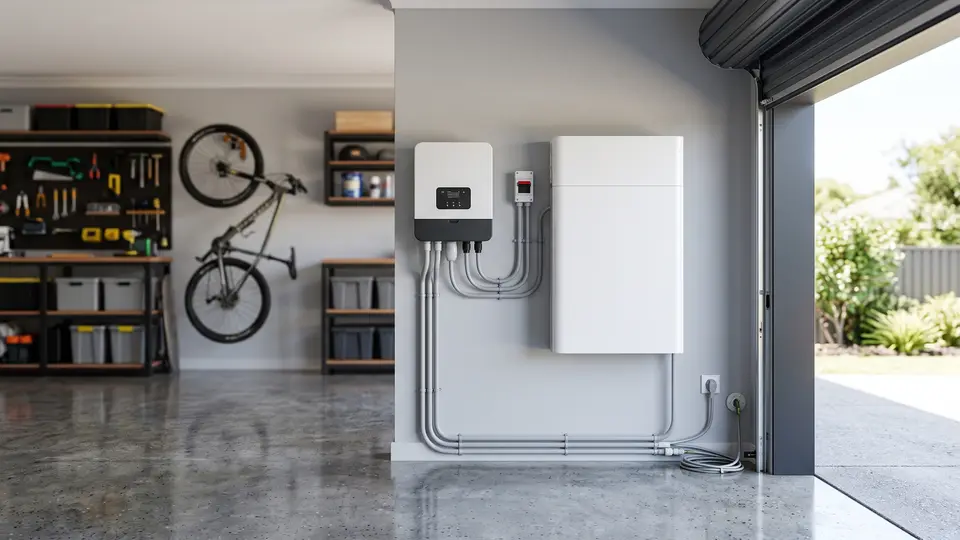
- Approved inverters
The registry includes string inverters, microinverters, and hybrid inverter-chargers from manufacturers like Fronius, SolarEdge, Enphase, Sungrow, and Goodwe.
Each inverter is listed with its maximum capacity, grid connection standard compliance (AS/NZS 4777.2), and any conditions of approval. Installers should always verify an inverter's current status before quoting, as models are occasionally suspended or removed.
- Approved batteries
The approved battery list has grown quickly as more homes add storage. Over 400 battery models from manufacturers including Tesla, BYD, Sungrow, Alpha ESS, and Enphase are currently listed.
Batteries must meet IEC 62619 or IEC 62133 safety standards, along with Australian installation requirements. The CEC list specifies compatible inverters for each battery, which is critical for system design and warranty compliance.
- Approved solar panels
The solar module list is the largest of the three registers, covering thousands of panel models. Panels must comply with IEC 61215 (design qualification) and IEC 61730 (safety) before being listed. The register includes monocrystalline, polycrystalline, and thin-film technologies.
The CEC periodically conducts random testing of panels already on the market. Panels that fail post-market testing can be suspended or de-listed, which directly affects installers who have stock of those models.
CEC accreditation to SAA transition
For nearly two decades, the CEC managed the accreditation program for solar installers. CEC accreditation was a prerequisite for creating STCs, meaning only CEC-accredited installers could sign off on systems eligible for the federal rebate. This gave the CEC real influence over installer standards, training, and professional conduct.
In mid-2024, installer accreditation formally transitioned from the CEC to Solar Accreditation Australia (SAA), a separate entity established to manage accreditation independently from the industry body. The transition was driven by concerns about the CEC's dual role as both an industry advocate and the body responsible for disciplining its own members. SAA now handles all accreditation applications, renewals, compliance audits, and de-accreditation decisions.
For homeowners, the practical impact is minimal. The same standards apply, and installers who were CEC-accredited had their credentials transferred to SAA. Still, check that your installer holds current SAA accreditation rather than relying on an old CEC accreditation claim. You can verify installer credentials on the SAA website.
CEC vs CER: what's the difference?
The Clean Energy Council and the Clean Energy Regulator have similar names, which causes frequent confusion. They do very different jobs in Australia's renewable energy system.
Clean Energy Council (CEC)
- Independent, not-for-profit industry association
- Represents 1,000+ clean energy businesses
- Maintains approved product lists (panels, inverters, batteries)
- Runs the Solar Retailer Code of Conduct
- Advocates for industry policy and regulation
- No enforcement or legislative power
Clean Energy Regulator (CER)
- Commonwealth Government statutory authority
- Administers the Renewable Energy Target (RET)
- Issues STCs (solar rebate certificates) and LGCs
- Manages the REC Registry for certificate trading
- Conducts compliance audits and inspections
- Has enforcement powers including suspension and penalties
Solar Retailer Code of Conduct
The CEC Solar Retailer Code of Conduct is a voluntary program that sets standards above the legal minimum for solar retailers. Companies that sign up commit to transparent quoting practices, honest advertising, minimum warranty terms, and accessible complaint resolution processes. The code is administered by the CEC and includes an independent dispute resolution pathway for consumers.
As of 2025, over 100 solar retailers are signatories to the code. While signing up is voluntary, some state government solar rebate programs have historically required retailers to be code-approved as a condition of eligibility. For consumers, choosing a code-approved retailer provides an extra layer of protection, particularly around pre-sale conduct and post-installation support.
The code covers retailers (the company you buy from), not necessarily the sub-contracted installer who does the physical work on your roof. The distinction matters because a retailer can be code-approved while using sub-contractors who may not meet the same internal standards. Always check that both the retailer and the installer hold current SAA accreditation and comply with Australian installation standards.
CEC membership
CEC membership is open to any business operating in the clean energy sector. Members pay annual fees based on their company size and revenue, with categories ranging from small installer businesses to large-scale project developers and multinational manufacturers. Membership provides access to industry events, policy briefings, market data, and the ability to participate in CEC working groups that shape industry standards.
For solar installation companies, CEC membership is separate from installer accreditation (now managed by SAA). A company can be a CEC member without its electricians holding SAA accreditation, and vice versa. However, many established solar businesses maintain both, as CEC membership signals industry engagement and provides networking opportunities.
The CEC also runs an annual Clean Energy Summit. The event brings together policy makers, manufacturers, installers, and investors, and is a key venue for industry announcements including product launches and policy updates.
Frequently asked questions
Is the Clean Energy Council a government body?
No. The Clean Energy Council is an independent, not-for-profit industry association. It represents and advocates for Australia's clean energy sector but has no regulatory or enforcement power. The government regulator for renewable energy schemes is the Clean Energy Regulator (CER).
How do I check CEC approved inverters?
You can search CEC approved inverters and other products through the CEC's online product registry at cleanenergycouncil.org.au. The registry lists every inverter, battery, and solar panel that meets Australian standards and has been approved for installation under the Small-scale Renewable Energy Scheme.
What is the difference between the CEC and CER?
The CEC (Clean Energy Council) is an industry body that represents clean energy businesses, maintains approved product lists, and runs voluntary programs like the Solar Retailer Code of Conduct. The CER (Clean Energy Regulator) is a Commonwealth Government agency that administers the Renewable Energy Target, issues STCs and LGCs, and has enforcement powers under legislation.
Do I still need CEC accreditation?
CEC accreditation for solar installers transitioned to Solar Accreditation Australia (SAA) in mid-2024. SAA now manages installer accreditation, training requirements, and compliance. If you were previously CEC-accredited, your accreditation transferred to SAA. New installers apply directly through SAA.
What is the CEC Solar Retailer Code of Conduct?
The Solar Retailer Code of Conduct is a voluntary program run by the CEC. Signatory companies agree to higher standards around quoting, advertising, warranties, and complaint handling. Consumers can search for Code-approved retailers on the CEC website. The code is not legally binding but provides an additional layer of accountability beyond consumer law.
How many members does the CEC have?
The Clean Energy Council has over 1,000 member companies spanning solar, wind, hydro, bioenergy, energy storage, and emerging technologies. Members range from multinational manufacturers and large-scale project developers to small residential solar installation businesses.
Apply to become a Why Solar partner
Family owned, and we do not install solar. Free to apply, then you pay per lead delivered with 7 days to raise a problem. We assess every application, and access is not automatic.