
Sizing Guide
Solar System Sizes Explained
Choosing the right solar system size is the single most important decision when going solar. Too small and you won't offset your bill. Too large and you're paying for production you can't use. This guide breaks down every common size from 5kW to 13kW+.
10 min read
Find out what your home actually needs
Quick comparison
| System | Panels | Daily output | Cost after rebate | Annual savings | Payback | Best for |
|---|---|---|---|---|---|---|
| 5kW | 10 to 12 | 20 kWh | $3,000 to $5,000 | $1,200 to $1,600 | 2.5 to 3.5 years | Small household, 1 to 2 people, apartment |
| 6.6kWMost popular | 12 to 15 | 26 kWh | $3,500 to $6,000 | $1,500 to $2,100 | 2.5 to 3.5 years | Average household, 3 to 4 people |
| 8kW | 15 to 18 | 32 kWh | $4,800 to $7,800 | $1,800 to $2,600 | 2.5 to 3.5 years | Larger families, home office, pool pump |
| 10kW | 18 to 22 | 40 kWh | $5,500 to $9,500 | $2,200 to $3,200 | 3 to 4 years | Large household, EV owner, battery-ready |
| 13kW+ | 24 to 30 | 52 kWh | $7,000 to $12,000 | $2,800 to $4,200 | 3 to 4.5 years | Large home, pool, multiple EVs, off-grid prep |
Costs are estimates for Tier 1 equipment after STC rebate. STC values are for Zone 3, which covers most of Australia. Actual prices vary by state, installer, and panel brand. Output assumes average Australian sun hours (about 4.5 peak hours/day).
Detailed size breakdown
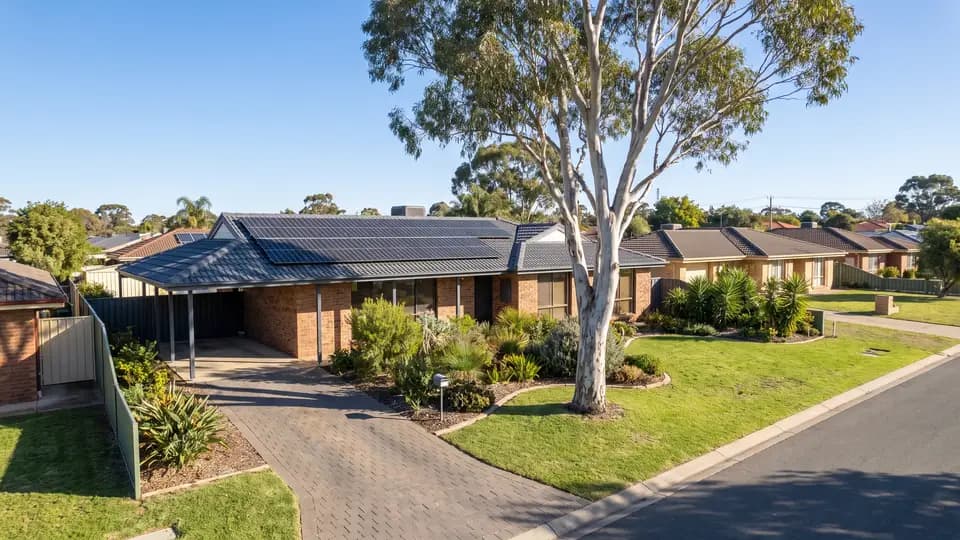
5kW solar system
5kW single-phase inverter
The entry-level system for low-usage households. A 5kW system suits apartments, units, or couples who are home during the day. It produces roughly 20 kWh per day, enough to offset most of a modest electricity bill.
- Daily output
- 20 kWh
- After rebate
- $3,000 to $5,000
- Annual savings
- $1,200 to $1,600
- Payback
- 2.5 to 3.5 years
10 to 12 panels, 18 to 22 m² of roof, ~$1,292 STC rebate
Pros
- Lowest upfront cost
- Fits on smaller roofs
- Fastest payback for low-usage homes
- Single-phase compatible
Cons
- Limited export income
- Not enough for larger families or EVs
- May need upgrading if usage grows
6.6kW solar system
Most popular5kW inverter (panels oversized for better morning/afternoon output)
Australia's most popular system size. A 6.6kW system pairs 6.6kW of panels with a 5kW inverter. This is allowed under CEC guidelines and means you get better output in the morning and afternoon when the sun isn't directly overhead. It's the sweet spot for most households.
- Daily output
- 26 kWh
- After rebate
- $3,500 to $6,000
- Annual savings
- $1,500 to $2,100
- Payback
- 2.5 to 3.5 years
12 to 15 panels, 22 to 28 m² of roof, ~$1,710 STC rebate
Pros
- Best value per watt, and the most popular size
- Strong output for average households
- Good balance of cost and production
- Panel oversizing gives better real-world output
Cons
- May not fully offset high-usage households
- Excess export earns less as feed-in tariffs drop
8kW solar system
8kW single-phase or 5kW + optimisers
An increasingly popular mid-size option. 8kW systems are ideal for households that use more power than average, such as running a pool pump, working from home, or with teenagers. The extra capacity over 6.6kW provides meaningful headroom without the step up to a 10kW system.
- Daily output
- 32 kWh
- After rebate
- $4,800 to $7,800
- Annual savings
- $1,800 to $2,600
- Payback
- 2.5 to 3.5 years
15 to 18 panels, 28 to 34 m² of roof, ~$2,090 STC rebate
Pros
- Good buffer for above-average usage
- Pairs well with a small battery (5 to 10kWh)
- Still fits on most suburban roofs
- Cost per watt is competitive
Cons
- May require single-phase inverter upgrade check
- Higher upfront cost than 6.6kW
- Export limiting may apply in some networks
10kW solar system
10kW single-phase or 2 × 5kW
A 10kW system produces roughly 40 kWh per day, enough to cover a large household's full usage and charge an EV. This is the go-to size if you're planning to add a battery or already own an electric vehicle. The cost per kW is lower than smaller systems, making it excellent value.
- Daily output
- 40 kWh
- After rebate
- $5,500 to $9,500
- Annual savings
- $2,200 to $3,200
- Payback
- 3 to 4 years
18 to 22 panels, 34 to 42 m² of roof, ~$2,622 STC rebate
Pros
- Covers most high-usage homes
- Ideal for battery + EV combination
- Lower cost per watt than smaller systems
- Future-proofs your home for electrification
Cons
- Needs a larger roof area
- May require three-phase power or export limiting
- Higher upfront investment
13kW+ solar system
Three-phase recommended, or micro-inverters
The largest common residential system. A 13kW+ system is for households that want to maximise solar production: powering a large home, pool, battery, and one or more electric vehicles. With three-phase power, you can comfortably run a 13 to 15kW system and drastically cut your energy costs.
- Daily output
- 52 kWh
- After rebate
- $7,000 to $12,000
- Annual savings
- $2,800 to $4,200
- Payback
- 3 to 4.5 years
24 to 30 panels, 44 to 56 m² of roof, ~$3,382 STC rebate
Pros
- Maximum STC rebate and self-consumption potential
- Powers a fully electrified home (heat pump, EV, battery)
- Lowest cost per kW of any system size
- Can virtually eliminate electricity bills with a battery
Cons
- Requires significant roof space
- Three-phase power usually needed
- Highest upfront cost
- May face export limits in some network areas
6 factors that determine your ideal size
Daily Electricity Usage
Your electricity bill shows daily kWh usage. This is the most important factor in sizing your system. Match your system output to your usage for maximum savings.
Roof Space & Orientation
North-facing roof is ideal. East/west splits work well too. Each panel needs about 1.8 to 2 m². Shading from trees or neighbours reduces output significantly.
Future Plans
Planning to get an EV, battery, heat pump, or pool? Size your system for future needs now. It's much cheaper to install a larger system upfront than to add panels later.
Budget & Payback Goals
Larger systems cost more upfront but deliver more savings. If budget is tight, a 6.6kW system offers the best value. With more budget, 10kW gives the lowest cost per watt.
Grid Connection Type
Single-phase homes are typically limited to 5kW inverter export. Three-phase homes can run 10 to 15kW inverters. Check with your distributor before choosing a large system.
Battery Plans
If you're adding a battery now or later, oversize your solar. A 10kW system with a 10kWh battery can make a household almost self-sufficient during summer months.
Find out what your home actually needs
Free, takes 60 seconds, no obligation.
Quick decision guide
“I'm a couple in a small home”
Daily usage under 15 kWh. No pool, no EV plans.
Go with 5kW: lowest cost, fastest payback for your usage.
“I'm a family of 3 to 4”
Daily usage 20 to 30 kWh. Standard suburban home.
6.6kW is the sweet spot, and the most popular size.
“I work from home with a pool”
Daily usage 30 to 40 kWh. Home office, pool pump, large family.
8kW or 10kW: the extra output covers your higher daytime usage.
“I have (or want) an EV”
Daily usage 30+ kWh plus EV charging needs.
10kW minimum. An EV adds 8 to 15 kWh/day. Go 13kW if budget allows.
“I want to go all-electric with a battery”
Full electrification: heat pump, EV, battery, induction cooktop.
13kW+ with three-phase, to run as much as possible from solar.
Related tools and guides
Frequently asked questions
What is the most popular solar system size in Australia?
6.6kW is the most popular residential solar system size in Australia. It pairs 6.6kW of panels with a 5kW inverter, which is allowed under CEC guidelines and gives the best balance of output, cost, and value for a typical 3 to 4 person household.
What size solar system do I need for my home?
Check your electricity bill for daily kWh usage. Under 15 kWh/day suits a 5kW system, 20 to 30 kWh/day suits 6.6kW, 30 to 40 kWh/day suits 8 to 10kW, and 40+ kWh/day suits 13kW+. If you plan to add a battery or EV, go one size up.
Is an 8kW solar system worth it?
Yes, an 8kW system is excellent value for households with above-average usage, for example a pool pump, home office, or large family. It costs only $1,500 to $2,000 more than a 6.6kW system but produces about 25% more energy, making it a strong ROI choice.
How many panels do I need for a 10kW solar system?
A 10kW system typically requires 18 to 22 panels, depending on panel wattage. Modern 440 to 550W panels mean fewer panels are needed. You'll need approximately 34 to 42 m² of north-facing roof space.
Can I install a 13kW solar system on single-phase power?
Most network distributors limit single-phase inverter size to 5kW (export). You can install 13kW of panels with a 5kW export-limited inverter, but you won't get full benefit. Three-phase power is recommended for 13kW+ systems to avoid export limiting.
What size solar system do I need to charge an electric vehicle?
A typical EV uses 15 to 20 kWh per 100km. If you drive 40km daily, you need about 8 kWh extra solar. Add this to your household usage. Most EV owners need a 10kW system minimum to cover both home and car charging from solar.
Does a bigger solar system mean a faster payback?
Not always. The fastest payback comes from high self-consumption: using the solar you produce rather than exporting it. A 6.6kW system with 50% self-consumption often pays back faster than a 13kW system that exports most of its output.
The next step
If you're considering solar panels or batteries for your home, Andy and the team can match you with one Why Solar Approved installer near you for a free written quote, and fifteen minutes with a solar expert before you sign.

Written by
Solar Installer Partner Relations
Connects homeowners with trusted, vetted solar installers across Australia. Andy works directly with installation companies to ensure quality standards and helps homeowners through the quoting process.
If you have any questions about the information in this guide, email andy@whysolar.com.au or call +61 2 5657 6527.