
Solar Guides
Solar Panel Sizes and Dimensions in Australia (2026)
Physical dimensions, weights, and measurements for the solar panels sold in Australia right now. Everything you need for planning how many panels fit on your roof.
Your solar rebate, checked before you sign
6 min read
Find out what your home actually needs
When you are planning a solar installation, you will hear a lot about kilowatts and system sizes. But at some point, a practical question comes up: how big are these panels, and will they actually fit on my roof?
This guide covers the physical dimensions of solar panels sold in Australia in 2026. Not system sizes in kilowatts, but the actual length, width, thickness, and weight of the panels themselves. If you are measuring your roof or trying to work out how many panels will fit, this is the page you need.
Standard Solar Panel Dimensions in Australia
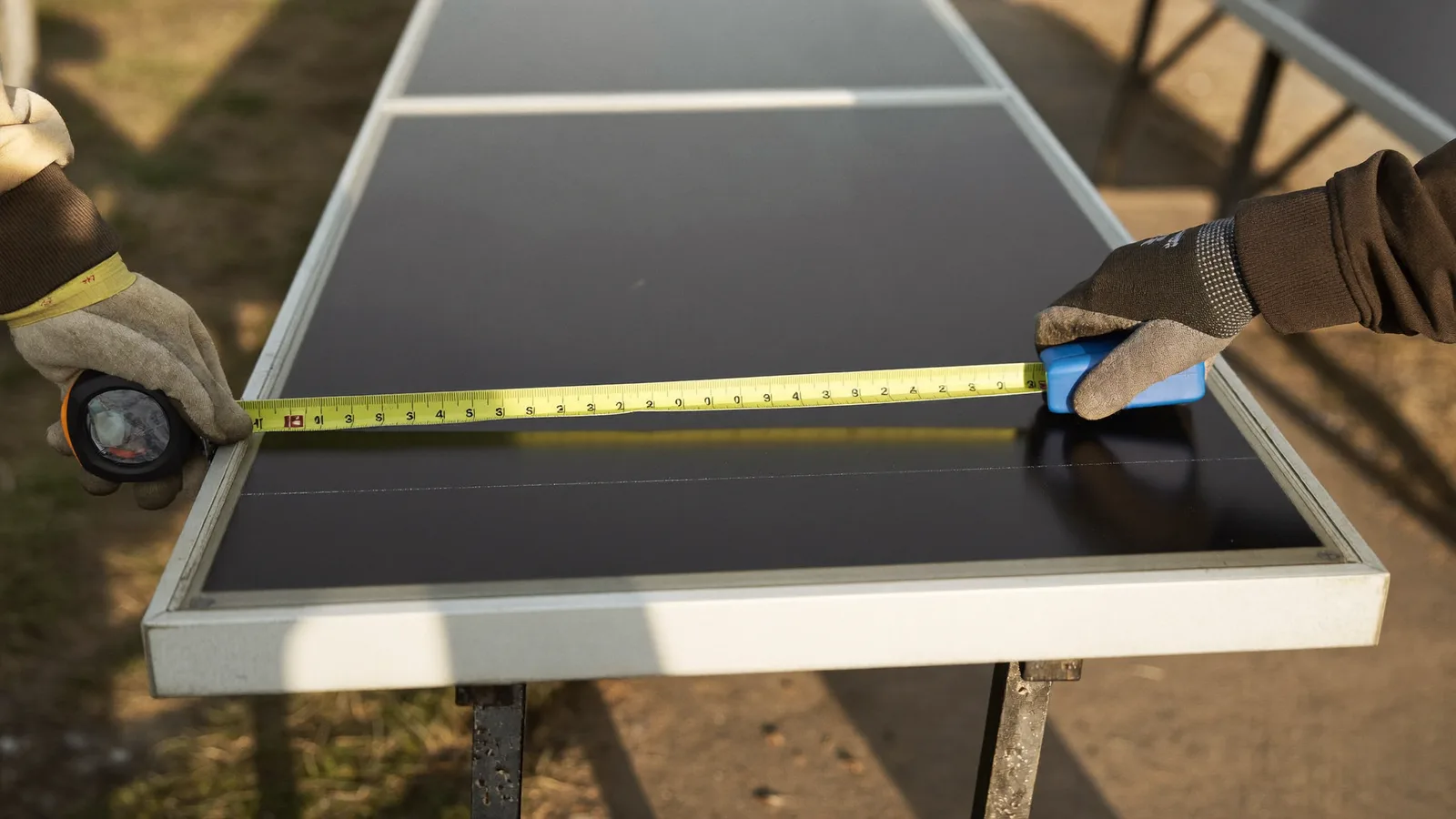
The most common residential solar panel in Australia in 2026 is rated between 400W and 440W. These panels use 144 half-cut monocrystalline cells arranged in a rectangular frame. The typical dimensions are:
Standard 400 to 440W residential panel: approximately 1,722 x 1,134 x 30mm, weighing 20 to 22kg.
That is roughly 1.7 metres tall, 1.1 metres wide, and 3 centimetres thick. About the size of a single bed mattress, give or take. Dimensions vary slightly between manufacturers. A Jinko Tiger Neo 440W and a Trina Vertex S+ 440W will be within a few millimetres of each other, but not identical.
Solar Panel Sizes by Wattage
Panel dimensions increase with wattage. Here is how the main categories compare:
| Wattage Range | Dimensions (L x W) | Weight | Use Case |
|---|---|---|---|
| 370 to 390W | ~1,700 x 1,000mm | ~19 kg | Older/smaller residential panels |
| 400 to 420W | ~1,722 x 1,134mm | ~21 kg | Standard residential (2026) |
| 430 to 450W | ~1,762 x 1,134mm | ~22 kg | Larger residential panels |
| 500 to 580W | ~2,278 x 1,134mm | ~28 to 32 kg | Commercial/large-scale |
Dimensions are approximate and vary by manufacturer. Always check the datasheet for the specific panel your installer is quoting.
Find out what your home actually needs
Free, takes 60 seconds, no obligation.
How Many Panels Fit on Your Roof?
The raw panel area is about 1.95 square metres for a standard 400 to 440W panel. But you cannot tile them edge to edge. Once you account for mounting rail gaps, ventilation clearance, and setbacks from the roof perimeter, allow 1.8 to 2.0 square metres per panel as a planning rule of thumb.
Quick estimate for common system sizes:
- 6.6kW system (15 x 440W panels): ~28 to 30 sqm of usable roof
- 8.8kW system (20 x 440W panels): ~38 to 40 sqm of usable roof
- 10kW system (23 x 440W panels): ~43 to 46 sqm of usable roof
- 13.2kW system (30 x 440W panels): ~56 to 60 sqm of usable roof
Remember, usable roof space is always less than total roof area. A roof that measures 80 square metres in total might only have 45 to 55 square metres available for panels after you subtract setbacks, obstructions, and shaded zones.
Half-Cut vs Full-Size Cells
Nearly all panels sold in Australia in 2026 use half-cut cells. This means each silicon cell is cut in half during manufacturing, doubling the cell count (from 72 to 144 in a standard panel) without changing the external dimensions.
The benefit is performance, not size. Half-cut cells carry lower current per cell, which reduces resistive losses and improves output in partial shade. If one row of cells is shaded, only that section is affected rather than the whole panel. You do not need to worry about choosing between half-cut and full-size. If you are buying a new panel in 2026, it will almost certainly be half-cut already.
Your rebate, worked out to your address
Then one Why Solar Approved installer near you, and fifteen minutes with a solar expert before you sign.
Common Roof Space Constraints
Your installer will do a proper site assessment, but here are the things that typically eat into your available roof space:
- Setbacks from roof edges. Panels must be kept back from the perimeter, typically 200mm or more depending on your state and council requirements.
- Ridge and hip clearance. Panels need clearance from the roof ridge for ventilation and to avoid wind uplift issues.
- Valleys and changes in roof plane. Panels cannot span across valleys, so each roof section is planned independently.
- Vents, skylights, and whirlybirds. These create dead zones where panels cannot be placed, plus shade buffers around them.
- Antenna mounts, satellite dishes, and plumbing vents. Often easier to relocate than work around, but your installer will assess.
- Structural load limits. Older roofs or lightweight structures may not support the weight of a full array. Each panel adds 20 to 22kg plus the mounting system.
For a typical single-storey home with a standard pitched roof, you can usually fit a 6.6kW system (15 panels) on one roof face. Larger systems of 10kW or more often need panels on two or more roof faces, which may mean a split orientation (some north-facing, some west-facing).
Choosing the Right Panel Size for Your Roof
If roof space is tight, higher-wattage panels let you fit more capacity into less area. Going from 400W to 440W panels gives you 10% more output per panel with only a marginal increase in physical size. That can be the difference between fitting 6.6kW and having to settle for 5kW.
For homes with plenty of roof space, the panel size matters less. Your installer will recommend whatever gives the best value per watt, which is usually a mid-range 410 to 430W panel from a Tier 1 manufacturer.
Avoid commercial-grade panels (500W+) on residential roofs. They are heavier, harder to handle on pitched roofs, and may exceed the structural load rating of your roof framing. They are designed for flat commercial rooftops with crane access.
Sources
- Clean Energy Council: approved solar module specifications and product listings
- Manufacturer datasheets: Trina, Jinko, LONGi, Canadian Solar, Q CELLS (2025/2026 models)
- AS/NZS 5033:2021 Installation and safety requirements for photovoltaic arrays
- Solar Accreditation Australia (SAA): installation guidelines and setback requirements
The next step
If you're considering solar panels or batteries for your home, Andy and the team can match you with one Why Solar Approved installer near you for a free written quote, and fifteen minutes with a solar expert before you sign.

Written by
Solar Installer Partner Relations
Connects homeowners with trusted, vetted solar installers across Australia. Andy works directly with installation companies to ensure quality standards and helps homeowners through the quoting process.
If you have any questions about the information in this guide, email andy@whysolar.com.au or call +61 2 5657 6527.