
Solar Maintenance
Solar Panel Cleaning in Australia: Is It Worth It?
Dirt costs you 5 to 30% of your solar output depending on conditions. Here's when professional cleaning is worth it, and when you can skip it.
Your solar rebate, checked before you sign
By Bec Ramirez
7 min read
Find out what your home actually needs
Professional solar panel cleaning costs $150 to $350 for a typical home system. Dirt reduces output by 5 to 30% depending on your situation. If your panels sit at a decent angle and you get regular rain, cleaning is a nice-to-have. If you have flat panels, lots of birds, dust, salt spray, or nearby construction, cleaning every 6 to 12 months pays for itself pretty quickly.
Search “should I clean my solar panels” and you'll get two very different answers. On one side, cleaning companies telling you that dirty panels are haemorrhaging money. On the other, sites like SolarQuotes saying panel cleaning is “a waste of time” and rain does the job for free.
The honest answer sits somewhere in between. Whether cleaning is worth it depends on where you live, the angle of your roof, what's falling on your panels, and how much output you're actually losing. Here's how to tell which camp you're in.
How much does dirt actually cost you?
Research from various sources puts the output loss from dirty panels at anywhere from 5% to over 30%. That's an enormous range, and it's part of why there's so much disagreement. A light layer of dust on angled panels in Melbourne might cost you 5% at most. A thick layer of bird droppings on flat panels in outback Queensland could easily cost 25 to 30%.
It comes down to what is sitting on the glass. Here's a rough guide to what different types of buildup actually do to your output.
| Type of buildup | Typical output loss | Does rain fix it? |
|---|---|---|
| Light dust | 2 to 5% | Mostly, yes |
| Pollen buildup | 5 to 15% | Partially |
| Bird droppings | 15 to 30% | No |
| Coastal salt film | 10 to 20% | Partially |
| Construction dust / cement | 15 to 25% | No |
| Lichen / moss (shaded areas) | 10 to 20% | No |
Look at the last column: rain does a decent job with loose dust, but it won't touch bird droppings, stuck-on pollen, salt residue, or construction grime. If that's what you're dealing with, waiting for rain is just watching money disappear from your power bill.
Find out what your home actually needs
Free, takes 60 seconds, no obligation.
When cleaning is genuinely worth it
There are situations where regular cleaning makes a real financial difference. If any of these apply to you, getting your panels cleaned every 6 to 12 months is likely worth the cost.
Flat or low-pitch roof (under 15 degrees)
Without a decent angle, water pools on the panels instead of sheeting off. Dirt, leaves, and droppings sit there and bake on. This is the single biggest factor in whether cleaning pays off.
Bird-heavy areas
If you're near trees that attract birds, or if pigeons have taken a liking to your roof, droppings are your biggest enemy. They create hot spots that degrade cells and can cause permanent damage if left.
Rural, dusty, or agricultural areas
Red dust, harvest chaff, and general agricultural debris build up faster than rain can clear it. Properties near unsealed roads or paddocks notice this especially.
Coastal locations (salt spray)
Salt deposits form a film that rain alone won't remove. Coastal homes within a few kilometres of the water typically need more regular cleaning, every 6 months or so.
Near construction or renovation
Cement dust, plaster particles, and general construction grime stick hard and build up fast. If there's building work nearby, check your panels once it wraps up.
When you can probably skip it
This is where SolarQuotes has a point. If your panels sit at a reasonable angle (above 15 degrees) and you live in an area with semi-regular rain, nature genuinely does most of the work for you. The rain sheets off the glass, taking dust with it, and your panels stay close to peak output without any intervention.
In a typical suburban area with a standard pitched roof, no major bird issues, and regular rainfall, you might see a 3 to 5% improvement from professional cleaning. On a 6.6kW system producing roughly $1,500 worth of electricity a year, that's $45 to $75 in recovered output. Given that cleaning costs $150 to $250, the maths doesn't really stack up for annual cleaning.
In this situation, cleaning every two to three years is more reasonable. Or just give them a spray with the hose yourself when you notice them looking grubby.
What professional cleaning costs
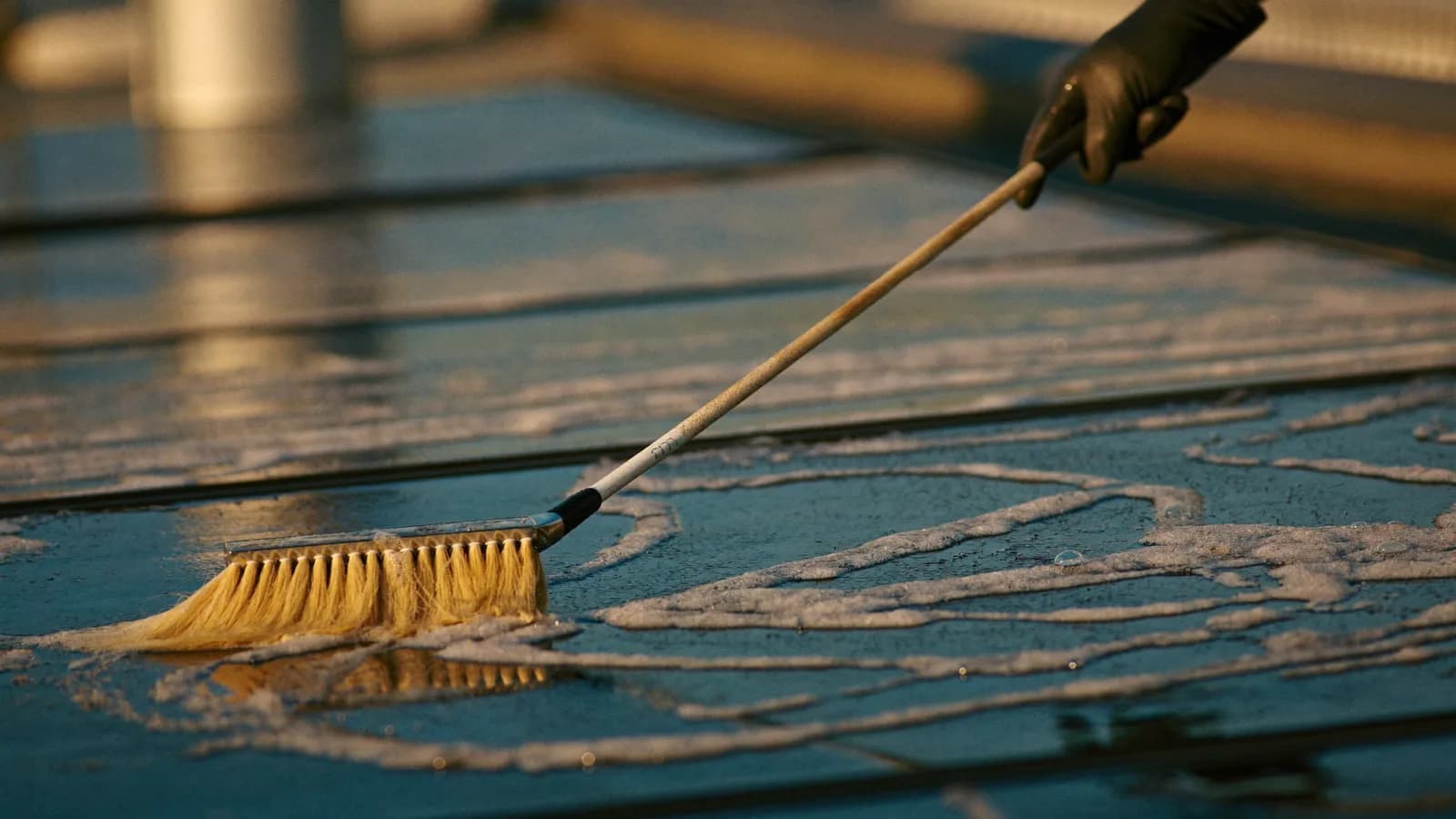
Most professional cleaning companies use purified water systems and soft brushes on extendable poles. A standard residential job takes 30 to 60 minutes. Some offer package deals when combined with gutter or roof cleaning, which can bring the per-panel cost down.
Always make sure whoever you hire is insured for working at height and understands they should never use pressure washers or chemical cleaners on solar panels. It sounds obvious, but it's worth asking.
Your rebate, worked out to your address
Then one Why Solar Approved installer near you, and fifteen minutes with a solar expert before you sign.
How to clean solar panels yourself (safely)
If you can safely reach your panels, DIY cleaning is straightforward. The important thing is knowing what to use and what to avoid.
check_circleDo
- Use a soft brush, sponge, or microfibre cloth
- Use plain water or a gentle garden hose
- Clean early morning when panels are cool
- Work from the ground with an extendable pole if possible
- Rinse from top to bottom so dirty water runs off
cancelDon't
- Never use a pressure washer (damages glass coating)
- Never use abrasive sponges or scourers
- Avoid detergent, soap, or chemical cleaners
- Don't spray cold water on hot panels (thermal shock)
- Don't walk on the panels or lean on them
A word on safety: if your panels are on a steep or multi-storey roof, don't climb up there yourself. A fall from a roof is far more expensive than a professional clean. Ground-level extendable brush kits are available from hardware stores for around $50 to $100 and work well for single-storey homes.
What most cleaning articles miss
The advice that solar panel cleaning is a waste of money gets repeated a lot online, and for certain situations it's fair enough. If you're in suburban Melbourne with a 25-degree pitched roof and regular rain, you probably don't need to pay someone $250 a year to clean your panels.
But Australia is a big, diverse place. Someone in a dusty part of regional South Australia with flat-mounted panels and cockatoos roosting on the roof is in a completely different situation. So is someone in a coastal Queensland suburb dealing with salt spray and bat droppings. For these people, regular cleaning isn't a luxury. It's basic maintenance that protects a significant investment.
The easiest way to check whether your panels need attention is to look at your monitoring data. If output has dropped noticeably and there's no shading or fault to explain it, dirty panels are the most likely culprit. Get them cleaned, check the data again a week later, and the numbers will tell you whether it was worth it.
How often should you clean your panels?
| Your situation | Suggested frequency |
|---|---|
| Well-angled roof (>15°), regular rain, no birds | Every 2 to 3 years (or hose off yearly) |
| Standard suburban, some trees nearby | Every 12 months |
| Flat/low-pitch roof | Every 6 to 12 months |
| Bird-heavy area or near large trees | Every 6 months |
| Coastal (within 5km of water) | Every 6 months |
| Dusty/rural/agricultural | Every 3 to 6 months |
| Near active construction | Once after construction finishes |
Frequently asked questions
How much does solar panel cleaning cost in Australia?
Professional cleaning runs $15 to $20 per panel, or $150 to $350 for a standard residential system. Prices vary depending on roof access, system size, and your location. Some companies offer discounts when you bundle with a gutter or roof clean.
How often should you clean solar panels?
Every 6 to 12 months is a good starting point. If your panels are on a steep roof and you get regular rain, you can stretch that to every couple of years. Dusty, coastal, or bird-heavy environments may need cleaning every 3 to 6 months.
Can I use a pressure washer on solar panels?
No. Pressure washers can crack the glass, strip the anti-reflective coating, and force water into sealed electrical junctions. Stick to a garden hose and a soft brush. It's slower, but it won't damage a $10,000 system.
Does rain clean solar panels well enough?
Rain handles loose dust reasonably well on angled panels. But it won't shift bird droppings, salt film, pollen crust, or construction dust. On flat or low-pitch roofs, rain can leave dirty water marks that make things worse.
Will cleaning void my solar panel warranty?
Not if done correctly. Cleaning with water and a soft brush is fine. What can void your warranty is using pressure washers, chemical solvents, or abrasive tools. Check your panel manufacturer's cleaning guidelines if you're unsure.
What's the best time of day to clean solar panels?
Early morning, before the panels heat up. Spraying cold water onto hot glass can cause thermal shock, which risks micro-cracks over time. Morning cleaning is also cooler and safer for you if you're working on the roof.
The next step
If you're considering solar panels or batteries for your home, Bec and the team can match you with one Why Solar Approved installer near you for a free written quote, and fifteen minutes with a solar expert before you sign.

Written by
Aussie Mum & Energy Expert
Helps families switch to solar with practical, real-world advice. Bec focuses on the financial side: rebates, bill savings and financing options, so everyday Australians can see real value from going solar.
If you have any questions about the information in this guide, email hello@whysolar.com.au or call +61 2 5657 6527.