
Grid & Energy
Queensland Just Switched on 1.7 GWh of Grid Batteries. Here's What It Means for You.
In the space of two weeks, Queensland brought online two massive battery systems totalling 550MW and 1.1 GWh of storage. Combined with the Supernode project in Brendale, that is over 1.7 GWh of new grid storage in a single state. Here is what it means for the grid, for electricity prices, and for anyone thinking about a home battery.
Your battery rebate, checked before you sign
8 min read
The federal rebate takes about $3,610 off a 14 kWh battery installed before 1 January 2027, when it steps down.
Current battery rates end 1 January 2027 · 80 days remaining
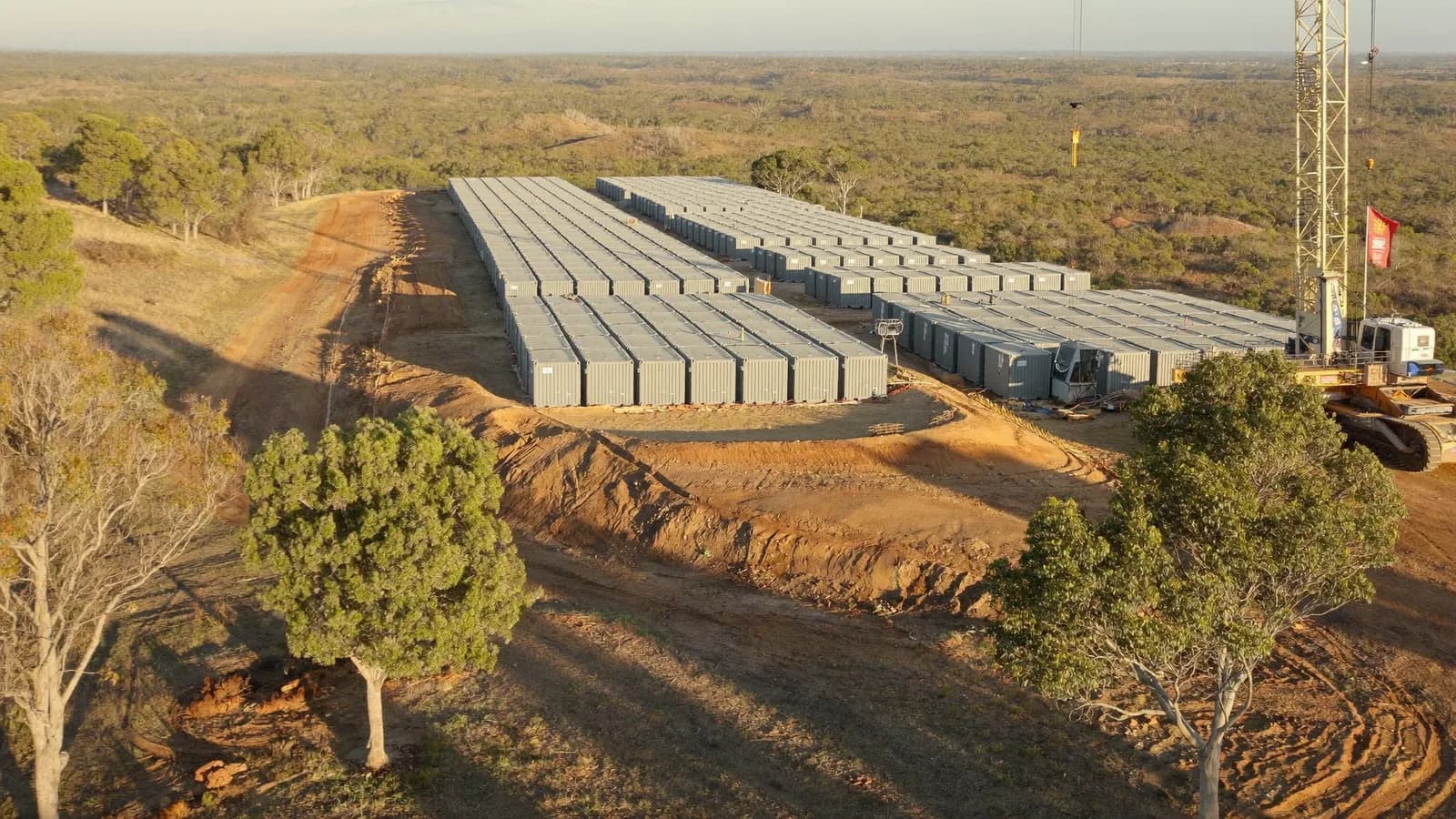
On 18 February 2026, Stanwell Corporation flicked the switch on the Tarong Battery Energy Storage System. 300 megawatts. 600 megawatt-hours. 164 Tesla Megapack 2XL units arranged in neat rows next to the coal-fired power station that has powered south-east Queensland for decades. Two weeks earlier, CleanCo brought its 250MW Swanbank battery online at a former coal site in Ipswich.
That is over half a gigawatt of new dispatchable battery capacity in a single fortnight. For a state that until recently relied almost entirely on coal and gas for evening power, it is a massive shift. And combined with the Supernode Stage 1 battery in Brendale (260MW / 619MWh), Queensland has added over 1.7 GWh of grid-scale storage in early 2026 alone.
But the question most people reading this actually want answered is simpler: what does any of this mean for me?
What just got built
Think of these batteries like enormous warehouses that buy cheap stock and sell it when demand peaks. During the middle of the day, Queensland's rooftop and utility-scale solar produces far more electricity than anyone needs. Wholesale prices drop, sometimes to zero, sometimes below. These batteries charge up during that glut and then discharge it during the evening peak when everyone gets home, turns on the aircon, and starts cooking dinner.
Tarong BESS
Capacity: 300MW / 600MWh
Cost: $514 million
Technology: 164 Tesla Megapack 2XL units
Owner: Stanwell Corporation (state-owned)
Location: Co-located with Tarong coal plant, near Nanango
Jobs: 80 permanent positions, construction began August 2023
The Tarong battery boosts the site's total capacity to 2.1 GW when combined with the existing coal and gas units. It is part of Stanwell's broader 2.8 GWh storage portfolio, which includes the 300MW / 1,200MWh Rockhampton battery still under construction.
Swanbank BESS
Capacity: 250MW / 500MWh
Cost: ~$330 million
Technology: Tesla battery technology
Owner: CleanCo (state-owned)
Location: Former Swanbank coal plant, Ipswich
Peak supply: Enough for ~355,000 homes during peak demand
Swanbank is a genuine coal-to-battery story. The old coal station was decommissioned and the site repurposed. It uses the existing grid connection infrastructure, which saved years of planning approvals and tens of millions in transmission costs.
Then there is the Supernode Stage 1 battery at Brendale in Brisbane's northern suburbs: 260MW / 619MWh, built by Quinbrook Infrastructure Partners. Stages 2 and 3 are already under construction, which will eventually take the site to 780MW / 3,074MWh. That is over three gigawatt-hours from a single location, which is genuinely enormous.
Between the three projects, Queensland has invested over $844 million in grid-scale batteries that are already operational. The state government has committed $379 million to large-scale batteries and another $135 million to network-scale batteries this financial year alone.
Your battery rebate, checked before you sign
The federal rebate takes about $3,610 off a 14 kWh battery installed before 1 January 2027, when it steps down. One Why Solar Approved installer near you, and fifteen minutes with a solar expert before you sign.
Current battery rates end 1 January 2027 · 80 days remaining
Why they are building batteries at coal plants
This is one of those details that sounds obvious once you hear it but explains a lot about where Australia's big batteries are going.
The most expensive and time-consuming part of building a grid-scale battery is not the batteries themselves. It is the transmission connection. Getting approval to connect a 300MW anything to the high-voltage grid takes years of planning studies, environmental approvals, and tens of millions in infrastructure upgrades. Sometimes the grid connection costs more than the battery.
Coal plants already have those connections. Tarong has massive transmission lines running straight to the south-east Queensland load centres. Swanbank sits on a grid connection that was built to handle a coal-fired power station. When you plonk a battery on the same site, you inherit all of that infrastructure. There are no new transmission lines to build and no five-year approval process. You just plug in.
It is the same logic behind Stanwell's next project: a 300MW / 1,200MWh battery at Rockhampton, co-located with the Stanwell coal plant. And you will see this pattern repeat across the country as more coal stations wind down. The grid connection is the golden ticket.
What this does to the electricity market
Back to the warehouse analogy. Right now, Queensland's electricity market has a problem that is best described as a badly timed surplus. During the day, there is too much solar and not enough demand. In the evening, there is too much demand and not enough supply. Gas peaker plants fill that evening gap, and they charge accordingly: sometimes $10,000 to $20,000 per megawatt-hour during extreme peaks.
Grid-scale batteries sit right in the middle of this mismatch. They absorb cheap daytime solar (sometimes buying at negative wholesale prices) and sell into the evening peak. Every megawatt-hour a battery dispatches during peak is a megawatt-hour that a gas peaker does not have to generate. Over time, that compresses the evening price spikes that drive high retail electricity rates.
With 550MW of new battery capacity now live in Queensland (and 260MW more from Supernode), the state has significantly more evening flexibility than it did three months ago. That does not mean electricity bills drop overnight. Wholesale prices flow through to retail gradually, typically over 6 to 12 months as retailers adjust their hedging positions. But the direction is clear.
The national picture: Australia brought online approximately 8.6 GWh of grid-scale battery storage in 2025. The NEM pipeline includes around 64 GW of proposed generation and storage, with roughly half being battery storage. The build rate is accelerating.
So does this make home batteries less worthwhile?
This is the question I get asked most often when grid battery news hits the headlines. And the honest answer is: it is complicated, but mostly no.
Grid batteries and home batteries do different jobs. Yes, there is some overlap in the “store cheap solar, use it at peak” logic. But the value of a home battery is not just arbitrage. It is self-consumption (using your own solar instead of buying from the grid at 30+ cents per kWh). It is blackout protection. It is VPP participation, where your battery earns money by responding to grid events. And it is independence from whatever retailers decide to charge you next year.
What grid batteries will do over time is reduce the severity of evening price spikes. If you are on a time-of-use tariff and your home battery is primarily earning its keep through peak/off-peak arbitrage, that margin could narrow. But self-consumption savings (the biggest value driver for most households) are barely affected. You are still avoiding the full retail rate every time you use your own stored solar instead of buying from the grid.
We covered this in more detail in our longer piece on grid batteries and home battery ROI. The short version: grid batteries shift the value mix slightly, but they do not kill the home battery business case. Not even close.
See the battery rebate your quote should show
The federal rebate takes about $3,610 off a 14 kWh battery installed before 1 January 2027, when it steps down. Then a solar expert goes through it with you, and your quote, before you sign.
Current battery rates end 1 January 2027 · 80 days remaining
The duck curve is getting addressed (finally)
If you have heard the term “duck curve” before, this is exactly what these batteries are designed to flatten. The duck curve describes how electricity demand looks when you subtract rooftop solar generation: it dips dramatically during the day (when solar is pumping) and spikes sharply in the evening (when solar drops off and everyone turns on their appliances).
That evening ramp, going from minimal demand to full demand in the space of two hours, is what makes electricity expensive. Gas peakers fire up, spot prices surge, and retailers pass the cost on. Grid-scale batteries are essentially purpose-built to clip that evening spike. Charge during the belly of the duck, discharge during the neck.
With over 200,000 home batteries now installed across Australia as well, the combined effect of grid-scale and residential storage is starting to reshape the demand curve in real time. Home batteries do their part during the same 4pm to 9pm window, just at a smaller individual scale. It is the same warehouse logic, just distributed across hundreds of thousands of garages instead of concentrated on a single site.
What comes next in Queensland (and nationally)
Queensland is not slowing down. Stanwell's second battery at Rockhampton (300MW / 1,200MWh) is under construction and will more than double the company's storage portfolio when it comes online. Supernode Stages 2 and 3 at Brendale will push that single site past 3 GWh. The state government's investment of $514 million in battery infrastructure this financial year makes it one of the largest state-level commitments to storage anywhere in the world.
Nationally, the pipeline is staggering. AEMO's data shows around 64 GW of proposed generation and storage in the NEM, with roughly half being battery projects. Not all of those will get built, but even a fraction would fundamentally change how the Australian grid operates. We are moving from a system designed around big coal plants that run 24/7 to one where solar provides the energy and batteries provide the timing.
For anyone thinking about a home battery, this context matters. The grid is getting more battery storage every month. That means fewer blackouts, smoother pricing, and (eventually) lower retail rates. It does not mean home batteries become pointless. If anything, the shift towards time-of-use pricing and dynamic tariffs makes having your own storage more valuable, because it gives you control over when you buy from the grid and when you do not.
The bigger picture
Coming back to the warehouse analogy: Queensland just built two enormous warehouses that will buy cheap solar during the day and sell it back to the grid every evening. That is good for everyone. Lower wholesale price spikes mean lower bills, eventually. Less gas generation means lower emissions. More grid stability means fewer blackouts.
For home solar owners, the equation has not changed as much as the headlines suggest. Your panels still generate more than you use during the day. A home battery still lets you use that surplus in the evening instead of buying from the grid at peak rates. And the federal battery rebate still knocks thousands off the upfront cost, at least while the current STC factor holds.
The coal-to-battery transition happening at sites like Tarong and Swanbank is genuinely significant. These are not pilot projects or demonstration facilities. They are $500 million industrial assets that will operate for decades. When a state-owned energy company invests that kind of money in battery storage on a coal plant site, it tells you everything about where the energy system is heading.
For anyone weighing up a home battery, living with one already, or simply trying to make sense of their electricity bill, the grid is changing fast, and for once the change is working in your favour.
Sources
The next step
If you're considering a home battery system, Andy and the team can match you with one Why Solar Approved installer near you for a free written quote, and fifteen minutes with a solar expert before you sign.

Written by
Solar Installer Partner Relations
Connects homeowners with trusted, vetted solar installers across Australia. Andy works directly with installation companies to ensure quality standards and helps homeowners through the quoting process.
If you have any questions about the information in this guide, email andy@whysolar.com.au or call +61 2 5657 6527.