
Energy
Negative Electricity Prices in Australia, Explained (And How Your Battery Can Cash In)
Why generators pay the grid to take their power, and how a battery turns that into money in your pocket.
Your battery rebate, checked before you sign
By Bec Ramirez
8 min read
The federal rebate takes about $3,610 off a 14 kWh battery installed before 1 January 2027, when it steps down.
Current battery rates end 1 January 2027 · 80 days remaining
Every few months, a headline pops up: “Electricity prices go negative in South Australia!” And every time, the same conversation plays out. People see “negative prices” and think oh, free energy, awesome.
As one Reddit user put it bluntly: “I've tried to explain to people on here that negative spot prices are not a good thing. They're actually an indication that there's a severe mismatch between generation and consumption (/storage)!”
They're right. Negative wholesale prices are a symptom, not a gift. But here's the twist: if you understand what's happening, a home battery lets you turn that symptom into actual money in your pocket.
What negative electricity prices actually are
Australia's electricity grid runs on a wholesale spot market managed by AEMO. Every five minutes, generators bid to supply power. When there's more generation than demand, prices drop. When supply massively exceeds demand, prices go negative, meaning generators are literally paying the grid to take their electricity.
Normal wholesale prices sit around $100-200 per megawatt-hour. During a sunny midday in South Australia, they can drop to minus $50 or worse. Then at 6pm on a hot evening, when everyone's running their aircon and the sun's gone, those same prices can spike to $10,000-$20,000/MWh.
That swing, from paying people to take power at lunchtime to charging a fortune at dinner, is where the opportunity lives. But first, you need to understand why it happens.
Your battery rebate, checked before you sign
The federal rebate takes about $3,610 off a 14 kWh battery installed before 1 January 2027, when it steps down. One Why Solar Approved installer near you, and fifteen minutes with a solar expert before you sign.
Current battery rates end 1 January 2027 · 80 days remaining
Why coal plants pay you to take their electricity
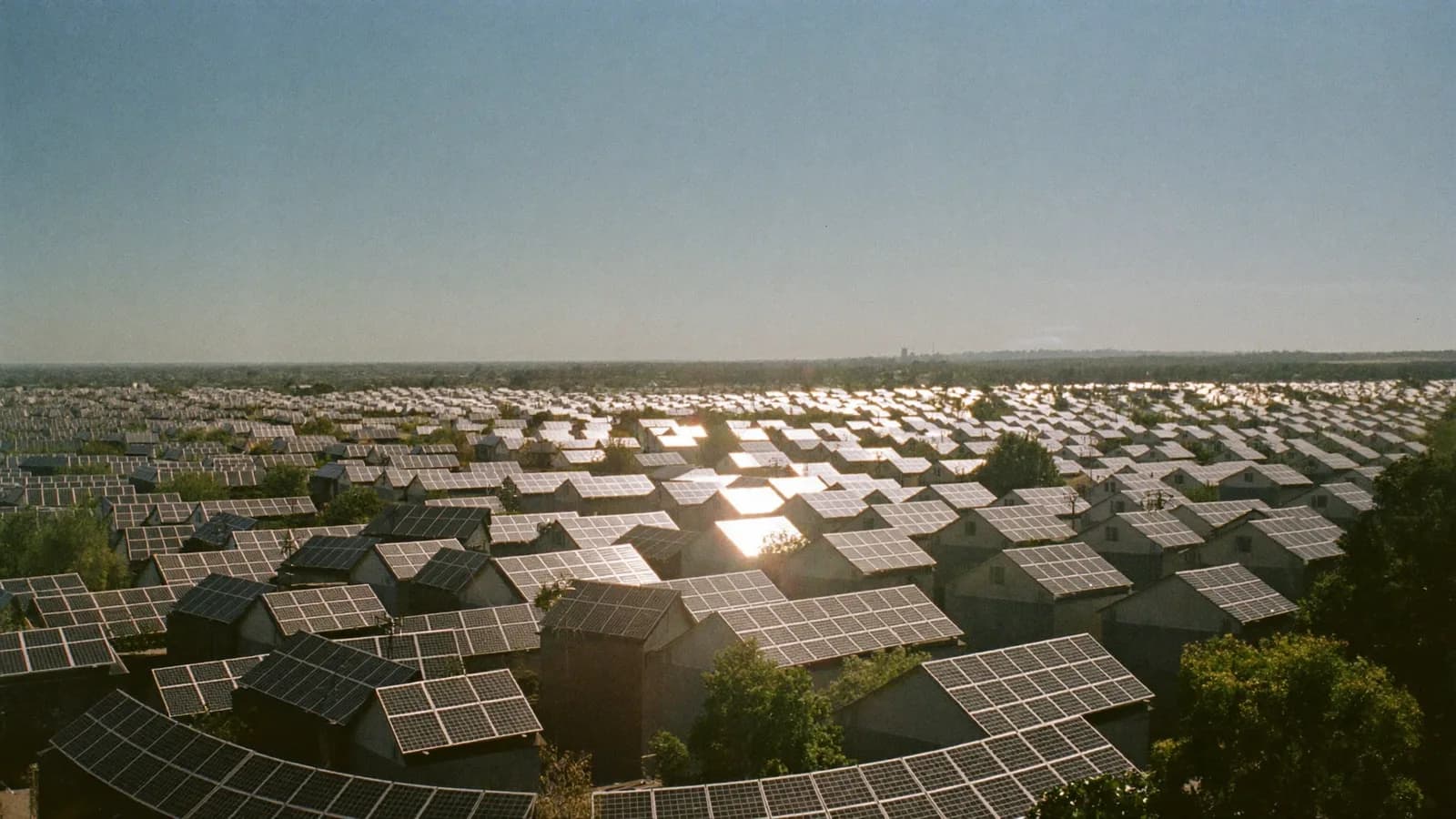
Two things collide at midday. First, rooftop solar across the country is pumping out enormous amounts of electricity. South Australia has already hit days where rooftop solar alone powered the entire state grid during the day.
Second, coal plants can't just switch off. Shutting down a coal generator and restarting it costs millions and takes days. So when solar floods the market and there's no demand for their power, coal operators do something counterintuitive: they bid negative prices. They'd rather pay the grid $50/MWh to keep running than spend millions ramping down and back up again.
Think of it like a farmer who grows way too much fruit with no cold storage. Come harvest time, they've got more peaches than anyone can eat. Rather than let them rot on the ground and lose the whole orchard, they'll pay someone to come take the excess. The coal plants are doing the same thing, paying the grid to absorb power they can't stop producing.
As one commenter on r/solar explained: “This program actually benefits the coal plants, as they are paying when prices go negative many mid days.”
Why negative prices don't mean free bills
This is where most people get tripped up. Negative wholesale prices sound like your power should be free. But your electricity bill isn't just wholesale generation. As one Redditor explained clearly: “It's negative prices on the wholesale market. The price you pay also accounts for distribution costs (poles and wires).”
Wholesale generation makes up roughly 30% of your retail bill. The other 70% is transmission and distribution infrastructure (the poles and wires), daily supply charges, retail margins, metering, and environmental levies. None of that changes when the wholesale price dips below zero.
So even during hours when generators are paying the grid to take their power, you're still paying for the privilege of being connected to that grid. Your power bill stays stubbornly high because the expensive part isn't generation. It's everything else.
How a battery turns the swing into savings
One Reddit comment nailed the opportunity: “I don't know why this isn't a cracking business opportunity: get paid to fill up your battery from the grid, then paid again to discharge it at peak times.”
That's exactly what home batteries make possible. The logic is straightforward:
- Midday: charge when prices are negative or near-zero. Your solar fills the battery for free. On a spot-price plan, you might even get paid to pull extra from the grid.
- Evening peak: discharge when prices spike. Use your stored energy instead of buying from the grid at 30-50c/kWh. Or export it via a VPP program when wholesale hits $10,000+/MWh.
- Repeat daily. The bigger the swing between midday and evening prices, the more your battery earns. And those swings are getting wilder.
This is energy arbitrage, and it's the same thing grid-scale batteries do at industrial scale. The difference is you can do it right now, from your garage, with a home battery system and the right electricity plan. We break down the full strategy in our battery arbitrage guide.
See the battery rebate your quote should show
The federal rebate takes about $3,610 off a 14 kWh battery installed before 1 January 2027, when it steps down. Then a solar expert goes through it with you, and your quote, before you sign.
Current battery rates end 1 January 2027 · 80 days remaining
Spot-price retailers: the risk and the reward
To actually benefit from negative pricing, you need a retailer that passes wholesale prices through to you. The most well-known is Amber Electric, which charges a monthly subscription and gives you the raw spot price.
One Redditor shared their experience: “My bill went from $140 with Sumo to $50 with Amber including their $25 monthly fee.”
But a warning came with it: it goes in both directions. As another commenter cautioned: “You just have to be careful because if you run down your battery by the evening peak you could be stuck paying like 20x more.”
Without a battery, a spot-price plan is a gamble. You save during the day but you're exposed to those $10,000/MWh spikes in the evening. With a battery, you're shielded from the spikes because you're running off stored energy when prices are highest. That's what turns the gamble into a strategy.
Spot-price plans without a battery
If you don't have a battery, a spot-price plan can backfire badly. One evening spike can wipe out weeks of daytime savings. Only consider this approach if you have storage to ride out the peaks, or if you're confident you can shift almost all usage to off-peak hours.
Why negative prices probably won't last
Here's the part most headlines miss. Negative wholesale prices are a transitional problem, not a permanent feature of the grid. Two things are about to change the equation:
Grid-scale batteries are coming online fast. Australia has 17 GW of battery capacity either operational or under construction. When those batteries start absorbing midday solar at scale, there'll be far less oversupply pushing prices negative. As one commenter put it: “Grid scale batteries will increase power demand during the day.”
Coal is shutting down. When coal plants close, their negative bidding disappears with them. No more generators paying the grid to keep running. As the same Redditor noted: “Coal shutting down will eliminate their daytime negative bids just to keep running (as it's expensive to stop and start coal powered generators).”
The window to profit from extreme price swings is open now, but it's not going to be open forever. The Solar Sharer program launching mid-2026 is another sign the government is working to redistribute cheap midday power more broadly.
The trifecta: battery + VPP + spot-price plan
If you want to actually profit from negative prices rather than just read about them, here's the setup that's working for people right now.
1. Get a home battery
This is the foundation. Without storage, you can't capture cheap midday energy for evening use. With the federal battery rebate covering a significant chunk of the cost, payback periods are now sitting around 3 years for many households. Compare the leading battery options and use our battery calculator to see where you'd land.
2. Join a VPP program
A Virtual Power Plant program pays you to discharge your battery during grid stress events, exactly when prices are spiking. VPP rates run 3-5x higher than standard feed-in tariffs, and some programs pay over $1/kWh during extreme events.
3. Switch to a wholesale retailer
With a battery backing you up, a spot-price plan like Amber Electric lets you buy power at wholesale (sometimes negative) prices without the evening risk. You're charging cheap, discharging dear, and your battery handles the volatility so you don't have to.
The combined effect
Battery self-consumption saves 25-35c/kWh. VPP exports earn 15-25c/kWh. Spot-price charging during negative periods can add another few cents per kWh on top. Stack all three and your home earns from the grid's volatility as well as cutting your bill.
The peach farmer's lesson
Back to the farmer analogy. Right now, Australia's grid is like a farmer with mountains of peaches at midday and empty shelves by dinner. Negative prices are the farmer paying people to take the surplus. Evening spikes are everyone fighting over the last tin of peaches at 6pm.
A battery is your cold storage. You grab the peaches when they're free (or when you're being paid to take them), keep them cool, and sell them at dinner when everyone else is paying a premium. That's not gaming the system. It's exactly what the grid needs more people to do.
The people who've figured this out are watching their bills drop from $140 to $50. The people who haven't are reading headlines about “free electricity” and wondering why their own bill didn't change. If you're still weighing up the numbers, our analysis of whether solar is worth it in Australia covers the full picture.
Take the rebate quiz to see what battery incentives you qualify for. The arbitrage window is open now, but it won't stay this wide forever.
The next step
If you're considering a home battery system, Bec and the team can match you with one Why Solar Approved installer near you for a free written quote, and fifteen minutes with a solar expert before you sign.

Written by
Aussie Mum & Energy Expert
Helps families switch to solar with practical, real-world advice. Bec focuses on the financial side: rebates, bill savings and financing options, so everyday Australians can see real value from going solar.
If you have any questions about the information in this guide, email hello@whysolar.com.au or call +61 2 5657 6527.