Find out what your home actually needs
Back in March, the Clean Energy Regulator brought in tighter photo rules for solar and battery installs and warned that it would be watching. This month we found out it meant it. In its April to June 2026 compliance update, the regulator confirmed it had suspended 21 companies from the scheme that funds the solar rebate.
The reasons are exactly the sort of thing that gives the industry a bad name: systems signed off as finished when they were not, false statements on paperwork, and, in one of the more brazen examples, installer verification selfies that did not actually show the installer. This is the enforcement wave that the March photo-rule changes were building towards.
If you already have solar, there is a reassuring short version, and I will get to it. If you are about to buy, this is genuinely good news, because the operators being weeded out are the ones you never wanted quoting you in the first place. Here is what happened and what to do about it.
What the CER actually did
The action came through the CER's quarterly compliance update for April to June 2026. Across that quarter, 21 companies were suspended from the Small-scale Renewable Energy Scheme (SRES), the federal scheme that creates and administers the Small-scale Technology Certificates behind your rebate. A suspended company cannot create new STCs, which in practice means it cannot pass on the upfront rebate discount that most of its business depends on.
The conduct the regulator called out falls into a few buckets:
Incomplete systems declared complete
Companies claimed certificates for systems they said were finished and generating electricity when they were not. The STC rebate is only meant to apply to a fully installed, commissioned system.
False or misleading statements
Inaccurate declarations on the paperwork used to claim certificates. Solar retailer Asun Solar was named among the companies suspended for failing to meet its obligations.
Fake installer verification selfies
On-site selfies that are meant to prove the accredited installer was physically at the job, but did not show the actual installer assigned to it.
Fit and proper person failures
The CER treats integrity, capability and competence as an ongoing obligation, not a one-off box to tick when a company joins the scheme.
“False statements and incomplete work will not be tolerated.”
Carl Binning, Acting Chair of the Clean Energy Regulator. The regulator's blunt message to installers was that dodgy applications will be failed and sent back to site.
Find out what your home actually needs
Free, takes 60 seconds, no obligation.
Over 3.6 million homes already claiming rebates
The fake selfie problem, explained
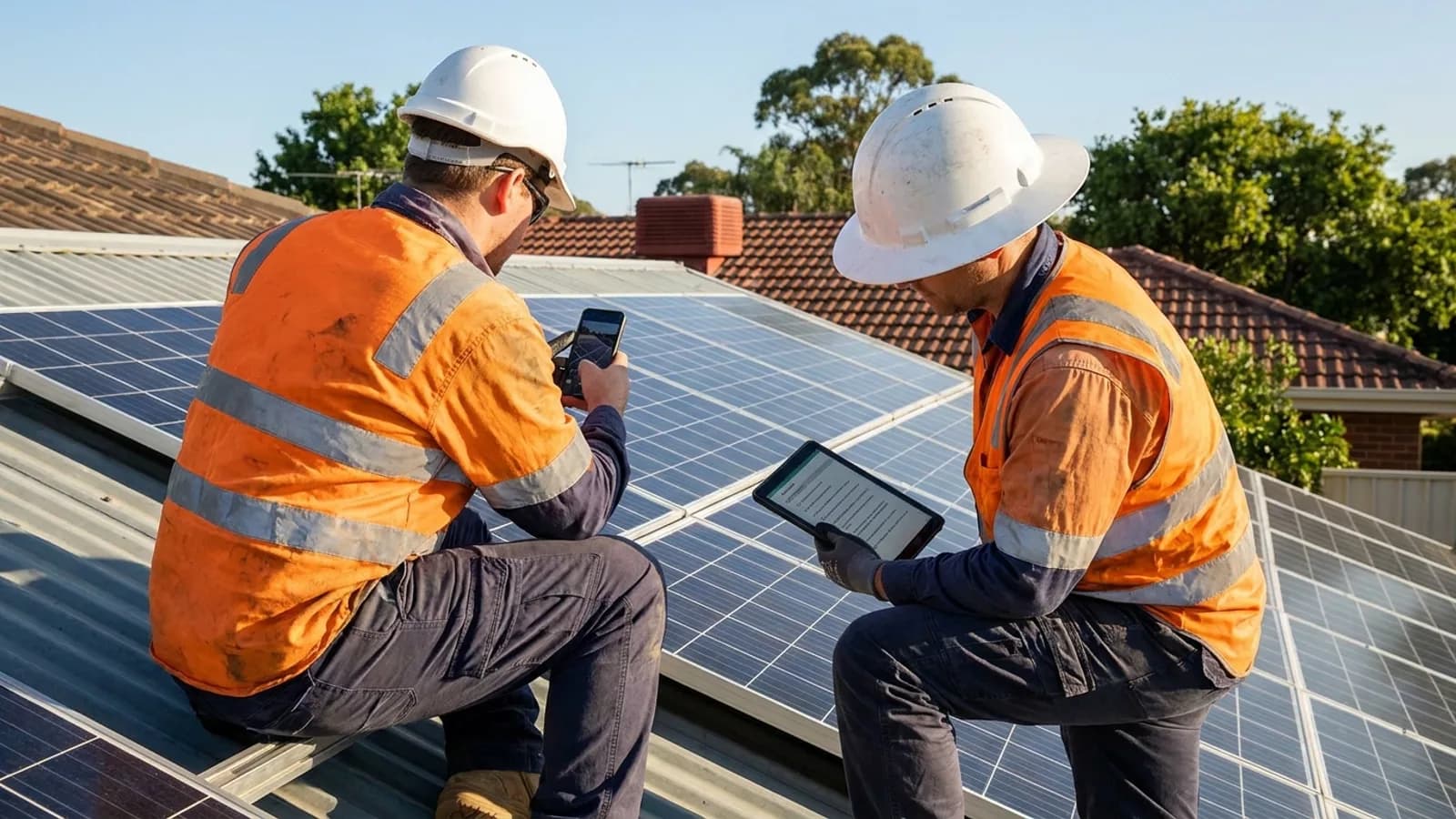
This is the detail that got the most attention, and it is worth understanding because it tells you how the rebate is actually policed. To claim STCs, an accredited installer has to submit an on-site verification selfie: a photo proving that the person accredited for the job was genuinely there to do it or supervise it. It exists to stop the practice of one accredited installer “rubber-stamping” work that unaccredited crews actually carried out.
The CER found selfies that did not show the accredited installer assigned to the job. In plain terms, that is false evidence submitted to claim a government rebate. Alongside it, the regulator has started running AI-assisted image checks on the photos installers upload, flagging missing safety labels and inconsistencies in the metadata, the hidden data that records when and where a photo was actually taken.
None of this is new policy. It is the March 2026 photo requirements being enforced with real consequences for the first time. The message to the industry is that the photos are not a formality, and software is now reading them.
Why this is good news if you are buying solar
It is easy to read “21 companies suspended” as a sign the industry is a mess. I would read it the other way. The good installers were already doing the labelling, the commissioning and the honest paperwork, because it is just how you run a proper business. The crackdown falls on the operators cutting those corners, and those are exactly the ones a homeowner is better off never dealing with.
You do not need to become a compliance expert to protect yourself. A few simple habits do most of the work:
Use an SAA-accredited installer, and confirm the accreditation belongs to the person actually doing your job.
Do not sign the completion paperwork until the system is switched on, commissioned and generating. Check the inverter app or meter before you sign.
Ask for the labelling and verification photos the CER now requires. A legitimate installer has no reason to refuse.
Be wary of anyone pushing you to sign off early or rushing the final steps to lock in a rebate deadline.
For the full version of this, our guide on how to vet a solar installer walks through the checks that matter before you sign anything.
See your specific solar savings
Based on your postcode, energy use and roof.
Over 3.6 million homes already claiming rebates
What to do if a company that did your install got suspended
Here is the reassuring short version I promised. The rebate you already received is safe. STCs that have been created and applied to your system as an upfront discount are not reversed if the company is later suspended. A suspension stops a company creating new certificates from that point on. It does not reach back and undo a discount you have already banked.
The one thing worth checking is the physical install itself, because the whole point of the crackdown is that some systems were signed off before they were genuinely finished. If your system was installed by a company that has since been suspended, confirm two things: that it is actually generating (your inverter app or meter will tell you), and that the required safety labelling is present on the switchboard and battery. If anything looks incomplete, unlabelled or unsafe, get an independent SAA-accredited installer or a licensed electrician to inspect it and put it right.
Signed off but not generating?
A system that was declared complete but is not producing power is the exact scenario the CER is targeting. That is a safety and rectification issue, not just a paperwork one. Do not let it sit. Arrange an independent inspection.
The direction of travel
Zoom out and a pattern is obvious. The photo rules landed in March. The accreditation body changed when Solar Accreditation Australia took over from the Clean Energy Council. Now the regulator is using AI to read installation photos and suspending companies in batches. The rebate has become harder to rort, on purpose.
That is good for the households buying solar and good for the installers doing it properly, even if it makes for uncomfortable headlines in the short term. The rebate is public money, and tightening how it is claimed is how the scheme keeps its social licence through to the end of the decade. For buyers, the takeaway has not changed, it has just been underlined: choose an accredited installer, watch the system come on before you sign, and keep the paperwork. Do that and none of this is your problem.
Sourcesexpand_more
The next step
If you have any questions about the information in this guide, feel free to get in touch:
Email: andy@whysolar.com.au
Tel: +61 2 5657 6527
If you're considering solar panels or batteries for your home, Andy and the team can help you get quotes from trusted, pre-vetted local installers:

Written by
Andy McMasterSolar Installer Partner Relations
Connects homeowners with trusted, vetted solar installers across Australia. Andy works directly with installation companies to ensure quality standards and helps homeowners navigate the quoting process.
Learn more about Andy McMaster