
Industry News
Billions in Solar and Battery Projects Just Kicked Off Across Australia
A $590M NSW transmission upgrade, 2,200 MWh of Victoria battery storage approvals, 3.6 GWh of QLD batteries, and Australia's first silicon wafer factory getting the green light. March was busy.
Your solar rebate, checked before you sign
8 min read
Find out what your home actually needs
Sometimes you can look at a single month of announcements and see a tipping point in real time. March 2026 was one of those months. Across New South Wales, Queensland, and Victoria, billions of dollars worth of solar and battery projects either broke ground, secured funding, or switched on. And a manufacturing plant that could change where Australia sources its solar panels got a major green light.
Here is what just happened, project by project, and why it matters for anyone with panels on their roof or thinking about getting them.
NSW: $590 million for the Hunter Valley's renewable future
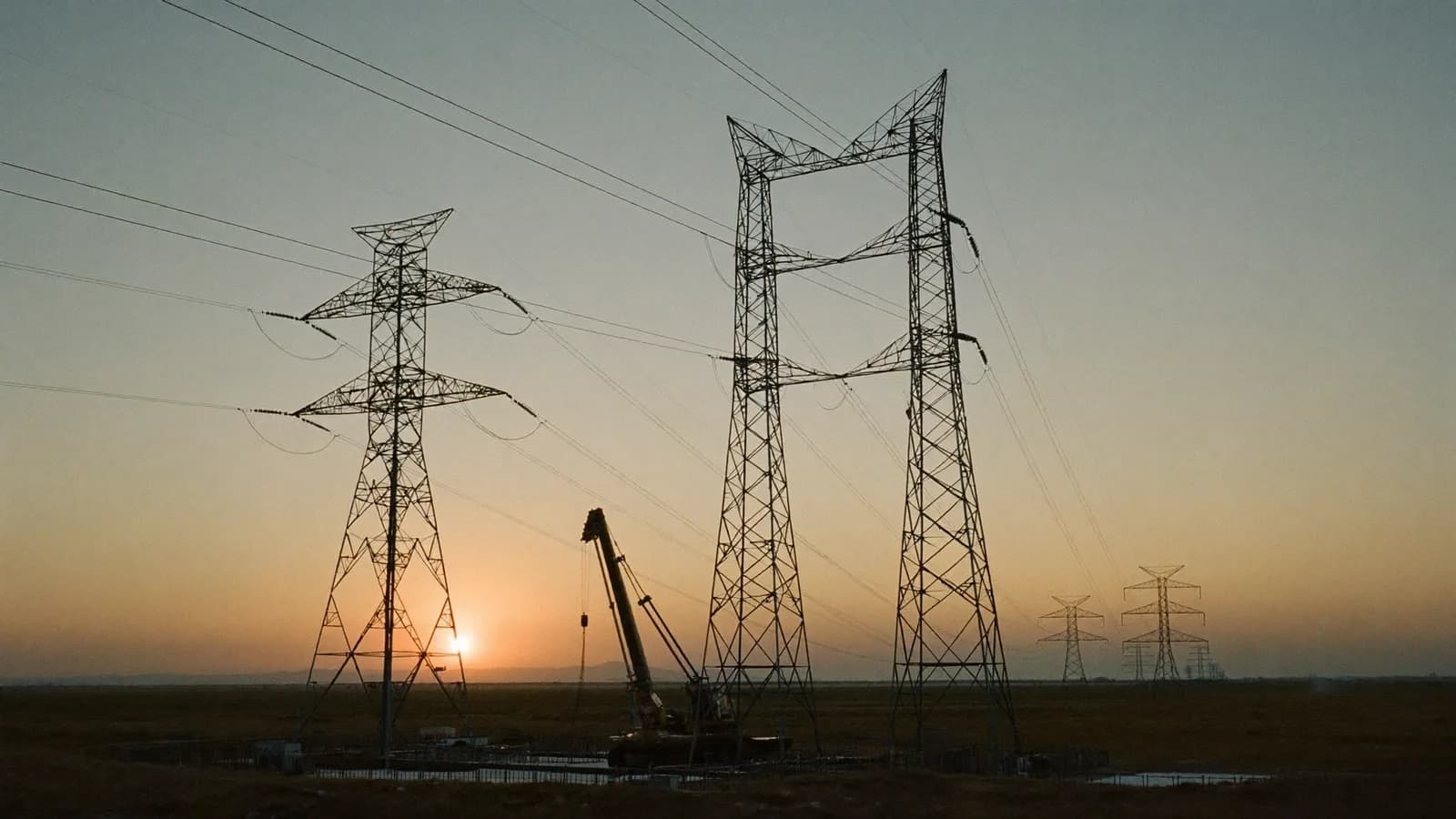
Construction kicked off on the Hunter-Central Coast Renewable Energy Zone (REZ) this month. This is a $590 million transmission upgrade in the Upper Hunter that will boost the grid's transfer capacity by at least 1 GW and enable 1.8 GW of new renewable generation and storage to connect.
The project includes upgrades to roughly 85 km of existing sub-transmission lines, improvements to substations including Kurri Kurri, and two new 132 kV substations at Sandy Creek and Antiene in the Muswellbrook area. EnergyCo (the NSW government's infrastructure delivery body) is running it, with Ausgrid as network operator.
The numbers that matter for local employment: 590 construction jobs and 220 permanent positions once operational. For context, the Hunter has been wrestling with what comes after coal for years now. This is a concrete answer, literally, to that question.
Think of a REZ like building a new highway before the suburbs go in. You need the transmission capacity in place before the solar farms and batteries can connect. Without it, you end up with renewable projects that are built but cannot export their energy. The Hunter REZ is designed to prevent exactly that bottleneck.
Find out what your home actually needs
Free, takes 60 seconds, no obligation.
Queensland: 3.6 GWh of battery storage across two massive projects
Edify Energy appointed DT Infrastructure as the EPC contractor for two solar-plus-storage projects in Queensland that, combined, represent 3.6 GWh of battery storage. To put that in perspective, the Tarong and Swanbank mega batteries that Queensland switched on earlier this year totalled 1.1 GWh. These new projects are more than three times that.
Smoky Creek and Guthrie's Gap (Banana Shire)
Solar: 720 MWp
Battery: 600 MW / 2,400 MWh
DC-coupled hybrid with grid-forming inverters
Ganymirra and Majors Creek (Townsville region)
Solar: 360 MWp
Battery: 300 MW / 1,200 MWh
DC-coupled hybrid with grid-forming inverters
The “DC-coupled” bit is worth a quick explanation. Instead of converting solar DC to AC and then back to DC to charge batteries (which loses energy at each step), these projects use DC/DC converters to charge batteries directly from the solar array before converting to AC for the grid. More efficient, less hardware, simpler.
The grid-forming inverters are the other notable detail. Unlike standard inverters that follow the grid's frequency, grid-forming inverters can set the frequency. That is important because as coal plants close, we lose the spinning mass (inertia) that keeps the grid stable. Grid-forming batteries can fill that role. Queensland is building the backbone of a post-coal grid, one project at a time.
The other major Queensland battery story is the Wooderson Solar and Storage project in central Queensland. RES Australia and joint venture partner received EPBC Act approval in March for a 3.6 GWh solar-plus-storage project with a 35-year operational lifespan. That is another 3.6 GWh project, separate from Edify's, meaning Queensland alone has multiple gigawatt-hours of storage progressing through approvals simultaneously.
Two more projects that tell a bigger story
Flow Power acquired the Dunedoo Energy Project in the Warrumbungle Shire, NSW: a 55 MW solar farm paired with a 60 MW battery, covering 92 hectares with about 175,000 panels. Enough to power roughly 20,000 homes. Construction starts this year. What makes this one notable is that Flow Power will develop, build, own, and operate it themselves. Vertical integration like that is still unusual in Australian renewables.
Meanwhile, in northern Victoria, the 108 MW Lancaster Solar Farm was inaugurated on 18 March. Developed by Danish company European Energy, it features about 170,000 panels and a long-term power purchase agreement with Apple (Apple's first Australian solar deal). A Memorandum of Understanding was signed with the Yorta Yorta Nation Aboriginal Corporation covering workforce participation and cultural protection. Danish King Frederik X and Queen Mary attended the ceremony alongside Australian Energy Minister Chris Bowen.
European Energy has a 10 GW pipeline of projects planned for Australia. Lancaster is just the first cab off the rank.
Queensland puts $200 million on the table for northwest renewables
On 24 March, Queensland launched the $200 million North West Energy Fund. Managed by Queensland Investment Corporation (QIC), it targets private-sector renewable energy, battery, and microgrid projects in the state's northwest, covering communities west of Hughenden including Mount Isa, Cloncurry, Julia Creek, and Richmond.
The backstory is the Copperstring transmission project, a nearly 1,000 km high-voltage line between Townsville and Mount Isa. Rising construction costs forced the government to prioritise the eastern section (Townsville to Hughenden, targeted for 2028) and defer the western link. This fund is the alternative for the communities that got left off the near-term grid connection timeline.
Remote microgrids and standalone battery systems are a different challenge to grid-connected renewables. The economics are different, the technical requirements are different, and the communities they serve are often mining-dependent. QIC is conducting market sounding to identify viable projects. If you are in northwest Queensland, this fund is designed specifically for your situation.
Australia's first silicon wafer factory just got fast-tracked
This is the one that might have the biggest long-term implications. Stellar PV's planned 2 GW solar silicon ingot and wafer manufacturing plant received “Major Project Status” from the Australian government in March. That designation fast-tracks regulatory approvals and signals serious government backing.
The facility would sit at the Lansdown Eco-Industrial Precinct, about 40 km south of Townsville. It would use the Czochralski method with automation and AI to produce monocrystalline silicon ingots and wafers, the building blocks of solar cells. Production is targeted for late 2028.
Stellar previously received $4.7 million through the federal Solar Sunshot program for feasibility and engineering design. If it makes it to production, it would be Australia's first large-scale silicon wafer factory and a meaningful step toward reducing our dependence on imported solar components. Currently, virtually every solar panel installed in Australia contains cells manufactured overseas, predominantly in China.
A 2 GW facility would produce enough wafers for roughly 3.5 to 4 million residential solar panels per year. Whether it makes commercial sense at scale against Chinese manufacturing costs is the billion-dollar question. But the political will and funding are clearly there.
Your rebate, worked out to your address
Then one Why Solar Approved installer near you, and fifteen minutes with a solar expert before you sign.
Victoria: 2,200 MWh approved through the fast-track pathway
Victoria has been running a Development Facilitation Program (DFP) that gives the state government direct approval authority over large battery storage projects, bypassing the standard council planning process. It was designed to accelerate the projects the grid actually needs, and it is producing results.
Two projects were approved through the DFP in March, together representing over 2,200 MWh of new storage capacity.
Meadow Creek Solar Farm
Solar: 332 MW
Battery: 250 MW / 1,000 MWh
Combined solar-plus-storage project approved via the DFP pathway
Tramway Road BESS
Standalone battery storage project
Approved via the DFP pathway
Contributes to the 2,200+ MWh total approved in this round
And then there is the Blind Creek Solar Farm and Battery project, which broke ground in March. Developed by Octopus Australia, the project carries an estimated value of AU$900 million and represents one of the largest single solar-and-battery investments Victoria has seen. Octopus Energy has been growing aggressively in the Australian market, and Blind Creek is a significant bet on the Victorian grid's storage needs.
Together, these Victoria projects add hundreds of megawatt-hours of storage to a state that has among the highest rooftop solar penetration in the country. The midday generation surplus that Victoria regularly experiences needs somewhere to go. These batteries are the answer.
NSW: Australia's biggest battery is already running
While most of the March project announcements are forward-looking, one significant NSW project crossed the finish line earlier in the year. Origin Energy's Eraring Battery commenced commercial operations in January 2026. At 700 MW and 3,160 MWh, it is the largest battery storage project in Australia.
It sits on the site of the Eraring coal power station in the Hunter Valley, the same plant that Origin controversially extended past its original closure date. The battery was built alongside the plant while coal was still running, then stepped into the void as coal generation winds down. AEMO has named grid-forming battery energy storage as a top operational priority for 2026 specifically in New South Wales, and the Eraring Battery is the centrepiece of that strategy.
At 3,160 MWh of capacity, the Eraring Battery can store enough energy to supply roughly 450,000 homes for an hour. It charges during the day when solar generation is abundant and exports during the evening peak when prices are high. That is exactly the arbitrage role that large-scale batteries play in a grid with high rooftop solar penetration.
Why does any of this matter if you just want solar on your roof?
Fair question. These are all big utility-scale and industrial projects. But they affect household solar owners in ways that are not always obvious.
Grid-scale batteries like the Edify projects reduce the need for gas peakers during evening peak. That puts downward pressure on wholesale electricity prices, which eventually flows through to what you pay per kilowatt-hour after sunset. More grid storage also means fewer curtailment events where your solar exports get throttled because the network cannot absorb the energy.
Transmission upgrades like the Hunter REZ enable more renewable generation to connect. More supply means lower wholesale prices, which benefits everyone on the grid. And if Stellar PV gets to production, domestic manufacturing could bring more competitive panel pricing and reduce supply chain risk for the Australian market.
The broader picture is this: Australia installed more than 4 GW of rooftop solar last year. But rooftop solar alone cannot fix the grid. You need the transmission, the storage, and the manufacturing to come with it. March 2026 showed all three moving forward at the same time.
Sources
The next step
If you're considering solar panels or batteries for your home, Andy and the team can match you with one Why Solar Approved installer near you for a free written quote, and fifteen minutes with a solar expert before you sign.
Written by
Solar Installer Partner Relations
Connects homeowners with trusted, vetted solar installers across Australia. Andy works directly with installation companies to ensure quality standards and helps homeowners through the quoting process.
If you have any questions about the information in this guide, email andy@whysolar.com.au or call +61 2 5657 6527.