
Homeowner Guide
Solar Hot Water Systems: The Complete Australian Guide
System types, prices by tank size, state rebates, and how to choose the right system for your home.
12 min read
Find out which hot water system suits your home
What is solar hot water?
Hot water accounts for roughly 25% of household energy use in Australia. A solar hot water system uses sunlight to heat your water instead of relying entirely on electricity or gas, cutting that bill by 50% to 90% depending on your climate and system type.
There are three main types of solar hot water: flat plate collectors, evacuated tube collectors, and heat pumps. Each has trade-offs in cost, efficiency, and installation requirements. This guide covers all three so you can work out which one makes sense for your home.
All three types are eligible for federal STCs (Small-scale Technology Certificates), which reduce the upfront cost by $600 to $1,000. Some states offer additional rebates on top of that.
Types of solar hot water systems
The right system depends on where you live, how much roof space you have, and your budget. Here is how the three main types compare.
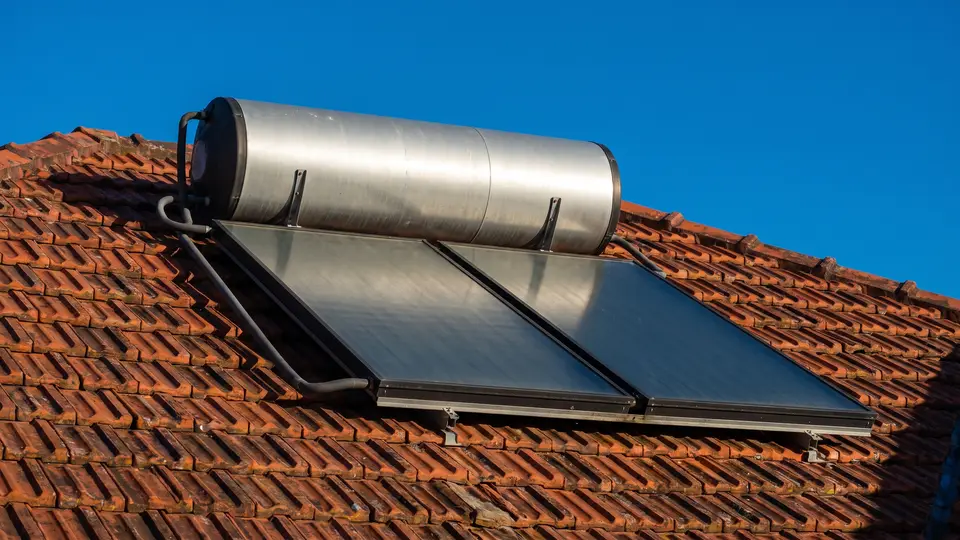
01Evacuated Tube
Glass tubes with a vacuum layer absorb sunlight and transfer heat to a copper pipe inside each tube. The heat rises into a manifold at the top, which connects to your hot water tank.
- Pros
- More efficient in cooler climates and overcast conditions. Performs well in southern states like Victoria and Tasmania.
- Cons
- Individual tubes can break (though they are replaceable). Slightly higher upfront cost.
- Best for
- Melbourne, Hobart, Adelaide, Canberra
02Flat Plate
A dark absorber plate sits behind glazed glass in an insulated box. Water or glycol fluid flows through pipes bonded to the plate, heating as it goes.
- Pros
- Proven, durable technology. Lower upfront cost. Good performance in warm, sunny climates.
- Cons
- Less efficient on cloudy days than evacuated tubes. Can lose heat faster in cold conditions.
- Best for
- Brisbane, Sydney, Perth, Darwin
03Heat Pump (Electric Boosted)
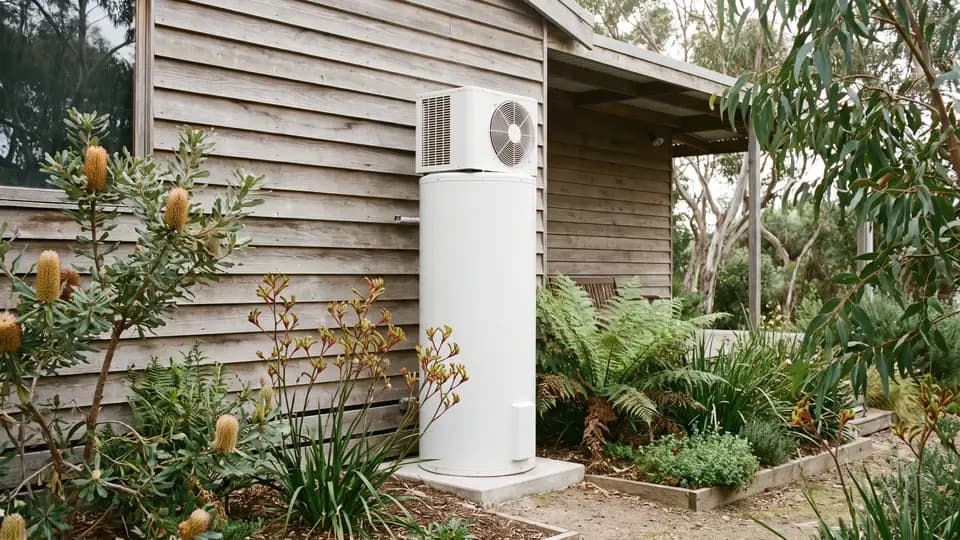
Uses a refrigerant cycle to extract heat from the air and transfer it to water, similar to a reverse-cycle air conditioner. Not technically "solar" but eligible for the same STCs.
- Pros
- Works day and night, rain or shine. No roof panels needed. Eligible for STCs and state rebates.
- Cons
- Uses electricity (though roughly one third of a standard electric system). Can be noisy.
- Best for
- Any climate, especially homes with limited roof space
Find out which hot water system suits your home
Free, no obligation.
Solar hot water system prices
Installed prices vary by tank size and system type. These are typical ranges for fully installed systems in 2026, before any rebates or STCs are applied.
| Tank size | Household | Flat plate | Evacuated tube | Heat pump |
|---|---|---|---|---|
| 160L | 1 to 2 people | $3,000 to $4,000 | $3,500 to $4,500 | $3,000 to $4,200 |
| 250L | 2 to 3 people | $3,800 to $5,000 | $4,200 to $5,500 | $3,500 to $4,800 |
| 300L | 3 to 4 people | $4,200 to $5,500 | $4,800 to $6,200 | $3,800 to $5,200 |
| 400L | 4 to 6 people | $5,000 to $6,500 | $5,500 to $7,200 | $4,500 to $6,000 |
After rebates: federal STCs typically take $600 to $1,000 off the installed price. In Victoria, the hot water rebate can reduce costs by a further $1,000. That means a 300L system in Victoria could cost as little as $2,500 to $4,200 out of pocket.
What size system do you need?
The simplest rule: allow 50 to 70 litres of tank capacity per person. This accounts for showers, dish washing, laundry, and general use.
- 1 to 2 people
- 160L tank is usually sufficient. Common for apartments, couples, and downsizers.
- $3,000 to $4,500
- 2 to 3 people
- 250L tank. Good for small families or households with moderate hot water use.
- $3,500 to $5,500
- 3 to 4 people
- 300L tank. The most common size for Australian families. Handles daily showers, laundry, and dishwashing comfortably.
- $3,800 to $6,200
- 4 to 6 people
- 400L tank or larger. For bigger families or homes with high hot water demand (spa baths, teens taking long showers).
- $4,500 to $7,200
If you are on the boundary between sizes, go up rather than down. A slightly oversized tank costs a little more upfront but avoids running out of hot water on high-use days. Your installer can also factor in your roof orientation, local climate, and whether you have a gas or electric booster.
Solar hot water vs electric: running costs
Replacing a standard electric storage hot water system with solar or a heat pump is one of the simplest ways to cut your energy bills. Here is how the numbers stack up for a 300L system.
| Metric | Electric storage | Solar hot water | Heat pump |
|---|---|---|---|
| Annual running cost | $800 to $1,200 | $100 to $300 | $200 to $400 |
| Annual savings | None | $500 to $900 | $400 to $800 |
| Lifespan | 8 to 12 years | 15 to 20 years | 10 to 15 years |
| Installed cost (300L) | $1,500 to $2,500 | $4,200 to $6,200 | $3,800 to $5,200 |
| Payback period | n/a | 4 to 7 years | 3 to 6 years |
If your current electric hot water system is more than 10 years old, you are likely paying $800 to $1,200 per year just to heat water. Switching to solar or a heat pump cuts that by half to three quarters, depending on your climate and usage.
See what a new hot water system would cost you
Based on your household size, current system and climate zone.
Solar hot water rebates by state
All solar hot water systems and heat pumps are eligible for federal STCs, which reduce the upfront cost at the point of sale. Some states offer additional rebates or interest-free loans.
| State | Available rebate | Eligibility |
|---|---|---|
| Federal (STCs) | $600 to $1,000 depending on zone and system | All households replacing electric or gas hot water |
| Victoria | Up to $1,000 (Solar Victoria hot water rebate) | Owner-occupiers, combined household income under $210,000 |
| New South Wales | STCs only (no additional state rebate for hot water) | Federal STCs apply |
| Queensland | STCs only | Federal STCs apply |
| South Australia | STCs only | Federal STCs apply |
| ACT | Up to $2,500 (Sustainable Household Scheme loan) | Interest-free loan available for ACT homeowners |
| Tasmania | STCs only | Federal STCs apply |
| Western Australia | STCs only | Federal STCs apply |
| Northern Territory | STCs only | Federal STCs apply |
How STCs work
STCs are certificates created when you install an eligible system. Your installer assigns them at the point of sale and gives you a discount on the price. The number of STCs depends on your climate zone, system type, and the years remaining until 2030 (when the scheme ends). You do not need to apply separately: the installer handles everything.
Roof requirements and installation
Solar thermal collectors (flat plate and evacuated tube) need roof space, just like solar panels. The requirements are a little different though.
Roof-mounted (thermosiphon)
The tank sits on the roof directly above the collectors. Water circulates naturally via convection, so no pump is needed. Simpler, cheaper, and very reliable. The trade-off is the weight on your roof: a full 300L tank weighs around 350 kg. Your roof structure needs to handle that.
Split system (ground tank)
Collectors go on the roof, but the tank stays on the ground. A small circulation pump moves heated fluid between the two. Better for roofs that cannot support the weight, and easier to access for maintenance. Slightly more expensive due to the pump and additional plumbing.
For both types, north-facing roof space with minimal shading is ideal. Flat plate collectors need roughly 2 to 4 square metres of roof area. Evacuated tube arrays are slightly more compact.
Heat pumps are the simplest to install: the unit sits on the ground near your existing hot water system location. No roof panels needed. This makes them popular for homes with complex roof shapes, heavy shading, or heritage restrictions.
How to choose the right system
Picking between the three types comes down to your location, roof, and priorities. Here is a quick way to decide.
You live in a warm, sunny climate (QLD, WA, NT)
A flat plate system is the most cost-effective option. Strong year-round sun means it will meet most of your hot water needs without a booster.
Go with: Flat plate
You live in a cooler or cloudier climate (VIC, TAS, ACT)
Evacuated tubes outperform flat plate in overcast and cold conditions. The vacuum insulation means less heat loss on cooler days.
Go with: Evacuated tube
Limited roof space, heavy shading, or heritage restrictions
A heat pump sits on the ground and does not need any roof panels. It works in any climate and is the easiest to install when roof space is constrained.
Go with: Heat pump
You already have rooftop solar panels
If you have a solar PV system, a heat pump can run off your excess solar electricity during the day. This effectively gives you solar hot water without needing separate thermal collectors.
Go with: Heat pump (powered by your solar PV)
Maintenance and lifespan
Solar hot water systems are low-maintenance compared to most home appliances, but they are not set-and-forget. A little attention every few years keeps them running efficiently for 15 to 20 years.
- Every 5 years
- Have a plumber check the sacrificial anode (a rod inside the tank that prevents corrosion). Replacing it when worn costs $150 to $300 and can add years to the tank lifespan.
- Every 2 to 3 years
- Check the pressure relief valve by lifting the lever briefly. If water flows and stops when you release it, the valve is working. If it drips continuously, get it replaced.
- As needed
- Evacuated tube systems: replace cracked tubes (around $30 to $50 each). Flat plate: clear any debris from the collector surface. Heat pumps: keep the air intake clear and clean the filter annually.
The next step
If you're considering a new hot water system, Andy and the team can match you with one licensed local installer for a free written quote.

Written by
Solar Installer Partner Relations
Connects homeowners with trusted, vetted solar installers across Australia. Andy works directly with installation companies to ensure quality standards and helps homeowners through the quoting process.
If you have any questions about the information in this guide, email andy@whysolar.com.au or call +61 2 5657 6527.