
EV Charging
How to Size Your Solar System for EV Charging
The maths: 8 kWh/day for an average commute, 2-3 kW extra panels, smart chargers, export limits, and the solar + battery + EV combo explained.
Your solar rebate, checked before you sign
11 min read
Find out what your home actually needs
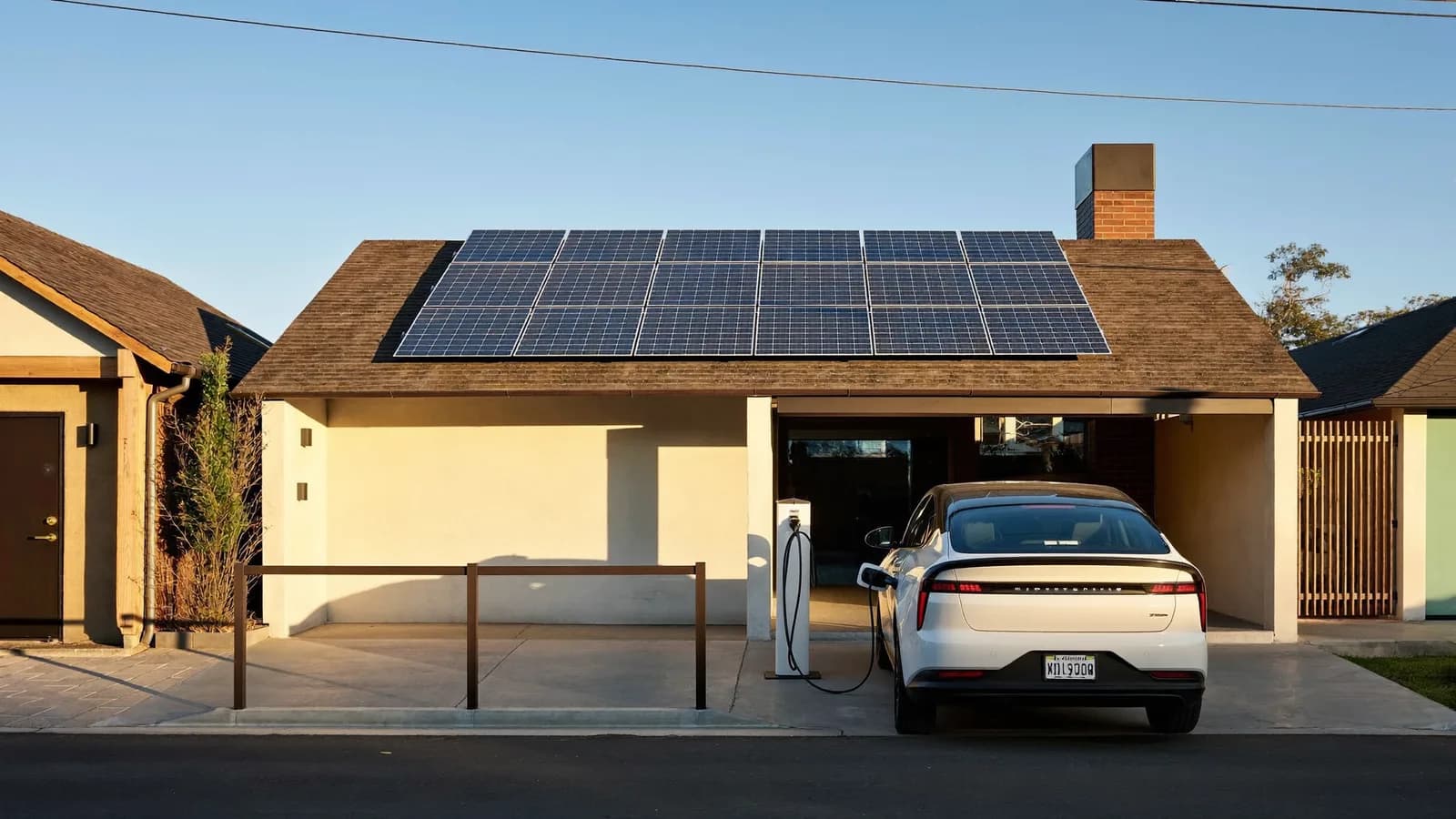
You have got solar on the roof. You have got an EV in the garage, or you are about to. The next question is inevitable: is my solar system big enough to charge the car, or do I need to upsize?
The short answer for most households is that you need 2 to 3 kW of extra panels beyond what your home already uses. But the real answer depends on how far you drive, when the car is home, and whether you have a battery to bridge the gap between solar hours and charging hours.
This guide walks through the sizing maths step by step, gives you a recommendation table you can take to your installer, and explains the charger types, smart charging options, and export limit quirks that affect the decision. If you want the broader picture on charging your EV with solar, start there and come back here for the sizing detail. And if you are still deciding whether solar makes financial sense at all, our is solar worth it analysis covers the payback maths.
How much electricity does an EV actually use?
Before you can size the solar, you need to know the load. Most modern EVs sold in Australia (the Tesla Model 3, BYD Atto 3, Hyundai Ioniq 5, MG ZS EV) consume roughly 15 to 20 kWh per 100 km of driving. Smaller, more efficient models sit at the lower end; larger SUV-style EVs sit at the upper end.
According to ABS data, the average Australian drives about 38 to 40 km per day (roughly 14,000 km per year). At an average efficiency of 17.5 kWh/100 km, that translates to about 7 to 8 kWh of daily charging demand.
That is equivalent to running a split-system air conditioner for 4 to 5 hours. It is a meaningful load, but not an enormous one, and importantly, it is a predictable one. You know roughly how far you drive each day, which makes solar sizing straightforward.
Quick rule of thumb
Take your daily driving distance in km, multiply by 0.18, and you get your approximate daily kWh demand. Example: 40 km × 0.18 = 7.2 kWh per day. Use our solar calculator for a more precise estimate based on your postcode and usage.
Find out what your home actually needs
Free, takes 60 seconds, no obligation.
The sizing maths: from kWh to kW of panels
Once you know how many kWh your car needs each day, converting that to solar panel capacity is simple division.
Australia gets roughly 4 to 5.5 peak sun hours per day depending on location. Sydney averages about 4.7, Brisbane about 5.2, Melbourne about 4.0, and Perth about 5.5. These are the “equivalent hours of full sunshine” that determine how much energy each kW of panels produces daily.
The formula is straightforward:
Extra solar needed = Daily EV kWh ÷ Peak sun hours
The “round up” is important. You want headroom for cloudy days, winter months, and the inevitable growth in household electricity use. At today's panel sizes (400 to 440 W each), 2 to 3 kW of extra capacity is just 5 to 7 panels, one extra row on most roofs.
System size recommendations: the table to take to your installer
Here is a practical recommendation table that covers the most common Australian household scenarios. These assume typical household consumption of 16 to 20 kWh per day and include the EV charging load on top.
If you already have a 6.6 kW system and you are adding an EV, upsizing to 9 to 10 kW is the most common path. That is a relatively simple panel addition. Your installer may be able to add a second string to your existing inverter if it has the capacity, or add microinverters to the new panels.
Curious about what these system sizes cost? We break down current Australian pricing in our cost guide.
Level 1 vs Level 2 chargers: why Level 2 matters for solar owners
The type of EV charger you use dramatically affects how well you can utilise solar. There are two main categories for home charging.
Level 1: Portable charger (2.4 kW)
Plugs into a standard 10A power point. Adds about 12 to 15 km of range per hour. A full charge on a 60 kWh battery takes 25+ hours. The problem for solar owners is that 2.4 kW is often less than your surplus solar, so the rest still gets exported. You cannot soak up a 4 to 5 kW solar surplus through a 2.4 kW charger.
Level 2: Hardwired charger (7 to 22 kW)
Installed on a dedicated circuit by an electrician. A 7 kW unit adds 40 to 45 km of range per hour. That means during a 5 to 6 hour solar window (10am to 3pm), you can add 200 to 250 km of range, more than enough for an entire week of average driving. A Level 2 charger can absorb your full solar surplus, maximising self-consumption. Installation is straightforward and typically costs $300 to $600 for the electrical work on top of the charger price.
If you have solar and an EV, a Level 2 charger is almost always worth it. The higher charging rate lets you make full use of the solar window and capture surplus that would otherwise be exported at low feed-in tariff rates.
Smart charging: chargers that follow the sun
The right system size gets the energy onto your roof. A smart charger makes sure it ends up in your car instead of being exported at 5 cents per kWh. Solar-aware chargers use CT clamps on your switchboard to monitor excess production in real time and adjust the charging rate to match.
Zappi (by Myenergi)
Most popular solar diversion charger in Australia
Eco mode charges exclusively from surplus solar and pauses when there is none. Eco+ mode sets a minimum charge rate from the grid and tops up from solar. Works with any inverter brand. The most commonly recommended charger on r/AusSolar and Whirlpool for solar households.
- Solar diversion built-in
- 7.4 kW / 22 kW options
- Works with any inverter
Tesla Wall Connector
Best for Tesla solar + Powerwall owners
Integrates with the Tesla app and Powerwall for coordinated solar charging. “Charge on Solar” mode in the Tesla app directs surplus solar to the car automatically. Competitive price and sleek design, though solar-tracking features work best within the Tesla ecosystem.
- Tesla ecosystem
- Up to 22 kW
- Charge on Solar mode
Fronius Wattpilot
Best for Fronius inverter owners
Connects directly through the Fronius Solar.web platform. PV surplus mode detects excess solar and adjusts charging rate automatically. If you already have a Fronius inverter, the Wattpilot is the natural choice. Everything talks natively without extra CT clamps.
- Fronius native integration
- 11 kW / 22 kW
- PV surplus mode
Budget alternative
A basic 7 kW Level 2 charger ($800 to $1,200 installed) with a timer set to 10am to 3pm captures most of the solar benefit without the smart charger price tag. You lose the automatic cloud-tracking, but you still charge during peak production hours. Upgrade to a Zappi or Wattpilot later when it makes sense.
Your rebate, worked out to your address
Then one Why Solar Approved installer near you, and fifteen minutes with a solar expert before you sign.
Daytime solar charging vs off-peak at night
This is the single biggest factor in whether your solar system “pays for” your EV or not. We covered it in depth in our daytime vs off-peak charging analysis, but the summary is simple.
Every kWh you charge from your own solar during the day is worth the difference between your grid import rate (25 to 35c/kWh) and your feed-in tariff (3 to 8c/kWh). That is a 20 to 30 cent advantage per kWh. Over a year of typical driving (~2,700 kWh), solar charging saves $540 to $810 compared to off-peak night rates, and $800 to $1,200 compared to peak grid rates.
The practical challenge is obvious: many people's cars are at work during peak solar hours. That is where batteries and weekend charging come in. More on that below.
Annual charging cost comparison (15,000 km driving)
Grid peak charging (30 to 35c/kWh)
Plugging in after work during evening peak
Off-peak night charging (12 to 15c/kWh)
Time-of-use tariff, 10pm to 7am
Daytime solar charging (effectively free)
Excess solar straight into the car, 10am to 3pm
The triple combo: solar + battery + EV
If your car is at work during solar hours, a home battery bridges the gap. The concept is elegant: your battery charges from excess solar during the day while the car is away. When you get home in the evening, the battery feeds stored solar into your EV charger. You are still effectively driving on sunshine, just time-shifted.
There is roughly 10 to 15% round-trip efficiency loss through the battery charge/discharge cycle, so you need slightly more solar to compensate. But the maths still work out dramatically better than buying grid power at 30+ cents per kWh.
The battery also does double duty: it powers your house during the evening peak, displacing the most expensive grid electricity of the day. One investment solving two problems.
Sizing your battery for the triple combo
You need to cover evening household use (8 to 10 kWh) plus your EV top-up (6 to 10 kWh). That means a 15 to 20 kWh battery is the minimum for this strategy. A 10 kWh battery works for short commuters but runs out before the car is full on most nights. Community data from r/AusSolar shows households with 15+ kWh batteries and 10 kW+ solar consistently achieving 80%+ self-consumption including EV charging.
7am to 9am
Morning. Solar starts generating. Battery begins charging from surplus. You head to work.
9am to 3pm
Peak solar. Solar is at full production. If the car is home, it charges directly. If not, the battery fills up.
3pm to 6pm
Afternoon. Solar tapers. Battery is full. Any remaining surplus exports at the feed-in tariff rate.
6pm to 10pm
Evening. You get home, plug in. Battery powers the house and tops up the car with stored solar.
10pm to 7am
Overnight. Battery covers remaining loads. If the EV needs more, a small amount of off-peak grid tops it up.
Export limits: why your DNSP makes EV charging even smarter
Here is something most sizing guides miss. Many distribution network service providers (DNSPs) limit how much solar you can export to the grid, commonly 5 kW in states like SA and parts of QLD. Some new connections are being approved with zero export limits.
This matters for EV charging because it changes the economics of a larger system. Without an EV, a 13 kW system in a 5 kW export-limited area wastes any production above what the house uses plus 5 kW of export. The inverter simply throttles back and curtails the excess.
But with an EV charger, that curtailed power goes into the car instead of being wasted. An EV effectively removes the export limit as a constraint, because the car absorbs the surplus on-site. This means a larger solar system makes even more sense when you have an EV. You can install 10 to 13 kW without worrying about hitting the export cap, because the car soaks up the excess.
Export limit example
A 10 kW system in SA with a 5 kW export limit. At midday, the house uses 1.5 kW and the inverter produces 8 kW. Without an EV, 5 kW exports and 1.5 kW goes to waste (curtailed). With a 7 kW EV charger running, the car absorbs 6.5 kW and only 0 kW exports. Nothing is wasted. The car just captured 6.5 kWh that would have been lost, worth roughly $2 in avoided grid charging.
Putting it all together: your action plan
The same five steps apply if you are adding an EV to an existing solar system or designing one from scratch.
- Calculate your daily EV demand. Multiply your daily driving distance by 0.18 to get kWh. Most Australians land at 7 to 8 kWh per day.
- Check your current solar exports. Open your inverter app. If you are exporting 5+ kWh/day, a smart charger alone may be enough without adding panels.
- Upsize if needed. Add 2 to 3 kW of panels for one average EV. Go to 10 to 13 kW total for long commuters or two EVs. Factor in export limits.
- Install a Level 2 charger. A 7 kW hardwired charger is the minimum for effective solar charging. Add smart features (Zappi, Wattpilot, Tesla Wall Connector) for automatic solar tracking.
- Consider a battery. If your car is away during the day, a 15 to 20 kWh battery lets you time-shift solar into evening EV charging.
The economics have never been better. Solar panel prices continue to fall, smart chargers are mature and well-supported, and every kWh you put into your car from your roof is a kWh you are not buying from the grid or the petrol pump. If you are new to solar, our understanding solar guide covers the fundamentals. Use our solar calculator to run the numbers for your postcode, or read our complete EV charging with solar guide for a broader look at the options.
Sources
- ARENA: Australian Renewable Energy Agency reports on distributed energy resources and EV integration scenarios
- AEMO: Australian Energy Market Operator data on solar generation, feed-in tariff rates, and DNSP export limit policies
- energy.gov.au: Australian Government household energy consumption benchmarks and EV charging guidelines
- Electric Vehicle Council: Australian EV sales data, efficiency ratings, and charging infrastructure reports
- Reddit r/AusSolar: Community-reported solar + EV setups, self-consumption data, and smart charger experiences
- Whirlpool Forums: Discussion threads on solar sizing for EV charging, export limits, and battery + EV combo configurations
The next step
If you're considering solar panels or batteries for your home, Andy and the team can match you with one Why Solar Approved installer near you for a free written quote, and fifteen minutes with a solar expert before you sign.

Written by
Solar Installer Partner Relations
Connects homeowners with trusted, vetted solar installers across Australia. Andy works directly with installation companies to ensure quality standards and helps homeowners through the quoting process.
If you have any questions about the information in this guide, email andy@whysolar.com.au or call +61 2 5657 6527.