
Industry Explainers
Australia's Renewable Energy Target Explained: How the RET, LRET and SRES Affect Your Solar Decision
The RET is the legislation behind your solar rebate and the wind farms pushing down wholesale prices. Here's how it all connects.
Your solar rebate, checked before you sign
By Bec Ramirez
8 min read
Find out what your home actually needs
When you install solar panels in Australia and get that $1,710 discount on your quote, that discount doesn't come from thin air. And when a new wind farm gets built in regional Victoria, that investment isn't happening purely out of goodwill either.
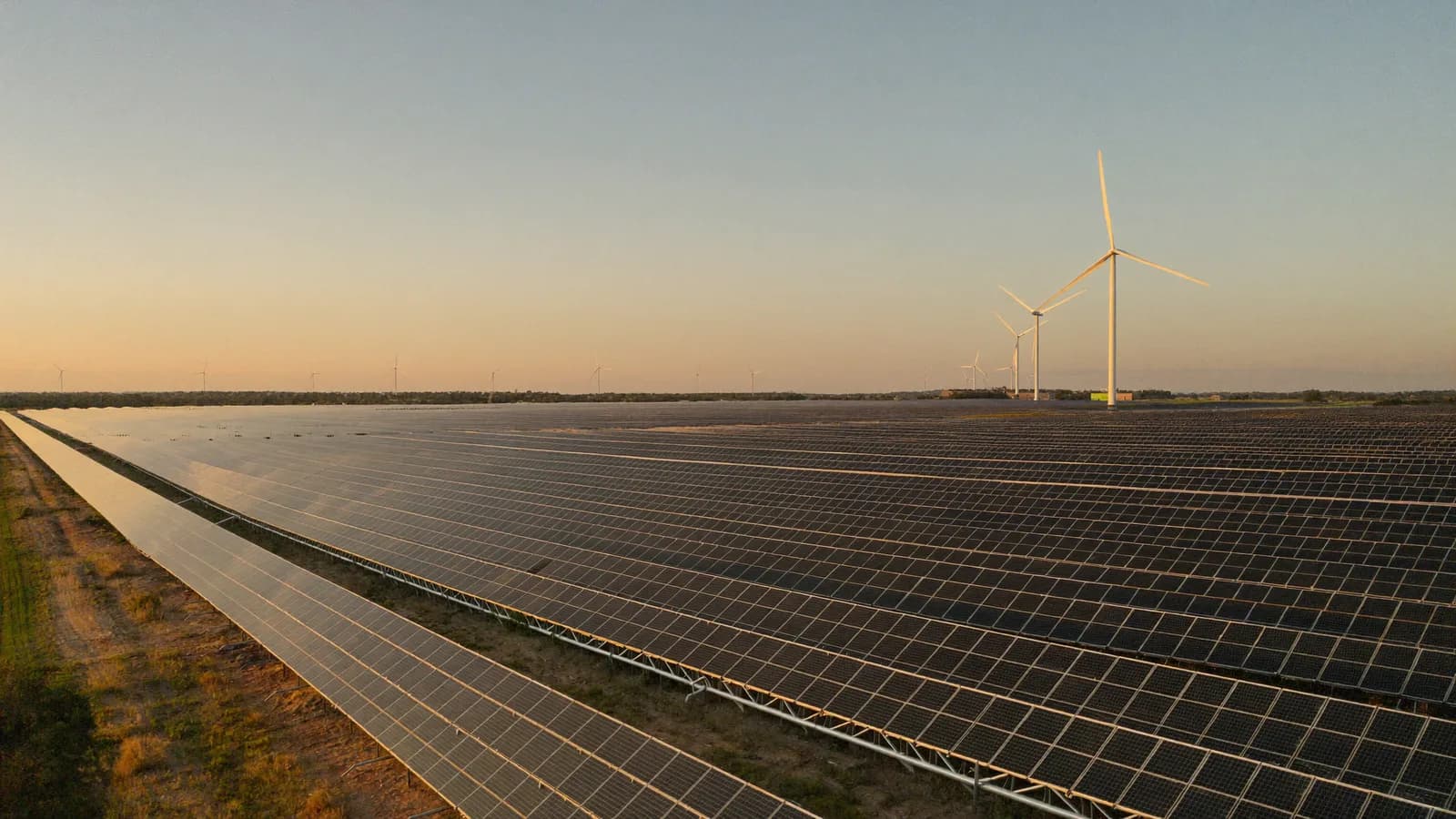
Both are driven by the same piece of legislation: the Renewable Energy Target (RET). It's the framework that creates the financial incentive for everything from your rooftop solar system to a 200-megawatt wind farm. Two completely different scales, one underlying scheme.
The RET has been running since 2001 and is set to wind down by the end of 2030. If you're thinking about solar, understanding how it works helps explain why the rebate is shrinking, why it still exists, and what happens when it's gone.
Two schemes, one target
The RET was originally a single scheme created under the Renewable Energy (Electricity) Act 2000. It started in 2001 as the Mandatory Renewable Energy Target (MRET), requiring a modest 9,500 GWh of additional renewable generation by 2010.
In 2009, the target was ramped up to 41,000 GWh by 2020. But then something unexpected happened: rooftop solar took off far faster than anyone predicted. The flood of small-scale certificates started overwhelming the market, making it harder for large-scale projects to compete. So in January 2011, the government split the RET into two separate schemes:
Large-scale Renewable Energy Target (LRET)
For renewable power stations generally over 100kW capacity, a threshold that moves to 1MW on 1 October 2026. Think wind farms, solar farms, hydro plants.
- Creates Large-scale Generation Certificates (LGCs)
- Target: 33,000 GWh annually through 2030
- LGCs traded on the open market
- Administered by the Clean Energy Regulator
Small-scale Renewable Energy Scheme (SRES)
For households and small businesses. Solar panels, batteries, heat pumps, solar hot water.
- Creates Small-scale Technology Certificates (STCs)
- No fixed target. Based on actual installations
- STCs sold via market or Clearing House at $40
- This is where your solar “rebate” comes from
Both schemes use the same basic mechanism: tradeable certificates that represent renewable energy. Electricity retailers are legally required to buy and surrender a certain number of certificates each year. That legal obligation is what puts a floor under certificate prices and makes the whole system work.
Find out what your home actually needs
Free, takes 60 seconds, no obligation.
The LRET: how large-scale generation certificates work
Every time an accredited wind farm or solar farm feeds one megawatt-hour of electricity into the grid, it creates one LGC. These certificates get sold on the open market to electricity retailers who need to meet their annual surrender obligations.
The LRET target was set at 33,000 GWh per year from 2021 through 2030 (reduced from the original 41,000 GWh trajectory after the 2014 Warburton Review). That target was met ahead of schedule in January 2021, and large-scale renewables have continued growing well beyond it.
In the second quarter of 2025, large-scale renewables hit a record 27.7% of all electricity in the National Electricity Market, totalling 14.9 TWh. Wind contributed 7.6 TWh, hydro 3.7 TWh, and utility-scale solar 3.6 TWh. A record 14.2 million LGCs were created in Q1 2025 alone.
LGC prices have crashed
Because large-scale generation has so far exceeded the legislative target, the LGC market is in surplus. Spot prices have fallen from around $34 per certificate in late 2024 to roughly $9 by late 2025. For large-scale generators, this means less revenue per megawatt-hour from certificates. For consumers, it means the certificate cost component on your electricity bill is shrinking.
The LRET matters to homeowners indirectly. More large-scale renewables mean more supply pushing down wholesale electricity prices. That's good for everyone, whether you have solar or not. And if you do have solar, lower wholesale prices also affect feed-in tariff rates, which is one reason those have been declining in most states.
The SRES: where your solar rebate comes from
The SRES is the half that directly puts money in your pocket. When you install solar, your system earns STCs based on its size, your location (sunnier zones earn more), and how many years are left in the scheme. Your installer trades those certificates and gives you the value as an upfront discount on your system price.
We've written a detailed SRES explainer that walks through the formula, zone ratings, and deeming period schedule. The key thing to know here is that the SRES uses a countdown. Your system is credited upfront for all the energy it's expected to generate between now and December 2030. As the end date gets closer, the credit gets smaller.
In 2026, a standard 6.6kW system in Zone 3 (Sydney, Brisbane, Perth, Adelaide) earns roughly 45 STCs, worth about $1,710. By 2029, that same system would only earn 18 STCs, worth about $684. The rebate phase-out schedule has the full year-by-year breakdown.
The SRES has been enormously successful. Over 4 million small-scale systems have been installed since the scheme began. In the first three quarters of 2025, approximately 229,000 solar PV systems were installed with a combined capacity of 2.3 GW. The battery side is ramping up fast too, with over 124,000 batteries installed since the Cheaper Home Batteries Program launched in July 2025.
Your rebate, worked out to your address
Then one Why Solar Approved installer near you, and fifteen minutes with a solar expert before you sign.
What happens after 2030?
Both the LRET and SRES are legislated to end on 31 December 2030. After that, no new certificates can be created. Final reporting and surrender obligations will wrap up in 2031.
For large-scale generators, the LGC surplus and declining prices mean the LRET is already becoming less relevant as a revenue driver. Many new projects are being built on the back of power purchase agreements (PPAs) and state-based schemes rather than relying on LGC revenue.
For homeowners, the end of the SRES means the upfront solar rebate disappears entirely. There's no replacement scheme currently announced at the federal level. State rebates vary and change frequently, so it's worth checking what's available in your state right now.
Solar panel prices have dropped so far over the past decade that systems are already cost-effective without any rebate. The rebate just makes an already good investment even better. If you're weighing it up, our STC calculator shows exactly what the rebate is worth for your postcode, and our analysis of whether solar is still worth it runs the full numbers.
Sources
The next step
If you're considering solar panels or batteries for your home, Bec and the team can match you with one Why Solar Approved installer near you for a free written quote, and fifteen minutes with a solar expert before you sign.

Written by
Aussie Mum & Energy Expert
Helps families switch to solar with practical, real-world advice. Bec focuses on the financial side: rebates, bill savings and financing options, so everyday Australians can see real value from going solar.
If you have any questions about the information in this guide, email hello@whysolar.com.au or call +61 2 5657 6527.