
Hot Water
Best Heat Pump Hot Water Systems in Australia (2026)
Heat pumps have become the go-to hot water upgrade for Australian homes. They use a fraction of the energy of a traditional electric tank, they qualify for government rebates, and they don't need roof panels. Here's how the top models compare.
Find out what a new hot water system costs
8 min read
Find out which hot water system suits your home
Why Heat Pumps Are the Default Hot Water Upgrade in 2026
If your old electric or gas hot water system is on its last legs, a heat pump is almost certainly what your plumber or installer will recommend. There are a few good reasons for that.
Heat pumps use around one-third to one-quarter of the electricity of a standard resistive electric tank. For a household spending $600 to $900 a year on hot water, that translates to real savings from day one. They qualify for federal STC rebates (typically $600 to $1,000 off the installed price), and several states offer additional incentives on top. Unlike rooftop solar hot water panels, a heat pump sits on the ground next to your house. No roof space needed, no plumbing on the roof, and no risk of leaks up high.
They also work in every Australian climate zone. Performance dips in very cold weather, but even in Hobart or Canberra, a well-chosen heat pump will outperform an electric element by a wide margin.
How Heat Pump Hot Water Works
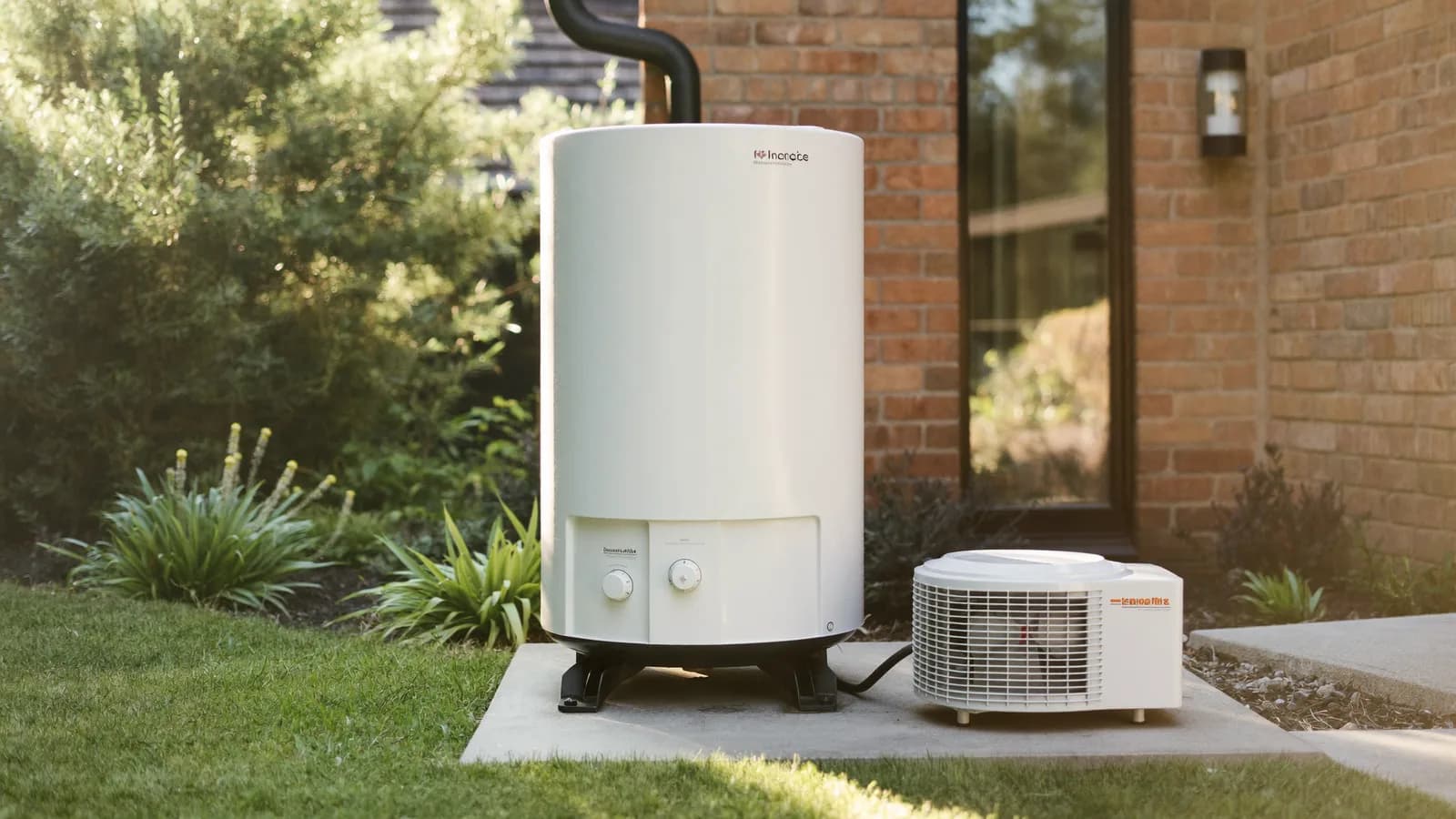
A heat pump hot water system works like a reverse-cycle air conditioner, but instead of heating a room, it heats water. A fan draws in ambient air and passes it over an evaporator coil containing refrigerant. The refrigerant absorbs heat from the air, a compressor concentrates that heat to a much higher temperature, and a heat exchanger transfers it into the water tank.
The key metric is COP (Coefficient of Performance). A COP of 3.5 means the system produces 3.5 kWh of heat energy for every 1 kWh of electricity it consumes. Compare that to a standard electric element, which runs at a COP of 1.0. Higher COP means lower running costs.
Find out which hot water system suits your home
Free, no obligation.
Best Heat Pump Hot Water Brands Compared
There are plenty of heat pumps on the Australian market, but five brands consistently come up in installer recommendations and homeowner reviews. Here is how they stack up.
| Brand / Model | Tank Size | Price (installed) | COP | Warranty | Standout Feature |
|---|---|---|---|---|---|
| Reclaim Energy CO2 | 315L | $4,000 to $5,500 | 5.3 | 15yr tank + 5yr compressor | CO2 refrigerant, very quiet (~37 dB), stainless steel tank |
| Stiebel Eltron WWK 302 | 302L | $3,500 to $5,000 | 3.5 | 5yr parts and labour | German engineering, integrated design (no outdoor unit) |
| iStore 270L | 270L | $3,200 to $4,500 | 3.8 | 5yr parts and labour | Solar integration input, popular with installers |
| Chromagen Midea | 270L | $2,800 to $4,000 | 3.6 | 5yr parts and labour | Budget-friendly, solid performer, widely available |
| Rheem AmbiHeat | 270L | $3,000 to $4,200 | 3.5 | 5yr parts and labour | Established brand, strong service network across Australia |
All prices are approximate and include standard installation. Actual costs vary by location, plumbing complexity, and whether your existing setup needs electrical or plumbing modifications.
Quick take on each brand
Reclaim Energy CO2 is the premium choice. Its COP of 5.3 is the highest on this list, thanks to CO2 refrigerant (R744) which performs exceptionally well across a wide temperature range. The stainless steel tank with a 15-year warranty is a genuine differentiator. It is also one of the quietest units on the market. The trade-off is price: you will pay more upfront, but running costs are the lowest of any heat pump available in Australia.
Stiebel Eltron WWK 302 is an integrated unit, meaning the compressor sits on top of the tank rather than in a separate outdoor unit. That makes installation simpler and keeps things tidy. German-engineered and well-built, though the COP of 3.5 is average by current standards.
iStore 270L is arguably the most popular heat pump among Australian installers. It has a dedicated solar boost input that allows your solar inverter to signal the heat pump to run when excess solar is available. Good COP at 3.8, competitively priced, and widely supported.
Chromagen Midea is the value pick. At $2,800 to $4,000 installed, it is the most affordable option here. The COP of 3.6 is respectable, and Chromagen has a reasonable service network in Australia. If budget is the primary concern, this is a solid choice.
Rheem AmbiHeat carries the weight of the Rheem name, which matters when it comes to spare parts and servicing. You can get a Rheem technician almost anywhere in Australia. Performance is middle of the pack, but a brand with a technician in every town counts for something.
What to Look For When Choosing a Heat Pump
Beyond the brand comparison, there are a few things worth considering before you commit.
Tank size: A 270L tank suits most households of 3 to 4 people. Larger families or homes with multiple bathrooms should look at 315L or above. Undersizing means the backup electric element kicks in more often, which erodes the efficiency gains.
COP rating: Higher is better, but context matters. A COP of 3.5 in mild Sydney weather will deliver different real-world savings than the same COP in a Canberra winter where ambient temperatures regularly drop below 5°C. CO2 refrigerant models hold their COP better in cold conditions.
Noise level: This is the number one complaint from heat pump owners. Check the dB rating in the product specs, and think carefully about where the unit will be installed. Anything under 40 dB is considered quiet. Anything above 50 dB may cause issues if the unit is near bedrooms or a neighbour's property.
Warranty: Most brands offer 5 years on parts and labour. The Reclaim CO2's 15-year tank warranty is a standout. Longer tank warranties generally indicate higher-quality materials (stainless steel vs vitreous enamel).
Refrigerant type: Most heat pumps use R134a or R410A. The Reclaim CO2 uses R744 (carbon dioxide), which is a natural refrigerant with zero ozone depletion potential and very low global warming potential. It also performs better in cold weather. If environmental credentials matter to you, this is worth factoring in.
See what a new hot water system would cost you
Based on your household size, current system and climate zone.
Rebates and Incentives for Heat Pumps
Heat pump hot water systems are classified as renewable energy products under the federal Small-scale Renewable Energy Scheme. That means you can claim Small-scale Technology Certificates (STCs), which typically reduce the installed price by $600 to $1,000 depending on the model and your location. Most installers apply the STC discount at the point of sale, so you do not need to claim it yourself.
On top of the federal rebate, some states offer additional incentives:
- check_circleVictoria: Up to $1,000 through the Solar Homes hot water rebate. Available to eligible owner-occupiers with a combined household income under $210,000.
- check_circleACT: Interest-free loans of up to $15,000 for energy-efficient upgrades including heat pump hot water systems through the Sustainable Household Scheme.
- check_circleNSW, QLD, SA: STCs apply federally. Check for any additional state or local government incentives that may be available in your area.
After all rebates, a mid-range heat pump like the iStore 270L can end up costing $2,200 to $3,500 installed, which is competitive with a basic electric storage tank when you factor in the long-term energy savings.
Heat Pump vs Solar Hot Water vs Electric
If you are weighing up all your hot water options, here is a quick comparison of the three main technologies.
| Feature | Heat Pump | Solar Hot Water (panels) | Standard Electric |
|---|---|---|---|
| Installed cost | $2,800 to $5,500 | $3,500 to $6,500 | $1,200 to $2,000 |
| Annual running cost | $150 to $300 | $100 to $250 | $500 to $900 |
| Roof space needed | No | Yes (2 to 4 collector panels) | No |
| Works at night | Yes | No (uses stored heat or electric boost) | Yes |
| STC rebate eligible | Yes | Yes | No |
For most households, a heat pump offers the best balance of upfront cost, running cost, and simplicity. Solar hot water panels can be slightly cheaper to run, but they require roof space and add plumbing complexity. If you want a deeper comparison, see our heat pump vs solar diverter guide.
Sources
- linkenergy.gov.au: Heat Pump Hot Water Systems: Energy Ratings and Small-scale Technology Certificates (STCs)
- linkReclaim Energy: CO2 Heat Pump specifications, COP ratings, and warranty documentation
- linkStiebel Eltron Australia: WWK 302 product specifications and performance data
- linkiStore: 270L heat pump technical specifications and solar integration features
- linkReddit r/AusSolar: Community discussions on heat pump brand experiences, noise levels, and real-world performance (2024 to 2026)
The next step
If you're considering a new hot water system, Andy and the team can match you with one licensed local installer for a free written quote.

Written by
Solar Installer Partner Relations
Connects homeowners with trusted, vetted solar installers across Australia. Andy works directly with installation companies to ensure quality standards and helps homeowners through the quoting process.
If you have any questions about the information in this guide, email andy@whysolar.com.au or call +61 2 5657 6527.