
Solar Basics
7 Common Solar Myths Debunked
Still hearing that solar does not work on cloudy days or takes 20 years to pay off? Here is what the data actually shows for solar in Australia.
Your solar rebate, checked before you sign
By Bec Ramirez
6 min read
Find out what your home actually needs
Seven solar myths busted: (1) Panels produce 10 to 25% output on cloudy days, not zero. (2) Payback is 3 to 5 years, not 20. (3) Maintenance is near-zero. (4) Panels do not damage your roof when properly installed. (5) Solar works in every Australian state. (6) Batteries are not required. (7) Self-consumption is now more valuable than feed-in tariffs.
When I first started looking into solar panels for our family home, I heard all sorts of advice from well-meaning friends, neighbours, and that one uncle who "knows a guy."
Half of it was outdated. Some of it was never true. And a good chunk was just plain wrong.
After years in the energy industry and having solar on my own roof, I have heard every myth there is. Here are the seven most common ones, and what the data actually shows.
"Solar does not work on cloudy days"
The myth: Solar panels need direct, blazing sunshine to produce any power. When it is cloudy, they are basically useless.
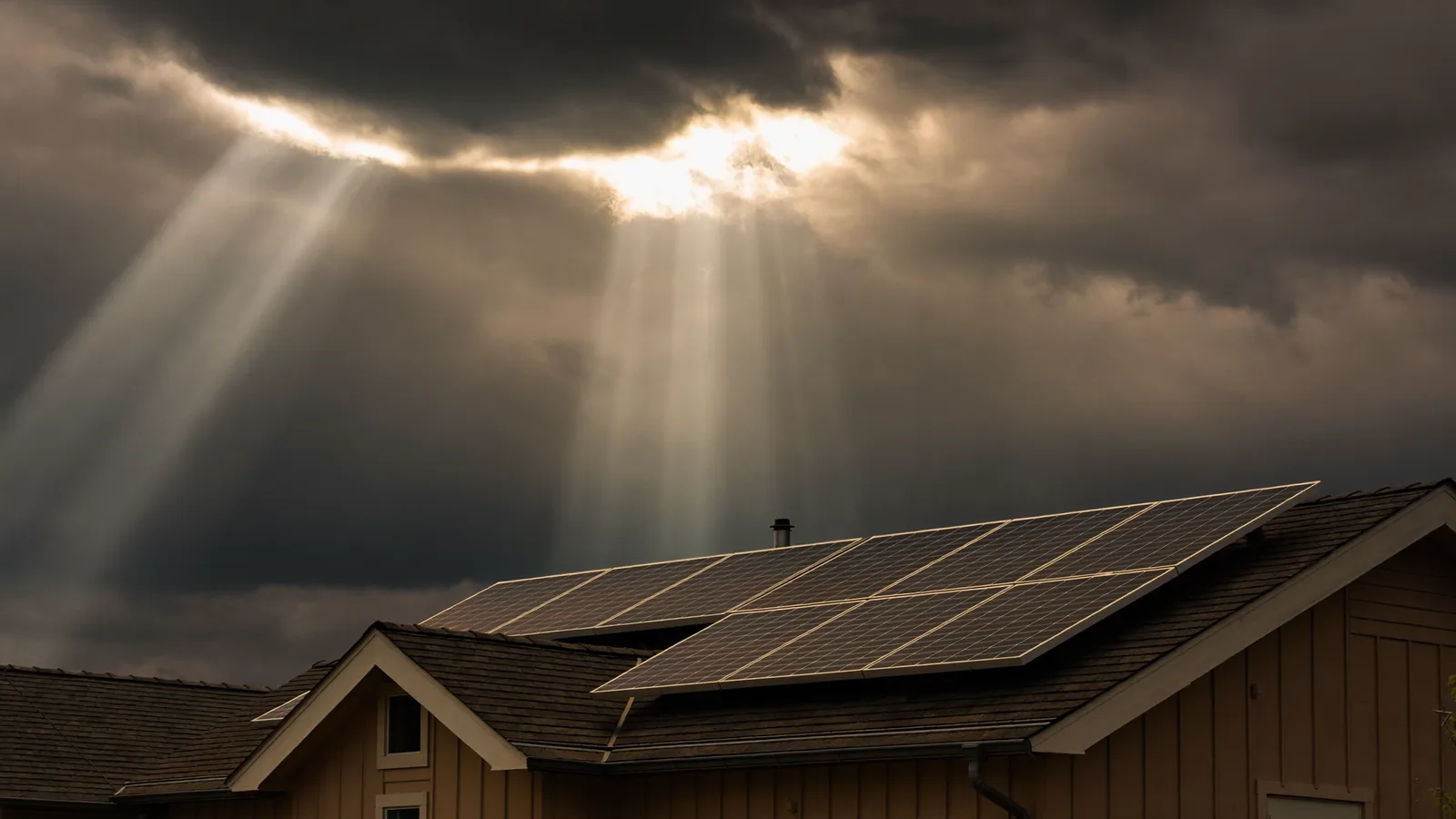
The reality: Solar panels work on light, not heat. While they produce more on sunny days, they absolutely still generate power when it is overcast. Modern panels are remarkably good at capturing diffuse light.
On a typical cloudy day, panels will produce around 10-25% of their rated capacity. That is not nothing: a 6.6kW system might still be pumping out 600-1,600 watts, which is often enough to run your fridge, lights, and other background loads without touching the grid.
Germany, which gets far less sunshine than any Australian capital, is one of the world's largest solar producers. If it works there, it definitely works here.
Verdict: Busted. Solar works on cloudy days, just at reduced output. Your annual production estimate accounts for this, because reputable installers factor local weather patterns into their estimates.
"Solar takes decades to pay off"
The myth: Solar is a 20-year investment before you see any real returns. By then the panels will need replacing anyway.
The reality: This might have been true in 2008, but it is wildly out of date now. Panel prices have dropped by over 90% in the last 15 years, while electricity prices have done the exact opposite.
In 2026, a typical 6.6kW system in Australia pays for itself in 3-5 years for most households. After that, you are essentially getting free electricity for another 20+ years.
Our system paid for itself in just under 4 years. We have had it for 6 years now, which means we have been enjoying free power for 2 years and counting. The panels still have at least 15-20 years of productive life left.
Verdict: Completely busted. Modern solar typically pays back in 3-5 years, with 20+ years of savings after that. Take our rebate quiz to see your potential payback period.
Find out what your home actually needs
Free, takes 60 seconds, no obligation.
"Solar panels require constant maintenance"
The myth: You will need to clean your panels regularly, replace parts constantly, and deal with endless maintenance hassles.
The reality: Solar panels have no moving parts. There is literally nothing to wear out in the panels themselves. They sit there, absorbing light and making electricity. That is it.
In most Australian locations, rain does a perfectly good job of keeping panels clean. If you live somewhere particularly dusty or have lots of birds, you might hose them down once or twice a year. That is the extent of the "maintenance."
The inverter is the only component that might need attention during the system's life. Most string inverters last 10-15 years before needing replacement. Microinverters often last even longer. Either way, it is one potential service call over decades of use.
Verdict: Busted. Solar is one of the lowest-maintenance home investments you can make. Most systems need nothing more than occasional monitoring through your app. If you want the full story on when cleaning is worthwhile (and when it is a waste of money), see our solar panel cleaning guide.
"Solar is not worth it if you are not home during the day"
The myth: Solar only makes sense if you are home to use the power when the sun is shining. Working families will not benefit.
The reality: This myth has some basis in fact: you do get more value from solar when you use power directly. But it is nowhere near the deal-breaker people make it out to be.
First, most homes have background loads running all day: fridge, freezer, standby devices, maybe a pool pump. That is often 500-1500W of constant consumption that solar covers regardless of whether anyone is home.
Second, smart home tech makes daytime use easy. Timer-controlled appliances (dishwasher, washing machine, pool pump) can run during peak solar hours. Many modern appliances can be scheduled through apps.
Third, while feed-in tariffs are not what they used to be, you still get paid for excess power. Even at 5-8c/kWh, a system that exports heavily can offset a significant portion of your evening usage costs.
And if you want to maximise value while working away from home, a battery stores your daytime solar for evening use.
Verdict: Mostly busted. Working families still benefit significantly from solar through background loads, smart scheduling, feed-in credits, and battery options.
Your rebate, worked out to your address
Then one Why Solar Approved installer near you, and fifteen minutes with a solar expert before you sign.
"Solar panels damage your roof"
The myth: Installing solar panels puts holes in your roof, leading to leaks and structural damage.
The reality: When installed correctly by accredited installers, solar panels actually protect your roof by shielding it from weather and UV degradation.
Yes, most mounting systems require roof penetrations. But proper installations use waterproof flashings, sealants designed for Australian conditions, and mounting points that distribute weight across rafters. The industry has been doing this for decades, and the methods are proven.
The key word is "correctly." Dodgy installations by unqualified installers can cause problems. That is why it is crucial to use CEC-accredited installers with proper insurance and warranties.
As for weight concerns: solar panels typically add 15-20kg per square metre. Most Australian roofs are engineered to handle far more than that. Your installer should assess your roof structure as part of their quote. If there are concerns, they will flag them.
Verdict: Busted, with a caveat. Quality installation protects your roof. Dodgy installation can damage it. Always use accredited installers with proper warranties.
"You need a north-facing roof"
The myth: Only north-facing roofs work for solar. East, west, or south-facing aspects are a waste of time.
The reality: North-facing is ideal in Australia, but it is far from the only option. The difference in annual production between orientations is smaller than most people think.
East-facing panels produce about 85% of north-facing output, with the bonus of generating more in the morning when breakfast and school preparation loads are highest. West-facing panels are similar at 85%, but peak in the afternoon, which suits running air conditioning during hot summer evenings.
Many modern systems split panels across east and west faces, giving a wider generation curve throughout the day. This often delivers better real-world value than pure north-facing, especially for homes with evening peak loads.
Even south-facing roofs can work in Australia, producing around 70% of north-facing output. Not ideal, but still viable if it is your only option.
Verdict: Busted. North is best but not essential. East/west splits are increasingly popular and can actually suit many households better than pure north.
"Solar batteries are not worth it yet"
The myth: Battery prices are still too high. Wait a few more years until they are affordable.
The reality: This one is complicated because it depends entirely on your situation. For pure economic returns, batteries are approaching the tipping point but are not there for everyone yet.
However, batteries make strong financial sense right now if you have high evening electricity rates (above 35c/kWh), you are on a time-of-use tariff with expensive peak periods, you have access to VPP (Virtual Power Plant) programs that pay you to discharge during grid peaks, or you are in a state with battery rebates (Victoria, SA, NSW, and others offer significant incentives).
Then there is the non-financial value: blackout protection. If you have ever lost power during a heatwave, had food spoil in a dead fridge, or needed to work from home during an outage, keeping the power on through the next one has real value.
Battery prices have dropped 70% in the last 5 years and continue to fall. For many households, especially those building new or upgrading existing solar, the economics already work. For others, it might be worth waiting another year or two.
Verdict: Partially true, but rapidly changing. For many households, especially with state rebates and VPP programs, batteries already make sense. Check the rebate quiz to see what incentives you qualify for.
Why these myths persist
Most solar myths come from outdated information or genuine misunderstandings that have been passed around so long they have become "common knowledge."
The reality is that solar technology has improved dramatically, prices have plummeted, and the economics work for the vast majority of Australian homes. Not just homes with perfect north-facing roofs and stay-at-home occupants, but regular houses with regular working families.
If you have been holding off because of something you have heard, do yourself a favour and get a proper assessment for your specific situation. Our guide to understanding solar is a good starting point. The numbers might surprise you.
The next step
If you're considering solar panels or batteries for your home, Bec and the team can match you with one Why Solar Approved installer near you for a free written quote, and fifteen minutes with a solar expert before you sign.
Written by
Aussie Mum & Energy Expert
Helps families switch to solar with practical, real-world advice. Bec focuses on the financial side: rebates, bill savings and financing options, so everyday Australians can see real value from going solar.
If you have any questions about the information in this guide, email hello@whysolar.com.au or call +61 2 5657 6527.